TRUST CENTER
Win buyer trust before requests become bottlenecks
Put AI-powered, self-serve trust information at stakeholders’ fingertips. They see you as a low-risk partner, and your teams keep moving.
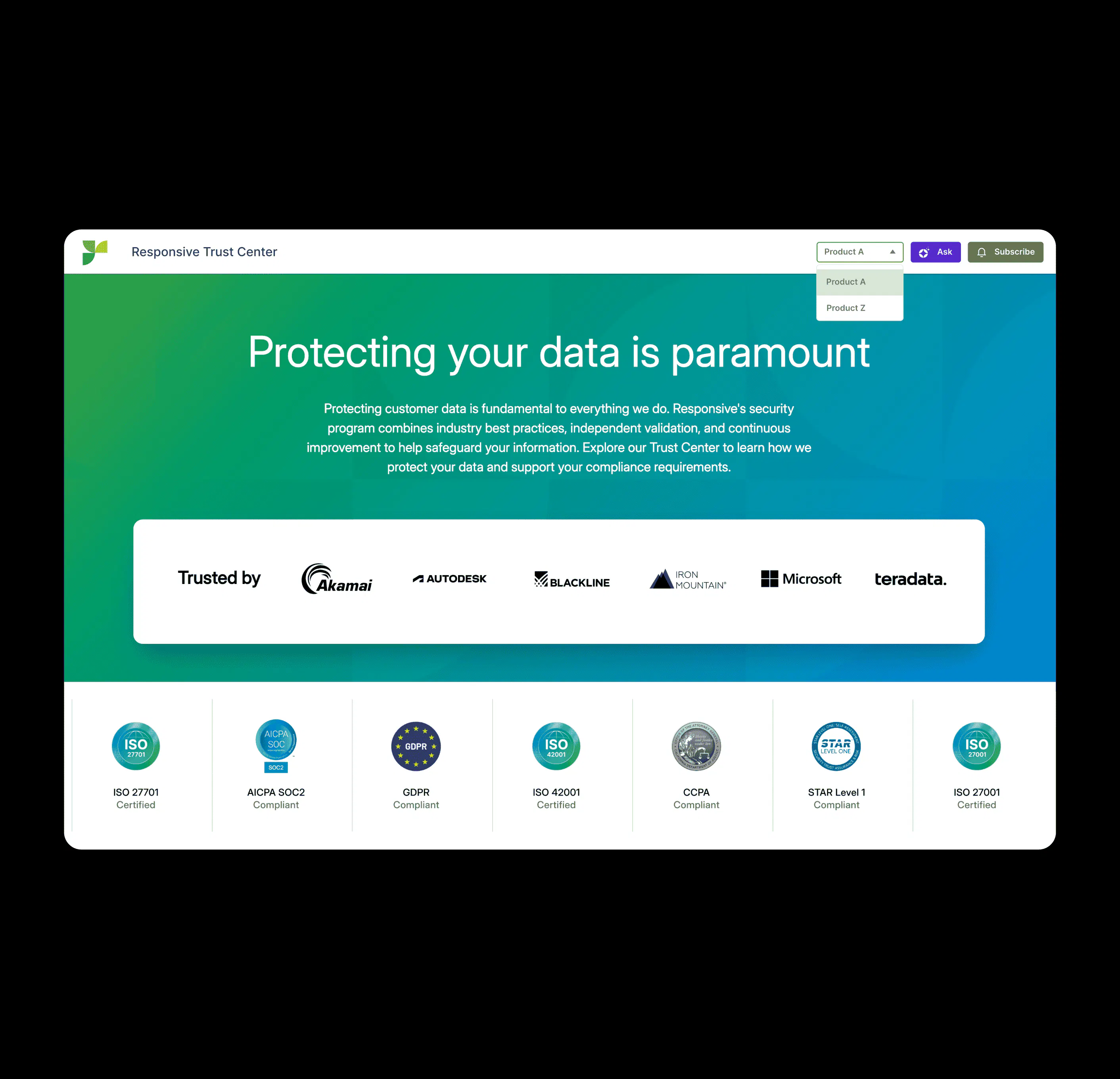
See Trust Center in action
Trust Center centralizes certifications, policies, and answers in one branded location, so buyers, auditors, and boards get what they need, fast.
Clear security reviews faster with AI you can trust

Cut down on repetitive questionnaires
Proactively publish pre-approved security profiles — like SOC, ISO, SIG, CAIQ, and more — to resolve most assessments before they reach your inbox.

Reduce back and forth with self-service answers
Store certifications, risk assessments, compliance, and security documents in one secure hub. Customers and auditors can search for answers in Responsive without interrupting your team.

Respond faster to incidents
When threats emerge or breaches hit the headlines, publish incident response disclosures promptly. Proactively keep stakeholders informed, reduce inbound calls, and free your team to focus on containment.
One source of truth for security, compliance, and trust
Confidently share your security posture
- Create secure, segmented views that include certifications, disclosures, and trust information for each solution.
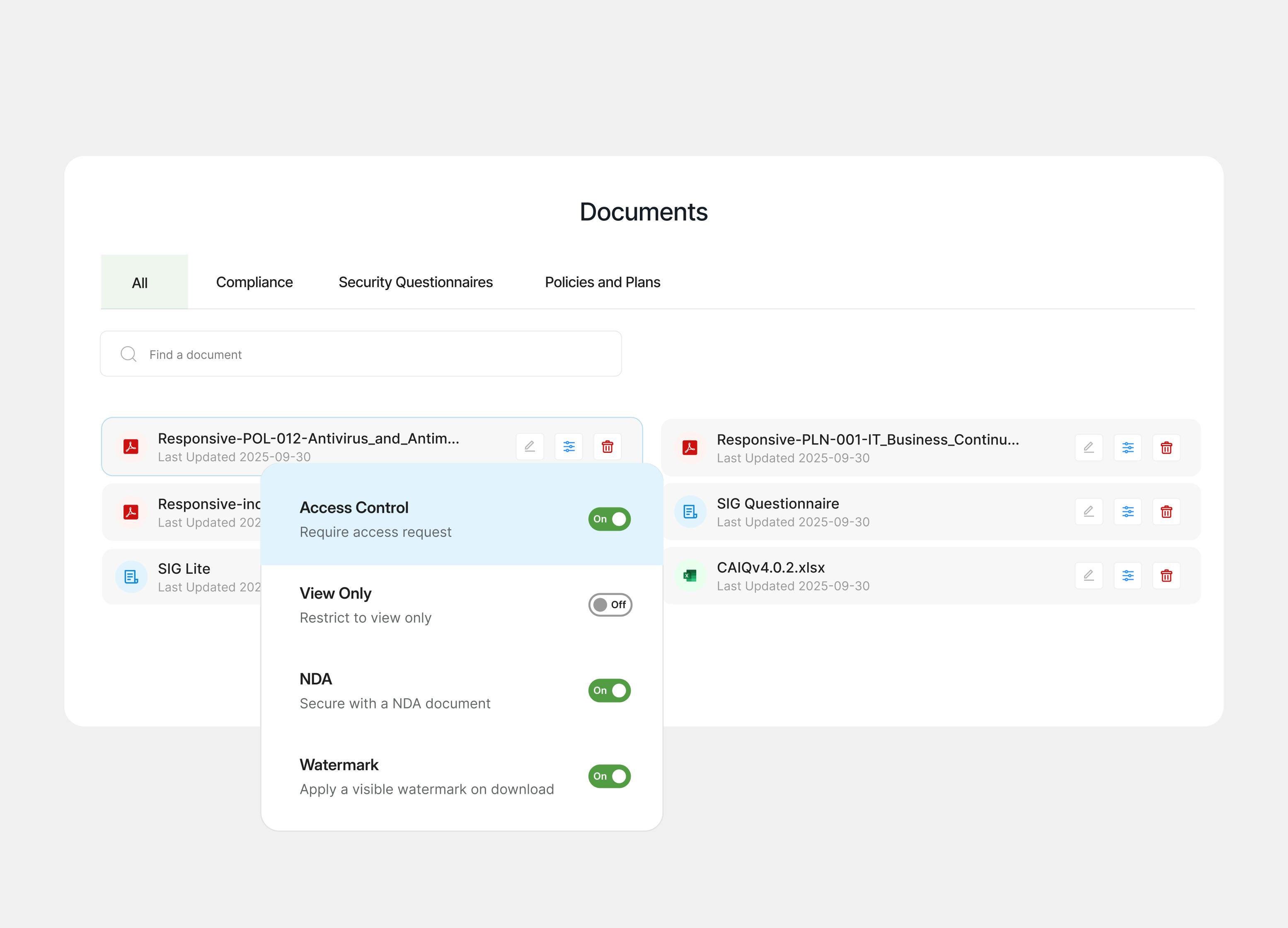
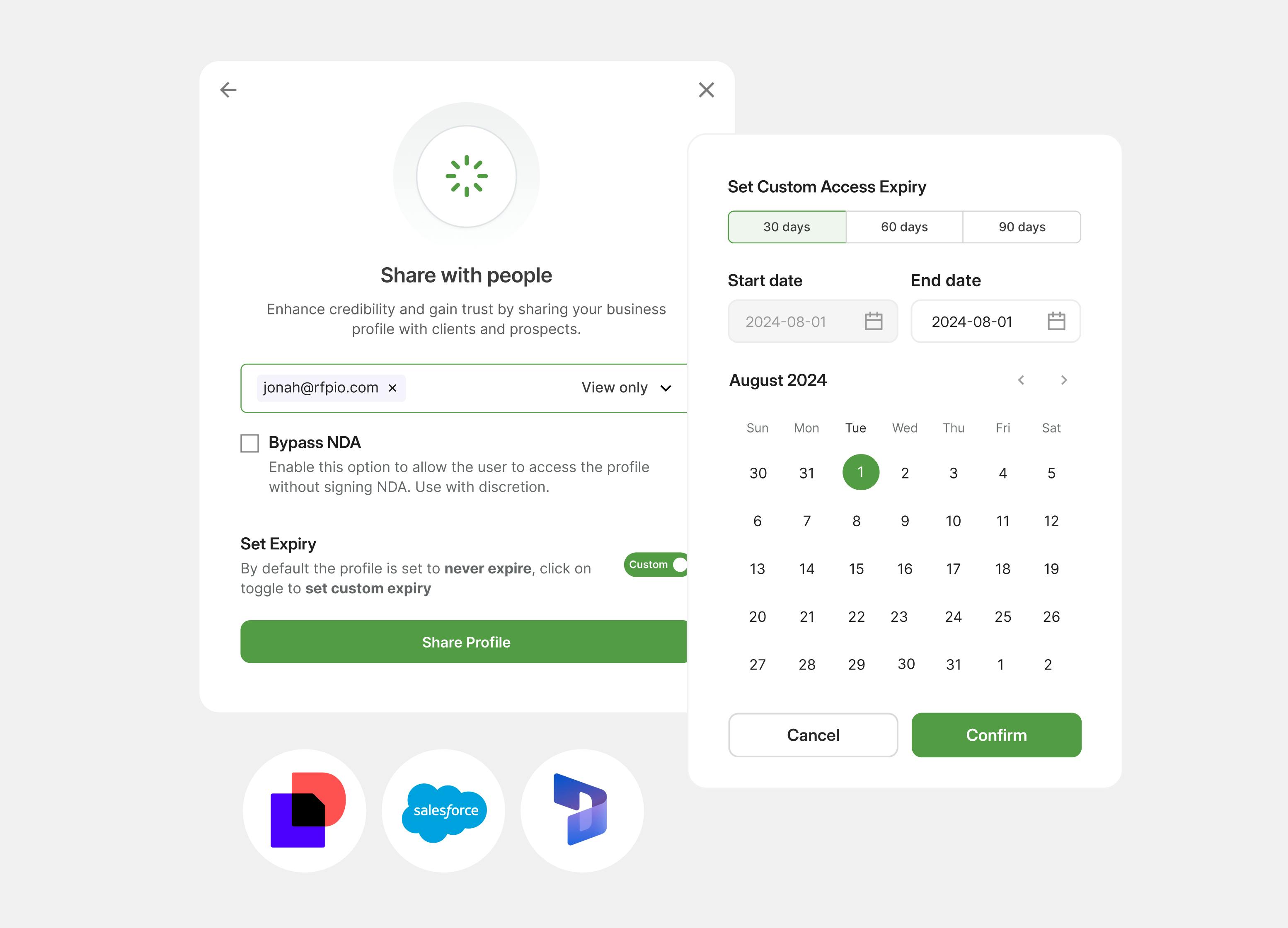
- Automate NDAs, approvals, and access controls to protect sensitive information while reducing manual work.
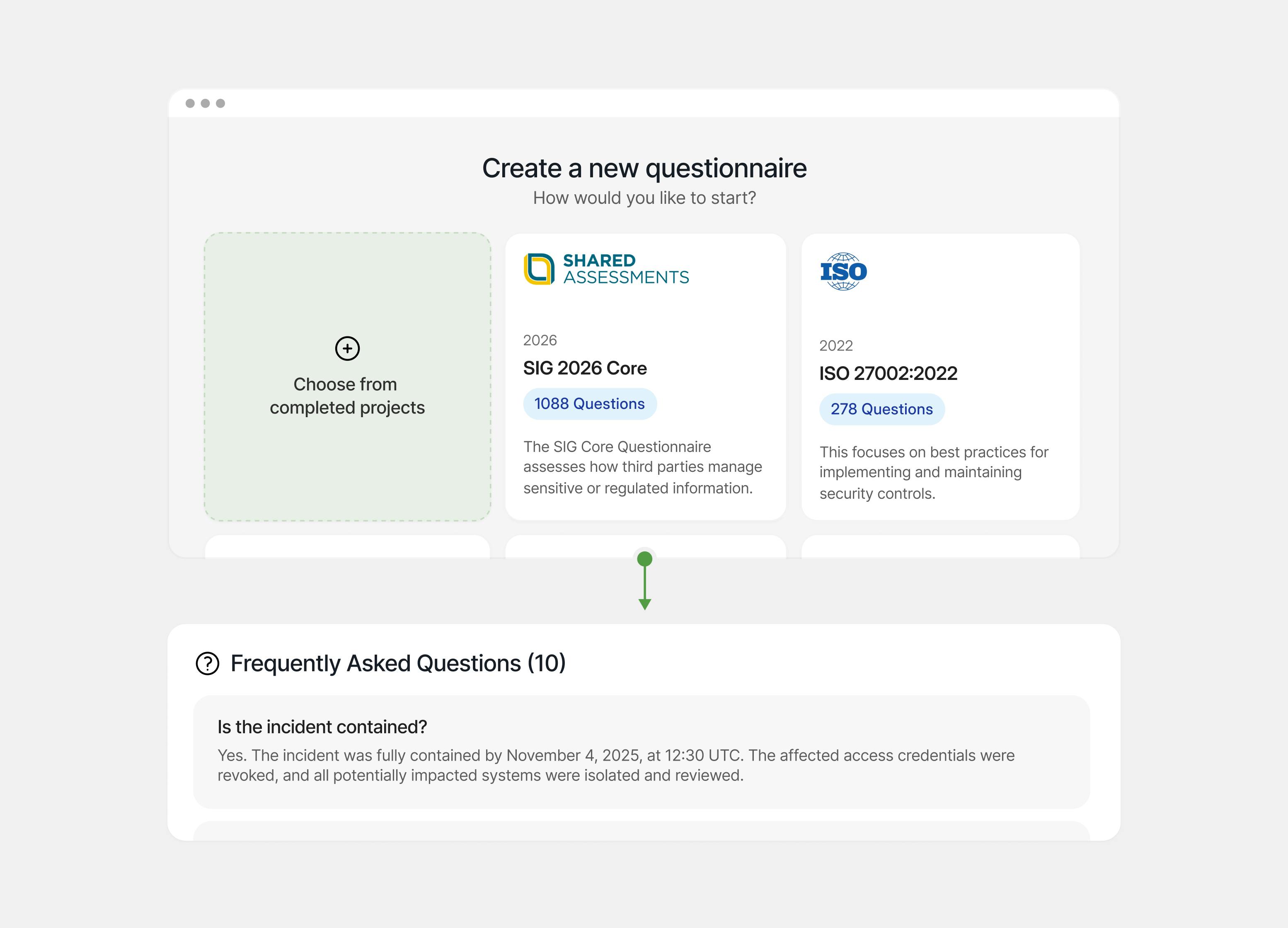
Complete SIG and CAIQ faster
- Access officially licensed SIG and CAIQ templates, along with additional questionnaire templates such as ISO and DORA.
- Use AI-assisted completion to respond faster, reduce manual effort, and eliminate interpretation risk.
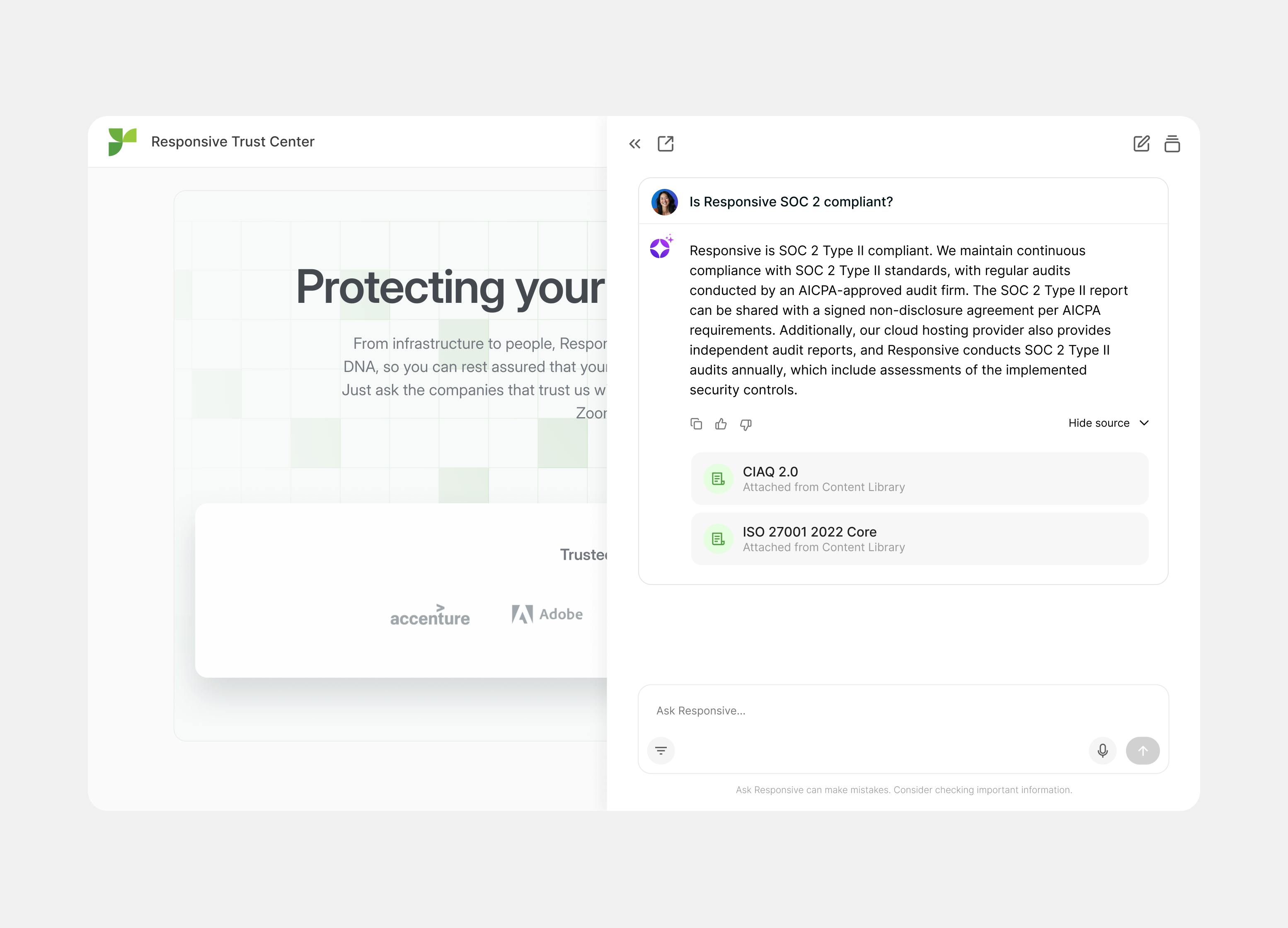
Enable stakeholders to self-serve trust information with AI
- Use Ask by Responsive to power AI-driven search and answers across your Trust Center using only approved content.
- Every answer in the Trust Center is backed by clearly cited sources to increase transparency and confidence in the information.
Automate the sharing of public and private trust profiles
- Share profiles publicly or privately with granular access controls and audit logs for compliance tracking.
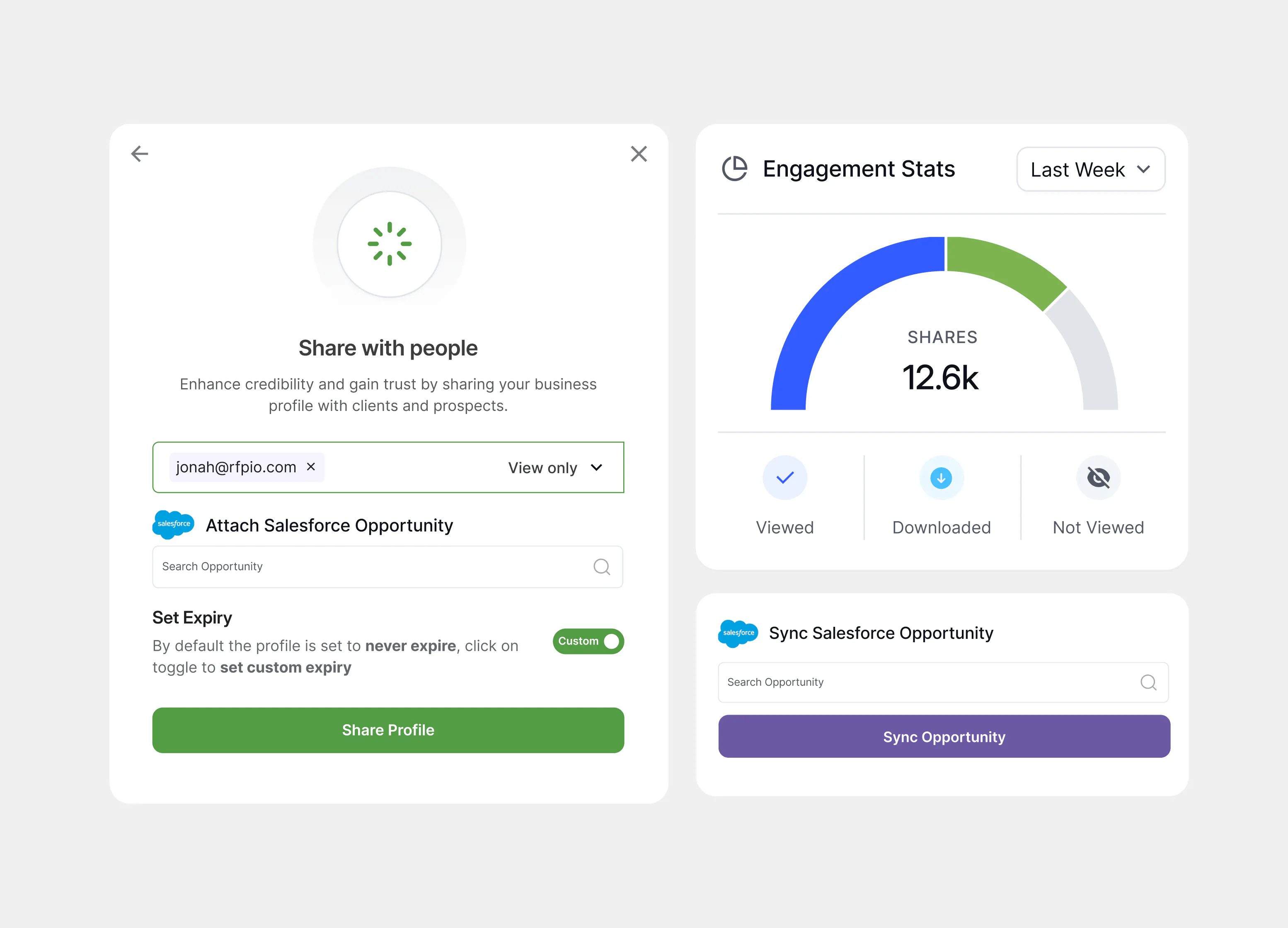
- Integrate with DocuSign and CRM tools such as Salesforce and Microsoft Dynamics to simplify NDA workflows and reduce friction.
Track visibility and opportunity impact
- Track Trust Center engagement through a built-in analytics dashboard, including visits, views, downloads, and time spent.
- View the same activity in Salesforce at the contact level. Tie engagement directly to opportunities to analyze deal impact and win/loss trends.
Confidently share your security posture
- Create secure, segmented views that include certifications, disclosures, and trust information for each solution.
- Automate NDAs, approvals, and access controls to protect sensitive information while reducing manual work.
Complete SIG and CAIQ faster
- Access officially licensed SIG and CAIQ templates, along with additional questionnaire templates such as ISO and DORA.
- Use AI-assisted completion to respond faster, reduce manual effort, and eliminate interpretation risk.
Enable stakeholders to self-serve trust information with AI
- Use Ask by Responsive to power AI-driven search and answers across your Trust Center using only approved content.
- Every answer in the Trust Center is backed by clearly cited sources to increase transparency and confidence in the information.
Automate the sharing of public and private trust profiles
- Share profiles publicly or privately with granular access controls and audit logs for compliance tracking.
- Integrate with DocuSign and CRM tools such as Salesforce and Microsoft Dynamics to simplify NDA workflows and reduce friction.
Track visibility and opportunity impact
- Track Trust Center engagement through a built-in analytics dashboard, including visits, views, downloads, and time spent.
- View the same activity in Salesforce at the contact level. Tie engagement directly to opportunities to analyze deal impact and win/loss trends.
What our customers are saying
Trusted solution for our security profiles
We have been using Responsive for several years and have come to rely on it as a trusted solution for managing our proposal process. Given that, it was a natural decision to extend our use of the platform [with Trust Center] to support additional needs within our sales team. We’re pleased to say the results have met our expectations.
UE verified: July 16, 2026 · survey conducted by UserEvidence
Information Security response time cut by 50%
Creating a Security and Compliance Profile on Responsive to securely store and share our SOC 2 Type II report, architectural diagrams, and security policies has made a HUGE difference for our organization. After implementing the Trust Center, my average response time for information security requests from prospects and clients went from an average of 8 business days to an average of 4 business days.
UE verified: June 5, 2026 · survey conducted by UserEvidence
Reducing internal back-and forth on security questionnaires
The Responsive Trust Center has reduced turnaround time by 1.3 days in addition to reducing about 35% of questionnaire completion requirement from our existing customers. Due to customers having multiple products, it reduces the back and forth as they have access to ALL documentation and not just the documents we provide based on the information given to us by the account reps (e.g. providing a SOC 2 for only one product when they need a SOC 2 for all 3 products they purchase.)
UE verified: June 5, 2026 · survey conducted by UserEvidence
Time to complete started at 5 days when we bought Responsive, it's now down to 1.4
In 2025, I forecasted having 124 RFx, received 122, processed 96, automated 26 (71% of SQs) via Trust Center. Volume is up 1% YoY and -2% QoQ, YTD win rate is 70%. Time to complete is 1.4 days down .3 days from Q4 of 2025. Time to complete started at 5 days when we bought Responsive, it's now down to 1.4. Win Rate was not even tracked before Responsive, now we know 70% is a bit low - we had a rough Q1, I'm usually 80%+. I have the higher win rate than most of the Sales Reps.
UE verified: June 5, 2026 · survey conducted by UserEvidence
Trusted solution for our security profiles
We have been using Responsive for several years and have come to rely on it as a trusted solution for managing our proposal process. Given that, it was a natural decision to extend our use of the platform [with Trust Center] to support additional needs within our sales team. We’re pleased to say the results have met our expectations.
UE verified: July 16, 2026 · survey conducted by UserEvidence
Information Security response time cut by 50%
Creating a Security and Compliance Profile on Responsive to securely store and share our SOC 2 Type II report, architectural diagrams, and security policies has made a HUGE difference for our organization. After implementing the Trust Center, my average response time for information security requests from prospects and clients went from an average of 8 business days to an average of 4 business days.
UE verified: June 5, 2026 · survey conducted by UserEvidence
Reducing internal back-and forth on security questionnaires
The Responsive Trust Center has reduced turnaround time by 1.3 days in addition to reducing about 35% of questionnaire completion requirement from our existing customers. Due to customers having multiple products, it reduces the back and forth as they have access to ALL documentation and not just the documents we provide based on the information given to us by the account reps (e.g. providing a SOC 2 for only one product when they need a SOC 2 for all 3 products they purchase.)
UE verified: June 5, 2026 · survey conducted by UserEvidence
Time to complete started at 5 days when we bought Responsive, it's now down to 1.4
In 2025, I forecasted having 124 RFx, received 122, processed 96, automated 26 (71% of SQs) via Trust Center. Volume is up 1% YoY and -2% QoQ, YTD win rate is 70%. Time to complete is 1.4 days down .3 days from Q4 of 2025. Time to complete started at 5 days when we bought Responsive, it's now down to 1.4. Win Rate was not even tracked before Responsive, now we know 70% is a bit low - we had a rough Q1, I'm usually 80%+. I have the higher win rate than most of the Sales Reps.
UE verified: June 5, 2026 · survey conducted by UserEvidence