Understanding AI response intelligence software in 2026

8 min read

AI response intelligence software represents a breakthrough in how organizations handle customer interactions at scale. These systems analyze incoming communications—whether text, voice, email, or chat—to understand intent and context, then generate or recommend appropriate responses in real-time. Unlike traditional rule-based chatbots that follow rigid decision trees, modern AI response systems leverage advanced language models to craft contextually appropriate replies that feel natural and helpful. The technology matters now because customer expectations have fundamentally shifted. People expect instant, personalized responses across every channel, while organizations face mounting pressure to reduce operational costs and maintain service quality. Traditional approaches simply can't scale to meet these demands. AI response intelligence bridges this gap by automating routine interactions, assisting human agents with intelligent suggestions, and ensuring consistent service delivery across all touchpoints. When evaluating these systems, you'll want to focus on four critical areas: automation capabilities that genuinely reduce workload, seamless data integration that provides relevant context, measurable impact on key metrics, and the trust factors that ensure reliable performance in your environment.

What these systems actually do

AI response intelligence software tackles the fundamental challenge of scaling personalized communication. The technology analyzes each incoming message to determine what the customer actually needs, then either generates a complete response or provides human agents with contextual suggestions and next-best actions. The core engine relies on transformer-based large language models (LLMs) that have been fine-tuned for specific business contexts. These models work alongside retrieval-augmented generation (RAG) systems that ground responses in your actual knowledge base, customer data, and company policies. This combination dramatically reduces the hallucination problems that plague general-purpose AI systems. Common applications include real-time agent assistance that suggests replies during live conversations, automated responses for routine inquiries, post-interaction summaries that capture key details, and intelligent routing that directs complex issues to the right specialists. Voice channels benefit from integrated speech recognition and text-to-speech capabilities that enable seamless verbal interactions. Contact center teams, customer success managers, sales representatives, and support specialists typically use these tools daily. Industries with high-volume customer interactions—banking, telecommunications, e-commerce, and healthcare—see the most immediate impact, though any organization handling substantial inbound communications can benefit.

How to evaluate automation and collaboration features

Effective AI response systems should handle genuinely time-consuming tasks, not just add complexity to existing workflows. Look for platforms that can manage complete interactions for routine requests—password resets, order status checks, basic troubleshooting—while seamlessly escalating complex issues to human agents with full context intact. The collaboration aspect matters more than many organizations initially realize. The best systems provide agents with suggested responses, relevant customer history, and recommended actions without disrupting their natural workflow. Agents should be able to accept suggestions with a single click, modify them easily, or ignore them entirely when their expertise suggests a different approach. Data organization and accessibility form the foundation of effective AI response systems. Your platform needs to connect seamlessly with existing knowledge bases, CRM systems, and documentation repositories. The quality of responses depends entirely on the quality and accessibility of underlying information. Vector search capabilities enable these systems to quickly retrieve relevant context from vast knowledge repositories. When a customer asks about a specific product feature, the system should instantly access the most current documentation, previous similar cases, and relevant policy information. This retrieval happens in milliseconds, providing both automated systems and human agents with comprehensive context.

Integration requirements that determine success

The most sophisticated AI system becomes worthless if it can't integrate smoothly with your existing technology stack. Successful implementations require robust APIs that connect with CRM platforms, ticketing systems, knowledge management tools, and communication channels without creating data silos or workflow disruptions. Real-time performance matters critically for customer-facing applications. Systems must maintain sub-second response times even during peak usage periods. This requires careful architecture planning, particularly around model hosting, data retrieval, and API rate limits. Cloud-based solutions often provide better scalability, while on-premises deployments offer more control over sensitive data.

Measuring results and building trust

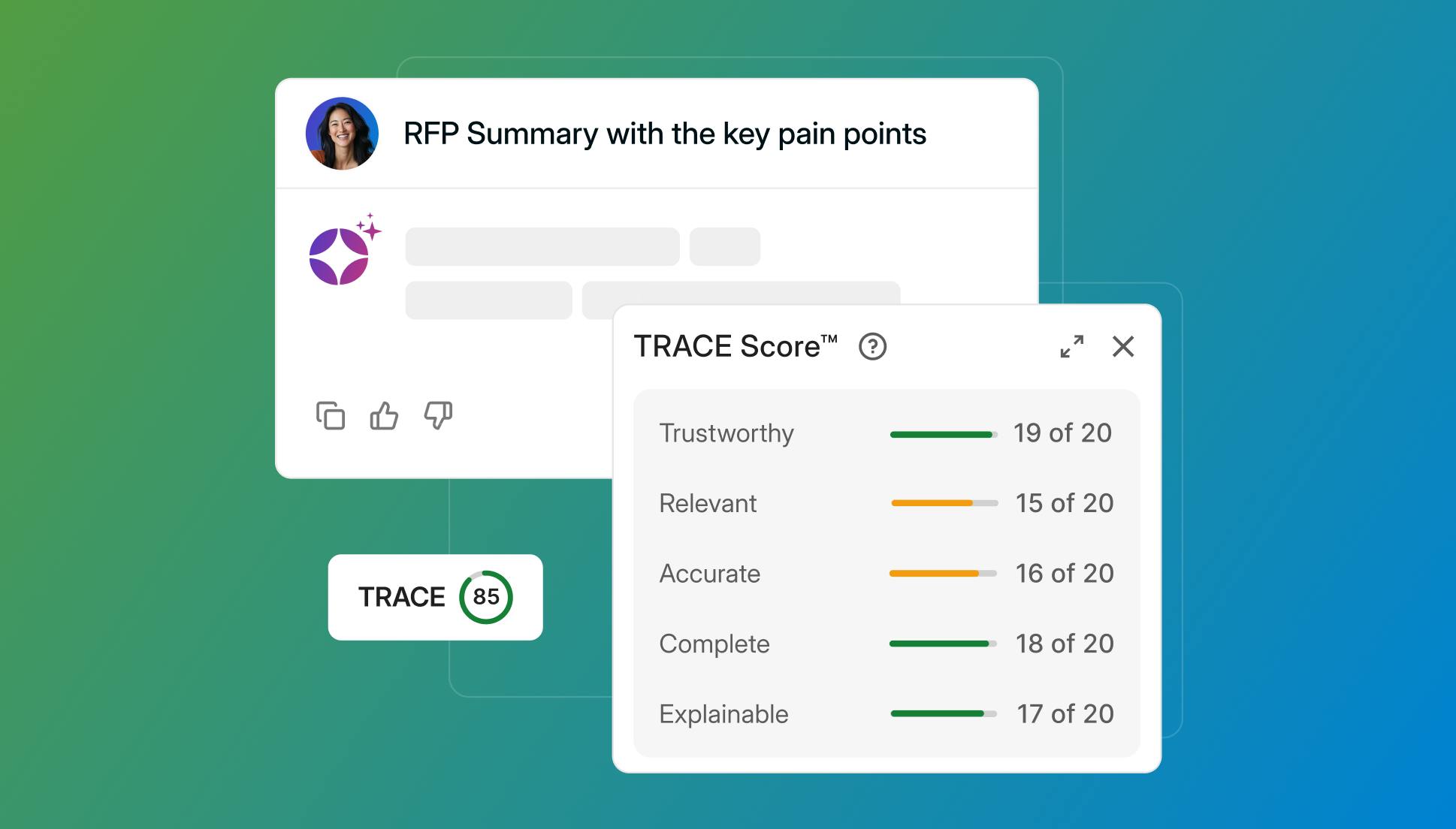
Accuracy and reliability separate effective AI response systems from expensive experiments. Establish baseline metrics for key performance indicators—average handle time, customer satisfaction scores, resolution rates, and agent productivity—before implementation. Effective systems typically reduce handle time by 25-40% while maintaining or improving satisfaction scores. Measurable ROI often appears within the first quarter of deployment. Banking implementations have reported 50% reductions in routine email volume, while sales teams see 30% increases in follow-up response rates. However, these outcomes depend heavily on proper training, integration quality, and ongoing optimization. Trust factors include transparent decision-making processes, clear escalation paths when AI confidence drops below acceptable thresholds, and comprehensive audit trails for regulatory compliance. The system should clearly indicate when responses are AI-generated and provide mechanisms for human oversight. Compliance becomes particularly important in regulated industries. Look for platforms that offer data residency controls, comprehensive logging, and clear documentation of model training processes. European deployments must consider GDPR requirements, while healthcare applications need HIPAA compliance.

Why vendor selection makes the difference

The AI response intelligence market includes everything from comprehensive contact center platforms to specialized point solutions. Major players like Genesys, NICE, and Google Contact Center AI offer integrated suites that handle multiple channels and use cases. Specialized vendors focus on specific industries or technical capabilities. Foundation model providers—OpenAI, Anthropic, Google—supply the underlying language capabilities, while implementation partners adapt these models for specific business requirements. The choice between cloud-hosted and on-premises deployment affects both capabilities and costs significantly. Key questions for vendor evaluation include: How does the system handle your specific industry terminology and processes? What level of customization is possible without extensive development work? How does pricing scale with usage volume? What data residency and security controls are available?

The strategic value of response intelligence

AI response intelligence software transforms customer communication from a cost center into a strategic advantage. Organizations that implement these systems effectively see improvements across multiple dimensions—faster service delivery, more consistent responses, reduced operational costs, and enhanced agent satisfaction. The most important evaluation criteria remain integration capabilities, measurable performance improvements, and trust factors that ensure reliable operation. Technical sophistication matters less than practical results in your specific environment. Looking ahead, expect continued improvements in accuracy and specialization, better multimodal capabilities that seamlessly blend text and voice interactions, and stronger compliance features that meet evolving regulatory requirements. The technology will become increasingly invisible, seamlessly augmenting human capabilities rather than replacing them. The organizations that benefit most from AI response intelligence are those that view it as an enhancement to human expertise rather than a replacement for it. Success depends on thoughtful implementation, ongoing optimization, and clear metrics that demonstrate tangible business value.

FAQs

Q: How does AI response intelligence software actually work to improve customer service?

A: AI response intelligence software analyzes incoming customer communications using transformer-based language models to understand intent and context, then either generates complete responses for routine inquiries or provides human agents with intelligent suggestions and relevant customer history. The system connects to your existing knowledge bases and CRM systems through retrieval-augmented generation (RAG) to ground responses in accurate, up-to-date information, dramatically reducing the hallucination problems of general-purpose AI while ensuring consistent, personalized service delivery.

Q: What tasks can these systems automate and how much time do they actually save?

A: These systems can fully automate routine interactions like password resets, order status checks, and basic troubleshooting while seamlessly escalating complex issues to human agents with complete context. Organizations typically see 25-40% reductions in average handle time, with banking implementations reporting 50% reductions in routine email volume and sales teams experiencing 30% increases in follow-up response rates, with measurable ROI often appearing within the first quarter of deployment.

Q: How do these systems integrate with existing tools and manage our company's data?

A: Effective AI response systems require robust APIs that connect seamlessly with CRM platforms, ticketing systems, knowledge management tools, and communication channels without creating workflow disruptions. The systems use vector search capabilities to instantly retrieve relevant context from your knowledge repositories, previous cases, and policy information in milliseconds, while maintaining data residency controls and comprehensive audit trails for regulatory compliance in industries like healthcare and banking.

Q: What are the limitations of AI response intelligence and where is human oversight still essential?

A: While these systems excel at routine interactions, human judgment remains critical for complex problem-solving, nuanced customer situations, and maintaining trust through transparent escalation processes. The technology should clearly indicate when responses are AI-generated and provide mechanisms for agents to accept, modify, or ignore suggestions entirely, with confidence thresholds that automatically escalate to humans when the system's certainty drops below acceptable levels.

Q: What should organizations evaluate when selecting an AI response intelligence platform?

A: Focus on four critical areas: automation capabilities that genuinely reduce workload rather than add complexity, seamless data integration that provides relevant context from your existing systems, measurable impact on key metrics like handle time and satisfaction scores, and trust factors including transparent decision-making processes, clear escalation paths, and comprehensive compliance features for your industry's regulatory requirements.