Understanding AI response management software in 2026

9 min read

AI response management software has emerged as a critical technology for organizations handling high volumes of customer inquiries, employee questions, and routine business communications. These platforms use artificial intelligence to automatically generate, route, and govern natural-language responses across multiple channels including chat, voice, email, and enterprise applications. Unlike traditional chatbots that rely on rigid decision trees, modern AI response management systems leverage large language models and retrieval-augmented generation to produce contextually appropriate, knowledge-grounded responses that can handle complex, nuanced interactions. The technology addresses several persistent operational challenges: overwhelming support ticket volumes, inconsistent response quality across human agents, lengthy resolution times for routine inquiries, and the need to scale customer service without proportionally increasing headcount. Organizations across telecommunications, retail, healthcare, and software industries report measurable improvements in response times, customer satisfaction scores, and operational efficiency after implementing these solutions. Evaluating AI response management software requires careful attention to automation capabilities, integration requirements, data governance controls, and measurable business outcomes. The rapid evolution of underlying AI technologies means that platform selection decisions made today will significantly impact your organization's ability to leverage future innovations in conversational AI and autonomous agent workflows.

What these systems actually do

AI response management platforms combine several core technologies to automate conversational workflows. Large language models provide the natural language generation capabilities, while retrieval-augmented generation (RAG) systems ground responses in your organization's specific knowledge base, policies, and documentation. This combination reduces the hallucination problem common in pure generative AI systems by constraining outputs to verifiable, source-attributed information.

The software handles multiple types of interactions simultaneously. Intent detection algorithms analyze incoming messages to determine what users actually need, whether that's account information, technical troubleshooting, or complex multi-step processes like scheduling or order modifications. Advanced platforms can execute actions through API integrations, updating CRM records, scheduling appointments, or triggering workflows in other business systems.

Orchestration layers manage the complexity of chaining together multiple AI models, knowledge sources, and business tools into repeatable workflows. These systems implement essential guardrails including authorization controls, privacy filters, content validation, and escalation triggers that ensure AI-generated responses meet compliance and quality standards before reaching users.

Customer service teams, IT help desk staff, sales development representatives, and HR departments typically use these platforms daily. The technology serves both as a fully autonomous response system for routine inquiries and as an intelligent assistant that provides human agents with suggested replies, relevant knowledge articles, and recommended next actions during complex interactions.

How to evaluate the technology that matters

Automation depth and team collaboration

Assess what types of tasks the platform can handle end-to-end versus where it augments human work. Leading systems automate routine information requests, password resets, order status inquiries, and basic troubleshooting while seamlessly escalating complex issues to human agents with full context and conversation history. Look for platforms that enable multiple team members to collaborate on response templates, knowledge base updates, and workflow improvements without requiring technical expertise.

The most valuable systems provide real-time assistance during live conversations, suggesting responses based on customer history, relevant documentation, and successful resolution patterns from similar cases. This collaborative approach maintains the human relationship while dramatically improving response accuracy and speed.

Knowledge organization and accessibility

Your existing documentation, policies, support articles, and institutional knowledge form the foundation for AI-generated responses. Platforms differ significantly in how they ingest, organize, and retrieve this information. Vector databases and semantic search capabilities determine whether the system can surface relevant information from large, unstructured knowledge bases.

Consider how the platform handles knowledge base maintenance, version control, and content freshness. Systems that automatically identify gaps in documentation, track which articles contribute to successful resolutions, and highlight outdated information provide ongoing value beyond response automation. Integration with content management systems, wikis, and document repositories should feel seamless rather than requiring duplicate data entry.

Workflow integration impact

The platform's ability to integrate with your existing technology stack determines its practical utility. Essential integrations include CRM systems, ticketing platforms, communication channels, and business applications where customer data and interaction history reside. APIs and webhooks should enable bidirectional data flow, allowing the AI system to both retrieve context and update records based on conversation outcomes.

Consider the implementation complexity and ongoing maintenance requirements. Platforms that provide pre-built connectors for common enterprise systems reduce deployment time and technical debt. The system should enhance existing workflows rather than forcing teams to adopt entirely new processes or abandon familiar tools.

Performance measurement and governance

Accuracy metrics, response quality scores, and resolution rates provide essential feedback for system optimization. Look for platforms that offer granular analytics on conversation outcomes, escalation patterns, and user satisfaction trends. A/B testing capabilities allow you to refine response strategies and measure the impact of knowledge base improvements.

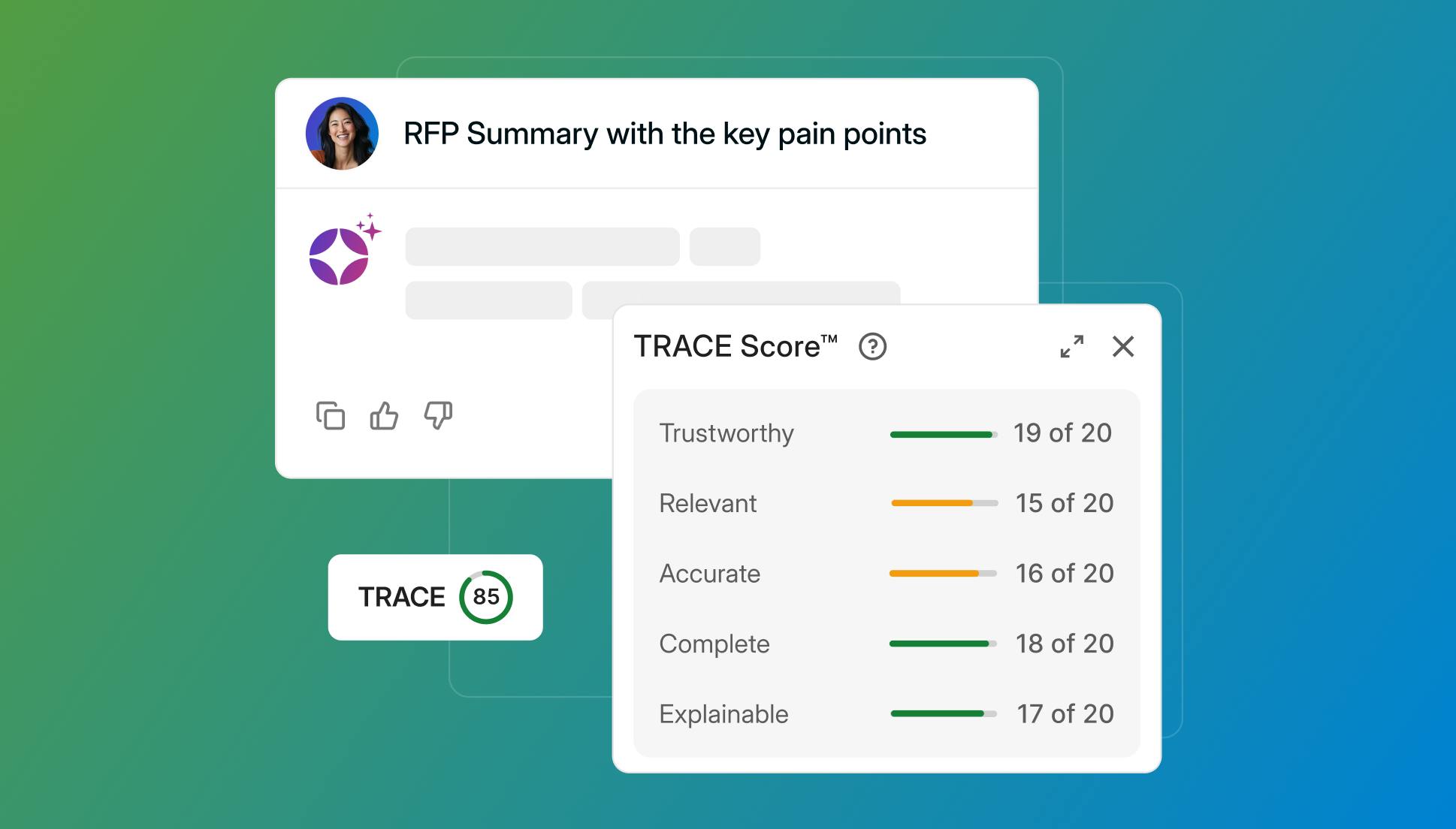
Trust factors include audit trails, compliance reporting, and content approval workflows that ensure responses meet regulatory and brand standards. For organizations in regulated industries, features like conversation logging, data retention controls, and privacy protection mechanisms are non-negotiable requirements rather than nice-to-have additions.

Making the right choice for your organization

Selecting AI response management software requires balancing current operational needs with future scalability requirements. The technology landscape continues evolving rapidly, with new capabilities in autonomous agents, multi-step workflow automation, and advanced reasoning emerging regularly. Choose platforms with strong API ecosystems and extensibility rather than closed systems that may limit future integrations.

Consider these decision-making questions: Can the platform handle your current conversation volume while scaling cost-effectively? Does it support the channels where your customers and employees actually communicate? Can you maintain control over response quality and brand voice while achieving meaningful automation? How quickly can you measure ROI through reduced response times, increased resolution rates, or improved satisfaction scores?

The vendor's approach to data privacy, model transparency, and ongoing platform evolution often matters more than current feature sets. Organizations that invest in platforms with strong governance frameworks and clear upgrade paths position themselves to leverage advancing AI capabilities without major system replacements.

The automation advantage in context

AI response management software transforms how organizations handle conversational workflows by combining the scale benefits of automation with the contextual understanding that modern AI provides. Rather than replacing human expertise, these platforms amplify it by handling routine interactions automatically while equipping agents with intelligent assistance for complex scenarios.

Success depends on selecting platforms that integrate seamlessly with existing systems, provide granular control over response quality, and deliver measurable improvements in operational efficiency. The most critical evaluation criteria remain automation capabilities that truly reduce manual work, knowledge management systems that leverage your institutional expertise, and governance controls that ensure responses meet your standards for accuracy and compliance.

The trajectory toward more autonomous, multi-step AI agents suggests that organizations implementing robust response management platforms today are building the foundation for increasingly sophisticated conversational AI capabilities. The platforms that combine strong current functionality with extensible architectures will provide the greatest long-term value as the technology continues advancing.

FAQs

Q: How does AI response management software actually work and what makes it different from traditional chatbots?

A: AI response management platforms combine large language models with retrieval-augmented generation (RAG) to produce contextually appropriate, knowledge-grounded responses. Unlike traditional chatbots that rely on rigid decision trees, these systems use your organization's specific documentation, policies, and knowledge base to generate natural language responses. They include orchestration layers that chain together multiple AI models, knowledge sources, and business tools while implementing essential guardrails like authorization controls, privacy filters, and escalation triggers to ensure quality and compliance standards.

Q: What types of tasks can these systems automate and how much time do they actually save?

A: These platforms can fully automate routine interactions like password resets, order status inquiries, account information requests, and basic troubleshooting while escalating complex issues to human agents with full context. They also provide real-time assistance during live conversations by suggesting responses based on customer history and successful resolution patterns. Organizations across telecommunications, retail, healthcare, and software industries report measurable improvements in response times, customer satisfaction scores, and operational efficiency, with the ability to scale customer service without proportionally increasing headcount.

Q: How does the software integrate with our existing tools and handle our company's data?

A: The platform's value depends heavily on its ability to integrate with your existing technology stack including CRM systems, ticketing platforms, communication channels, and business applications. Essential features include bidirectional data flow through APIs and webhooks, allowing the AI system to both retrieve customer context and update records based on conversation outcomes. The system should ingest and organize your existing documentation, policies, and institutional knowledge through vector databases and semantic search, with seamless integration to content management systems and document repositories rather than requiring duplicate data entry.

Q: Where is human oversight still necessary and what are the system's limitations?

A: While these systems excel at routine inquiries and providing intelligent assistance, human judgment remains essential for complex scenarios, relationship management, and quality control. Even with RAG systems, AI can still produce incorrect or outdated outputs, and prompt-injection attacks pose security risks. Organizations need robust governance frameworks including audit trails, content approval workflows, conversation logging, and clear escalation triggers. Success requires maintaining control over response quality and brand voice while implementing layered defenses and human-in-the-loop processes for monitoring and evaluation.

Q: What should we evaluate when selecting an AI response management platform?

A: Focus on four key areas: automation depth (what the platform handles end-to-end versus where it augments human work), knowledge organization capabilities (how it ingests and retrieves information from your existing documentation), workflow integration impact (pre-built connectors and API ecosystem strength), and performance measurement tools (accuracy metrics, A/B testing, and compliance reporting). Consider the vendor's approach to data privacy, model transparency, and platform evolution rather than just current features. Choose platforms with strong API ecosystems and extensibility that can scale with your conversation volume while delivering measurable ROI through reduced response times and improved satisfaction scores.