Understanding AI response software in 2026

9 min read

AI response software represents a fundamental shift in how organizations handle knowledge work, customer interactions, and routine communications. These platforms use large language models and sophisticated AI frameworks to generate human-like responses, automate complex workflows, and provide intelligent assistance across virtually every business function. Unlike traditional rule-based chatbots that follow rigid scripts, modern AI response systems understand context, maintain conversational memory, and can access external data sources to provide accurate, personalized answers. The technology has reached a critical inflection point. What began as experimental tools in late 2022 has rapidly evolved into production-ready solutions that enterprises are deploying at scale. Organizations report significant productivity gains—from reducing customer support response times by 70% to accelerating software development cycles through intelligent code assistance. The convergence of powerful foundation models, improved training techniques, and robust integration capabilities means AI response software can now handle tasks that previously required human expertise, from technical documentation to complex problem-solving. When evaluating these platforms, you'll need to balance capability with control, considering factors like accuracy, integration depth, data security, and measurable business impact. The right choice depends heavily on your specific use cases, risk tolerance, and existing technology infrastructure.

What these systems actually accomplish

AI response software tackles the fundamental challenge of scaling human-like communication and decision-making across your organization. The core pain points it addresses include information bottlenecks (where knowledge workers spend hours searching for answers), repetitive customer inquiries that drain support resources, and the growing complexity of maintaining consistency across multiple communication channels. At its technical foundation, these systems combine several breakthrough technologies. Large language models serve as the reasoning engine, trained on vast text corpora to understand language patterns and generate coherent responses. Retrieval-augmented generation (RAG) connects these models to your specific knowledge base, ensuring responses draw from current, accurate information rather than potentially outdated training data. Agent frameworks enable the software to take actions beyond just generating text—scheduling meetings, updating databases, or triggering workflows based on conversation context. The feature set typically includes multi-turn dialogue management that maintains conversation context across extended interactions, document synthesis that can analyze and summarize complex materials, and multimodal capabilities that process images, audio, and other content types alongside text. Advanced implementations incorporate tool integration, allowing the AI to query databases, call APIs, or interact with external systems to provide comprehensive responses. You'll find these solutions deployed across diverse roles and industries. Customer support teams use them to handle tier-one inquiries and escalate complex issues with full context. Software development organizations leverage AI response systems for code review, debugging assistance, and technical documentation. Legal and medical professionals employ specialized versions with enhanced accuracy controls for research and drafting support, while sales teams use them for proposal generation and customer communication.

Essential evaluation criteria to guide your selection

Automation and collaboration capabilities

Focus on how effectively the system handles your specific workflow requirements. The best platforms seamlessly integrate human oversight with automated responses, allowing team members to review, modify, and approve outputs before they reach customers or stakeholders. Look for systems that can learn from human corrections, gradually improving their accuracy for your particular use cases. Collaborative features should include shared knowledge bases, consistent brand voice across team members, and audit trails that track how responses evolve over time.

Data and content management foundation

Your AI response system is only as good as the information it can access and the accuracy of that information. Evaluate how the platform ingests, organizes, and updates your knowledge base. Vector databases and semantic search capabilities ensure the system can find relevant information even when queries don't match exact keywords. Version control becomes crucial—you need visibility into when information changes and confidence that outdated content won't surface in responses. Consider how the system handles different content types, from structured databases to unstructured documents, and whether it can maintain source attribution for regulatory compliance.

Integration impact on existing workflows

Seamless integration determines whether your AI response software becomes a productivity multiplier or another tool that creates friction. Assess API quality and pre-built connectors for your existing systems—CRM platforms, helpdesk software, document repositories, and communication channels. The system should feel native to your current workflows rather than requiring users to switch between multiple interfaces. Pay particular attention to single sign-on capabilities, permission inheritance from existing systems, and how the platform handles data synchronization across your technology stack.

Results and trust factors for sustainable adoption

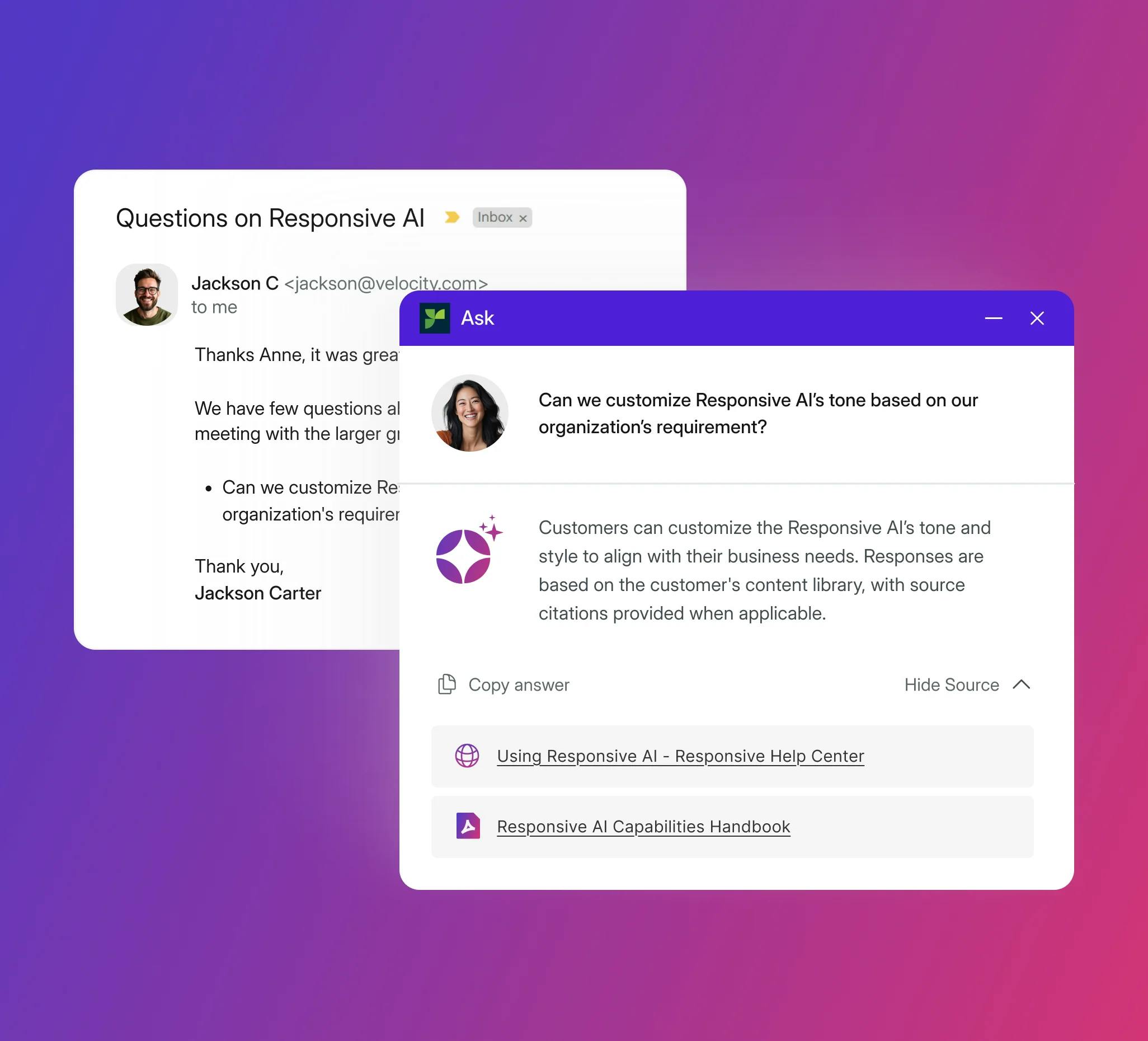
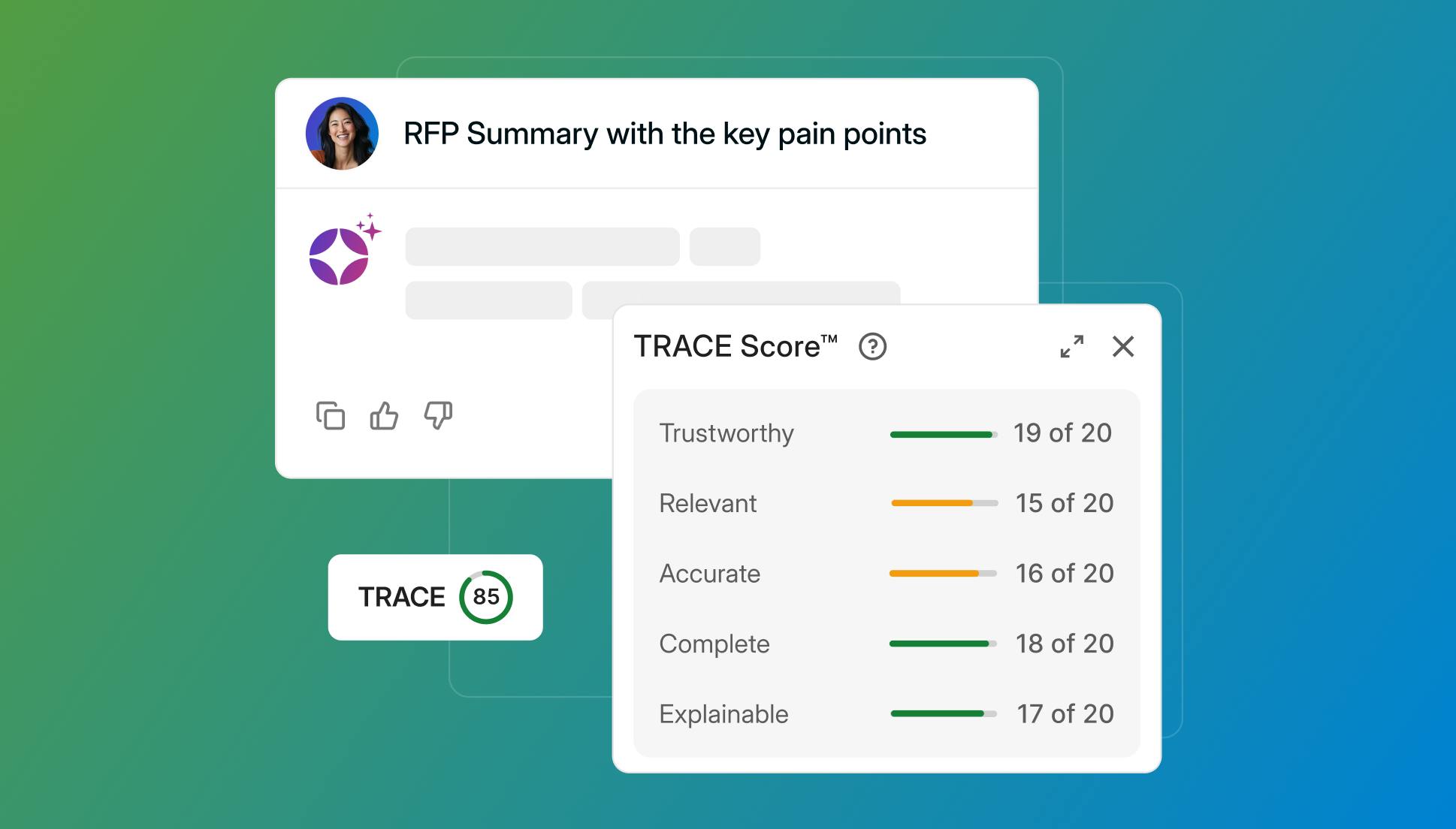
Accuracy and reliability form the foundation of user trust. Look for platforms that provide confidence scores for their responses, clear citations linking answers to source materials, and robust testing capabilities that let you evaluate performance against your specific use cases. Performance metrics should include response accuracy, query resolution rates, and user satisfaction scores. Compliance features become critical for regulated industries—ensure the system can demonstrate GDPR adherence, maintain SOC 2 compliance, and provide audit trails that satisfy your governance requirements. Measurable ROI indicators might include reduced response times, decreased escalation rates, and quantified time savings across your team.

What truly differentiates leading solutions

The AI response software market has matured rapidly, but meaningful differences emerge when you examine how platforms handle real-world complexities. Superior solutions excel at maintaining accuracy as they scale, providing transparency into their reasoning process, and adapting to your organization's specific context without compromising security or compliance. Selecting the right platform requires careful evaluation because switching costs are significant once these systems become embedded in your workflows. The wrong choice can create dependency on inflexible technology, expose sensitive data, or fail to deliver promised productivity gains. Ask these critical questions during your evaluation: How does the system handle scenarios where it doesn't know the answer, and can it gracefully escalate to human experts? What specific measures prevent hallucinations or confident but incorrect responses? How quickly can you update the knowledge base when business information changes, and how does the system prioritize conflicting information from different sources? What happens to your data if you need to switch platforms, and can you export conversation histories and trained models? How does the vendor's roadmap align with your long-term business strategy, particularly around features like advanced reasoning, multimodal capabilities, and agent-based automation?

The transformation ahead

AI response software has evolved from experimental technology to essential business infrastructure in just two years. These platforms now serve as intelligent interfaces between your organization's knowledge and the people who need it—whether that's customers seeking support, employees looking for internal information, or partners requiring technical guidance. When evaluating solutions, prioritize accuracy and integration depth over flashy features. The most successful implementations focus on specific, measurable use cases where AI can demonstrably improve outcomes. Data security and vendor transparency should be non-negotiable requirements, especially as these systems gain access to increasingly sensitive business information. The technology continues advancing rapidly toward more sophisticated reasoning capabilities, better multimodal understanding, and autonomous agent functionality that can take actions on your behalf. Organizations that establish strong foundations now—with proper governance, clear use cases, and robust evaluation frameworks—will be best positioned to leverage these emerging capabilities as they mature.

FAQs

Q: How does AI response software work and what benefits can it provide to my organization?

A: AI response software combines large language models with retrieval systems and tool integrations to generate human-like responses and automate complex workflows. Unlike traditional rule-based chatbots, these systems understand context, maintain conversational memory, and can access your specific knowledge base through retrieval-augmented generation (RAG). Organizations typically see significant productivity gains—such as reducing customer support response times by 70% and accelerating development cycles through intelligent assistance across virtually every business function.

Q: What tasks can these systems automate and how much time can they actually save?

A: AI response software automates information-heavy tasks like handling tier-one customer inquiries, generating technical documentation, code review and debugging assistance, proposal generation, and complex problem-solving that previously required human expertise. The time savings compound across your organization—customer support teams can focus on complex issues while AI handles routine inquiries, developers get instant code assistance instead of searching documentation, and knowledge workers spend less time hunting for information and more time on strategic work.

Q: How does AI response software integrate with our existing tools and handle our company data?

A: Modern platforms offer robust API connections and pre-built connectors for CRM systems, helpdesk software, document repositories, and communication channels. They use vector databases and semantic search to organize and access your knowledge base, maintaining version control and source attribution for compliance. The best systems feel native to your current workflows with single sign-on capabilities and permission inheritance, while providing audit trails and ensuring data synchronization across your technology stack without requiring users to switch between multiple interfaces.

Q: Where do these systems fall short and what still requires human oversight?

A: AI response software can still produce confident but incorrect responses (hallucinations) and may struggle with nuanced judgment calls, complex ethical decisions, or scenarios requiring deep contextual understanding of your specific business dynamics. Human oversight remains critical for reviewing and approving outputs before they reach customers, handling escalated complex issues, making strategic decisions, and maintaining quality control. The most successful implementations focus on clear use cases where AI augments rather than replaces human expertise.

Q: What should I look for when evaluating AI response software vendors?

A: Prioritize accuracy and integration depth over flashy features, focusing on platforms that provide confidence scores, clear source citations, and robust testing capabilities for your specific use cases. Essential evaluation criteria include seamless workflow integration, transparent data handling with compliance features (GDPR, SOC 2), collaborative human oversight capabilities, and measurable ROI indicators like response accuracy and time savings. Consider switching costs carefully since these systems become embedded in workflows, and ensure the vendor's roadmap aligns with your long-term strategy around security, compliance, and advanced capabilities.