Understanding AI strategic response management software in 2026

9 min read

Organizations today face an overwhelming volume of external events requiring rapid, accurate responses—from security incidents and compliance questionnaires to customer inquiries and crisis communications. AI strategic response management software emerges as a solution that combines natural language processing, knowledge management, and workflow automation to detect, prioritize, and execute responses to these critical events. This technology spans multiple operational domains, including proposal management, security orchestration, customer service automation, and crisis response. The urgency around these tools reflects the accelerating pace of business and regulatory requirements. Security teams struggle with alert fatigue and lengthy incident response times. Sales and proposal teams spend weeks manually crafting responses to RFPs and security questionnaires. Customer service organizations can't scale human expertise to handle growing inquiry volumes. Crisis management requires immediate, coordinated responses across multiple channels and stakeholders. Strategic response management software addresses these challenges by automating the detection and classification of incoming requests, generating contextually appropriate draft responses using organizational knowledge, and orchestrating approval workflows that maintain governance while reducing cycle times. The most effective solutions combine retrieval-augmented generation to ground AI outputs in verified content, sophisticated workflow engines to ensure compliance, and robust integrations that connect with existing business systems.

What these systems actually do

AI strategic response management platforms function as intelligent orchestration layers that sit between incoming signals and outbound responses. When a security alert triggers, an RFP arrives, or a customer inquiry comes through, these systems immediately classify the event, determine its priority, and begin assembling relevant information from organizational knowledge bases. The core technology stack combines several AI capabilities. Large language models generate human-like text responses, while retrieval systems search through documents, policies, and historical responses to find relevant content. Vector databases store semantic embeddings of organizational knowledge, enabling the system to understand context and meaning rather than just matching keywords. Workflow engines then guide these AI capabilities through predefined processes, ensuring that responses meet compliance requirements and approval standards. Common features include automated triage that routes high-priority incidents to appropriate teams, draft generation that pulls from approved content libraries, template management systems that ensure consistency, and audit trails that track every decision and modification. Many platforms also offer multi-channel delivery, sending responses via email, chat, SMS, or integration with other business systems. Security teams typically use these tools for Security Orchestration, Automation, and Response (SOAR), automating the investigation and containment of threats. Proposal and business development teams leverage them to respond faster to RFPs and vendor questionnaires. Customer service organizations deploy them to handle routine inquiries while escalating complex issues to human agents. Crisis management teams use them to coordinate communications and execute emergency response plans across multiple stakeholders and channels.

How to evaluate your options

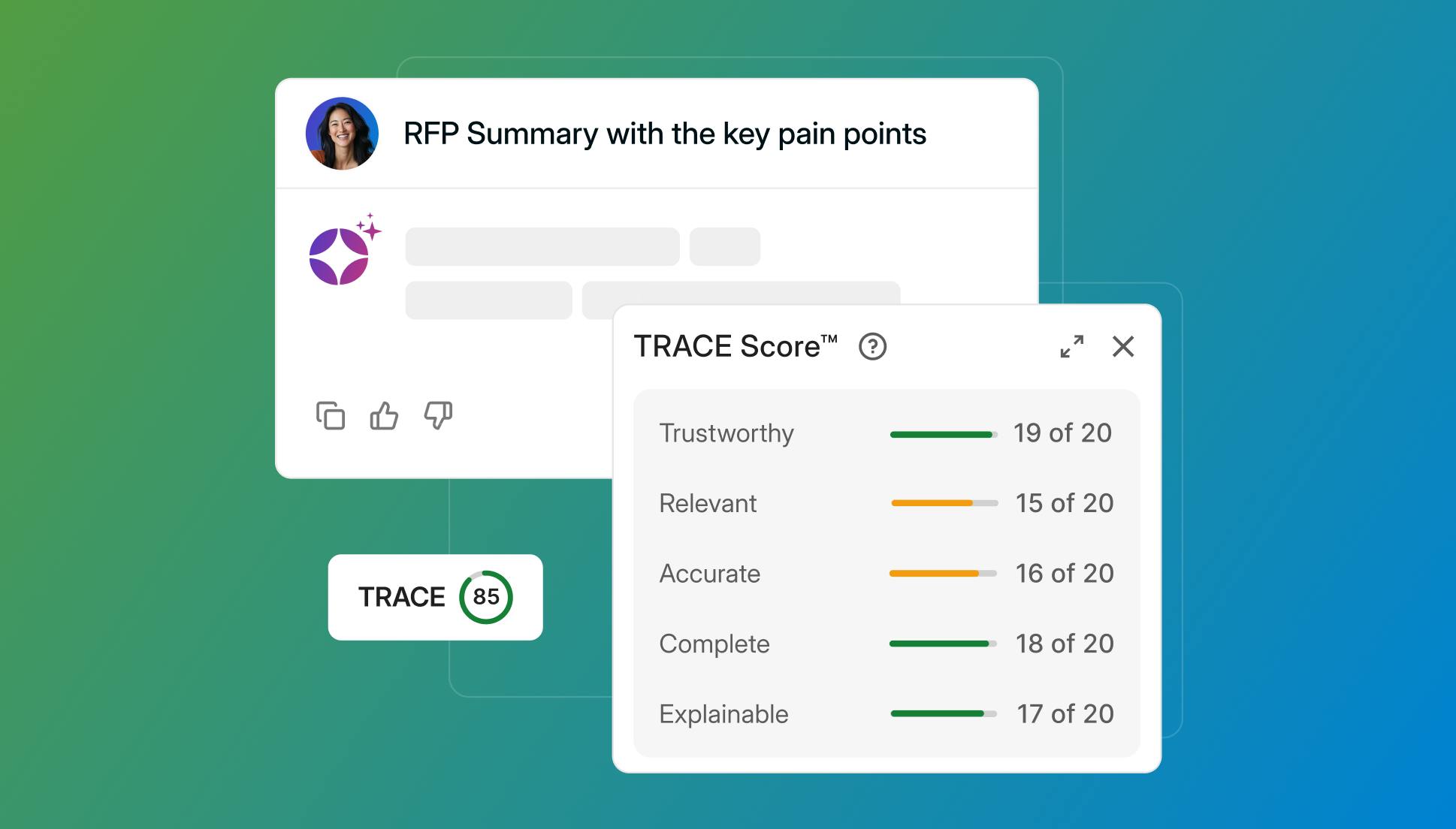
When assessing AI response management platforms, automation capabilities and collaboration features represent the foundation of value creation. Look for systems that can handle your most time-intensive response tasks—whether that's security incident triage, proposal section drafting, or customer inquiry routing. The platform should reduce manual effort while improving response quality through better access to organizational knowledge. Collaboration features matter because most responses require input from multiple stakeholders, so evaluate how well the system supports review processes, approval workflows, and team coordination. Data and content management capabilities determine whether the AI generates accurate, compliant responses. The system needs robust knowledge governance, ensuring that AI draws from current, approved sources rather than outdated or unauthorized content. Look for platforms that can organize content libraries, track document versions, and maintain audit trails. The quality of the underlying content management directly impacts the reliability of AI-generated responses. Integration impact often determines adoption success or failure. The platform should connect seamlessly with your existing workflows rather than requiring completely new processes. Evaluate API quality, pre-built connectors to your critical systems like CRM, SIEM, or document management platforms, and how well the tool fits into established approval chains. Poor integration leads to information silos and reduced adoption. Results and trust factors encompass accuracy, performance, compliance capabilities, and measurable return on investment. Since these systems handle sensitive communications, accuracy becomes paramount. Look for platforms that provide citation and source tracking, human oversight capabilities, and clear audit trails. Performance metrics should include response time improvements, accuracy rates, and user satisfaction scores. Compliance features vary significantly by vendor, so ensure the platform meets your regulatory requirements, whether that's SOC 2, GDPR, HIPAA, or industry-specific standards.

What sets the best solutions apart

The strategic response management software market includes numerous vendors with overlapping capabilities, making careful selection crucial for organizations seeking meaningful operational improvements. The most effective platforms distinguish themselves through their approach to knowledge grounding, workflow sophistication, and integration depth rather than just AI model performance. When evaluating options, focus on these key questions: Does the platform generate responses from your verified content sources, or does it rely primarily on general training data? Can you trace every AI-generated statement back to specific approved documents? How sophisticated are the approval workflows—do they support complex organizational hierarchies and compliance requirements? What's the actual integration depth with your existing systems, not just surface-level API connections? Consider whether the vendor offers meaningful customization for your industry or use case. Generic platforms may require extensive configuration to handle sector-specific requirements like healthcare privacy rules, financial services regulations, or government security protocols. Assess the vendor's commitment to ongoing model improvement and whether they provide transparency about training data sources and model limitations. Finally, evaluate the total cost of ownership, including implementation services, ongoing training requirements, and the internal resources needed to maintain accurate knowledge bases.

The strategic advantage of intelligent response automation

AI strategic response management software transforms how organizations handle external communications by combining the speed of automation with the accuracy of human oversight. These platforms reduce response times from days to hours, improve consistency across all communications, and free skilled professionals to focus on strategic work rather than routine response tasks. When selecting a platform, prioritize knowledge governance capabilities, integration quality, and workflow sophistication over raw AI performance metrics. The most successful implementations ground AI generation in verified organizational content, maintain clear approval processes, and integrate deeply with existing business systems. Organizations that invest in robust content management and change management alongside the technology see the greatest returns. The future of strategic response management points toward more sophisticated AI agents capable of executing complex workflows with minimal human oversight, while regulatory frameworks increasingly demand transparency and auditability. As these technologies mature, organizations will need platforms that balance automation benefits with the governance controls required for high-stakes communications. The vendors that master this balance—delivering both operational efficiency and organizational trust—will define the next generation of enterprise response management.

FAQs

Q: How does AI strategic response management software actually work and what benefits does it provide?

A: AI strategic response management software combines natural language processing, knowledge management, and workflow automation to automatically detect, classify, and prioritize incoming events like security alerts, RFPs, or customer inquiries. The system then generates contextually appropriate draft responses using your organization's verified knowledge base through retrieval-augmented generation (RAG), ensuring accuracy while maintaining governance through human-in-the-loop approval workflows. This approach reduces response times from days to hours, improves consistency across communications, and frees skilled professionals to focus on strategic work rather than routine response tasks.

Q: What types of tasks can be automated and what kind of time savings should organizations expect?

A: These platforms can automate security incident triage and containment actions, draft RFP responses and security questionnaire answers, route customer inquiries to appropriate teams, and coordinate crisis communications across multiple channels. Security teams see significant reductions in mean-time-to-respond for threat incidents, while proposal teams report weeks of time savings on complex RFPs through automated section drafting. Customer service organizations can handle routine inquiries automatically while escalating complex issues to human agents, and crisis management teams can execute coordinated emergency response plans across multiple stakeholders simultaneously.

Q: How does the software integrate with existing tools and manage organizational data?

A: The most effective platforms connect deeply with existing business systems through robust APIs and pre-built connectors to CRM, SIEM, document management platforms, and other critical tools. They maintain sophisticated knowledge governance by organizing content libraries, tracking document versions, and ensuring AI draws from current, approved sources rather than outdated content. Vector databases store semantic embeddings of organizational knowledge, enabling the system to understand context and meaning while maintaining clear audit trails that track every decision and modification for compliance purposes.

Q: What are the limitations and where is human oversight still required?

A: While these systems excel at automation, human judgment remains essential for several areas. AI models can still produce "hallucinations" or fabricated facts, requiring human review of generated responses before deployment. Complex strategic decisions, sensitive communications, and situations requiring nuanced interpretation still need human oversight. Organizations must also maintain governance over knowledge bases to ensure accuracy, handle edge cases that fall outside predefined workflows, and make final approval decisions for high-stakes responses. The most successful implementations balance automation benefits with appropriate human checkpoints.

Q: What should organizations consider when evaluating different platforms?

A: Focus on knowledge governance capabilities, integration quality, and workflow sophistication over raw AI performance metrics. Evaluate whether the platform generates responses from your verified content sources with clear citation tracking, supports complex approval workflows that match your organizational hierarchy, and offers meaningful integration depth with existing systems. Consider industry-specific customization capabilities, the vendor's transparency about training data and model limitations, total cost of ownership including implementation services, and whether the platform meets your regulatory requirements such as SOC 2, GDPR, or HIPAA compliance.