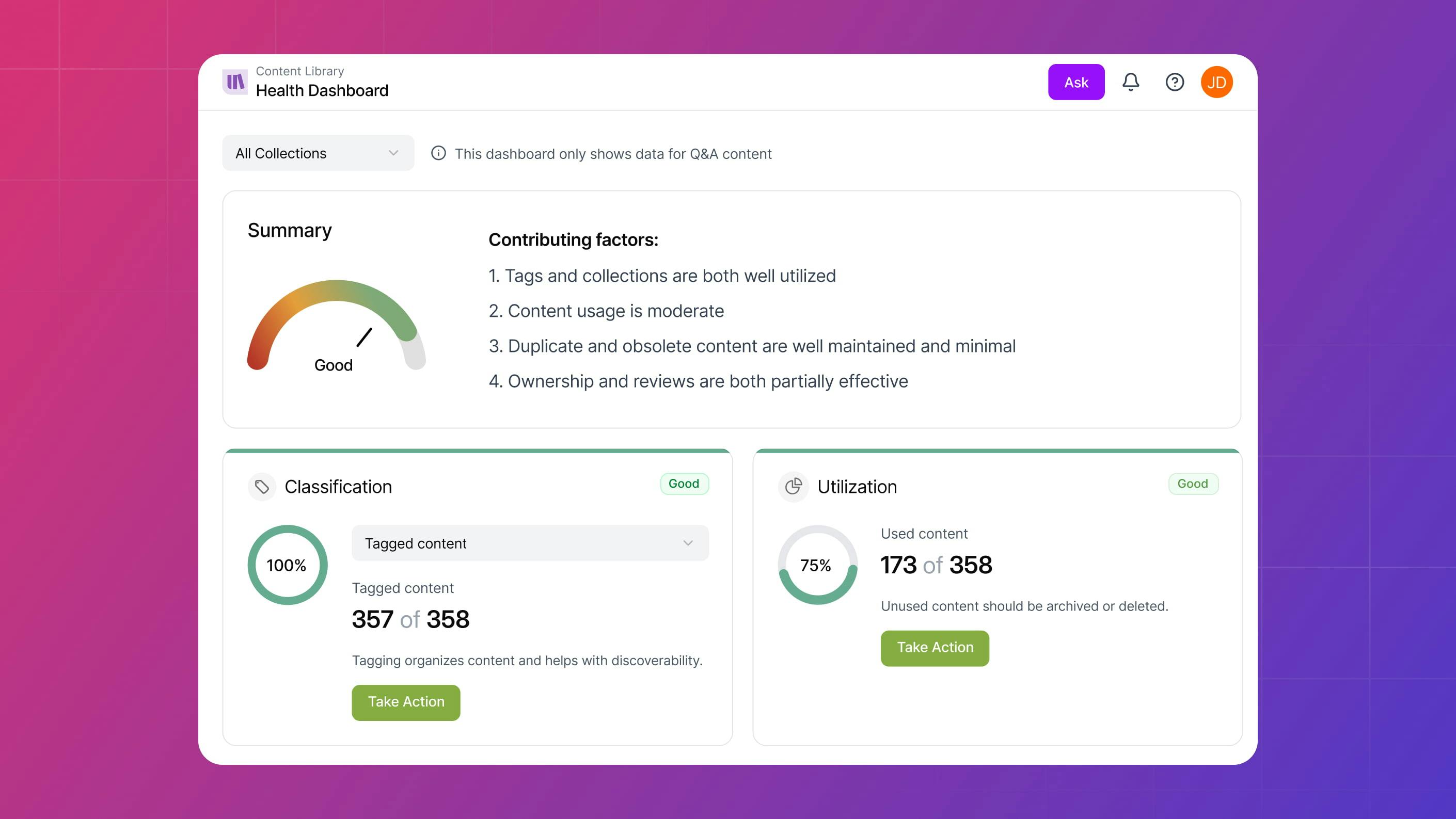
Institutional knowledge is one of your organization’s most valuable assets. How effectively you organize, access, and apply it can determine your ability to scale, win new business, and respond with confidence.
According to Responsive’s 2025 State of Strategic Response Management (SRM) Report, high-growth organizations are more than twice as likely to connect accessible knowledge directly to revenue, accuracy, and customer trust. The right knowledge management software helps your team find verified information faster, collaborate more efficiently, and maintain accuracy across every proposal and customer interaction.
In this post, you’ll learn how to evaluate and choose a platform that centralizes your company’s knowledge, enhances accuracy and speed with AI, and supports long-term scalability.
What effective knowledge management software does
When evaluating knowledge management software, focus on how it enables your team to work more efficiently and accurately every day. The right platform should simplify access to information, strengthen collaboration, and make it easy to trust every answer you share, both internally and with customers.
Creates a single source of truth
You need a single reliable place to store accurate, up-to-date, and approved content that everyone can access. A centralized library eliminates version confusion and keeps your team aligned when responding to proposals, due diligence questionnaires, or security reviews.
Microsoft’s Proposal Center of Excellence created a global resource library with more than 20,000 verified assets, enabling 21,000 users to find trusted answers instantly. This approach saved 93,000 hours that were previously spent searching for information, demonstrating how a single source of truth can enhance both speed and consistency across large teams.
Makes knowledge searchable and self-service
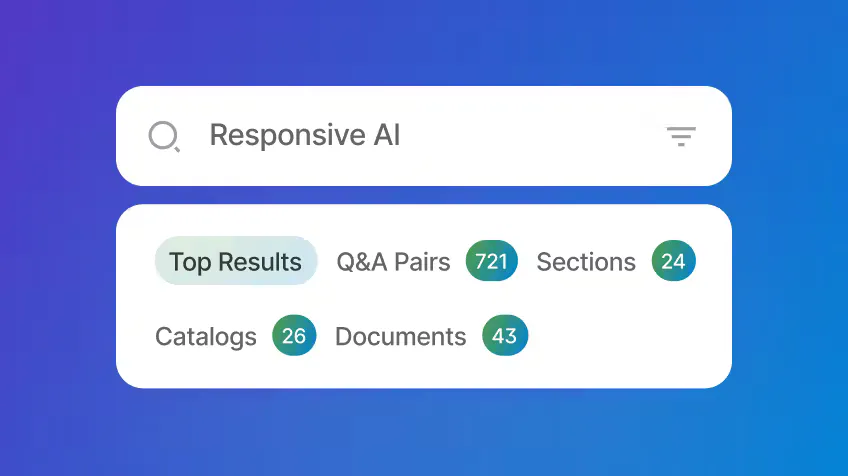
You need fast, reliable access to information right when and where you’re working. Ask and LookUp make that possible through two complementary approaches:
- Ask uses conversational AI to give you accurate, cited answers you can trust. Each answer links directly to its verified source, so you always know where the information came from.
- LookUp lets you search by keyword within the tools you already use, such as Excel, Docs, and Sheets, so you never have to leave your workflow to find what you need.
By combining these capabilities, you can find, utilize, and share institutional knowledge without introducing delays or duplicating effort. The best systems provide both conversational discovery and structured search, ensuring that every answer remains accurate, consistent, and easy to verify.
Keeps accuracy visible and measurable
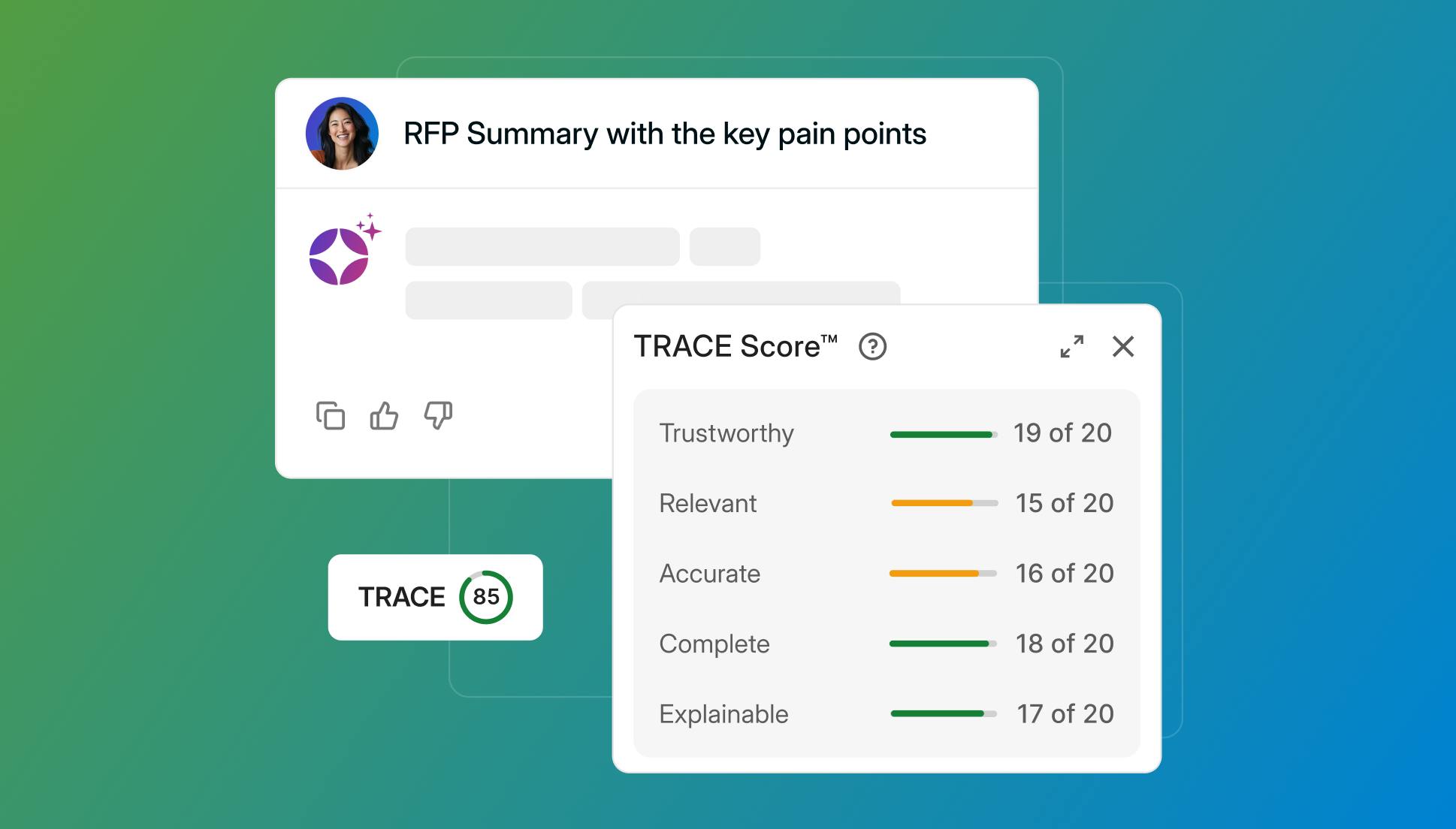
When you use AI to create content, you need complete visibility into the source of each answer and its accuracy. TRACE Score™ helps you evaluate each response for accuracy, completeness, and confidence, so you can confirm that each answer aligns with verified content before sharing.
The 2025 State of SRM Report highlights how ADP’s Commercial Operations division applied this same approach to measurable effect. By standardizing and verifying content through AI, the team reduced proposal turnaround times and increased win rates by 7%. You can achieve similar results by tracking accuracy and using those insights to make automation a dependable part of your workflow.
How to evaluate knowledge management software vendors
Governance and data security
Security and compliance should always guide your decisions when managing company knowledge that includes customer data or regulated content. You’ll want to choose a solution that meets SOC 2 and ISO standards, providing precise control over user permissions for both administrators and contributors.
By centralizing your content governance, you can ensure every shared answer meets your organization’s compliance and brand standards. This approach helps you stay audit-ready at all times, which is especially important if you work in finance, healthcare, or the public sector.
Integration with daily workflows
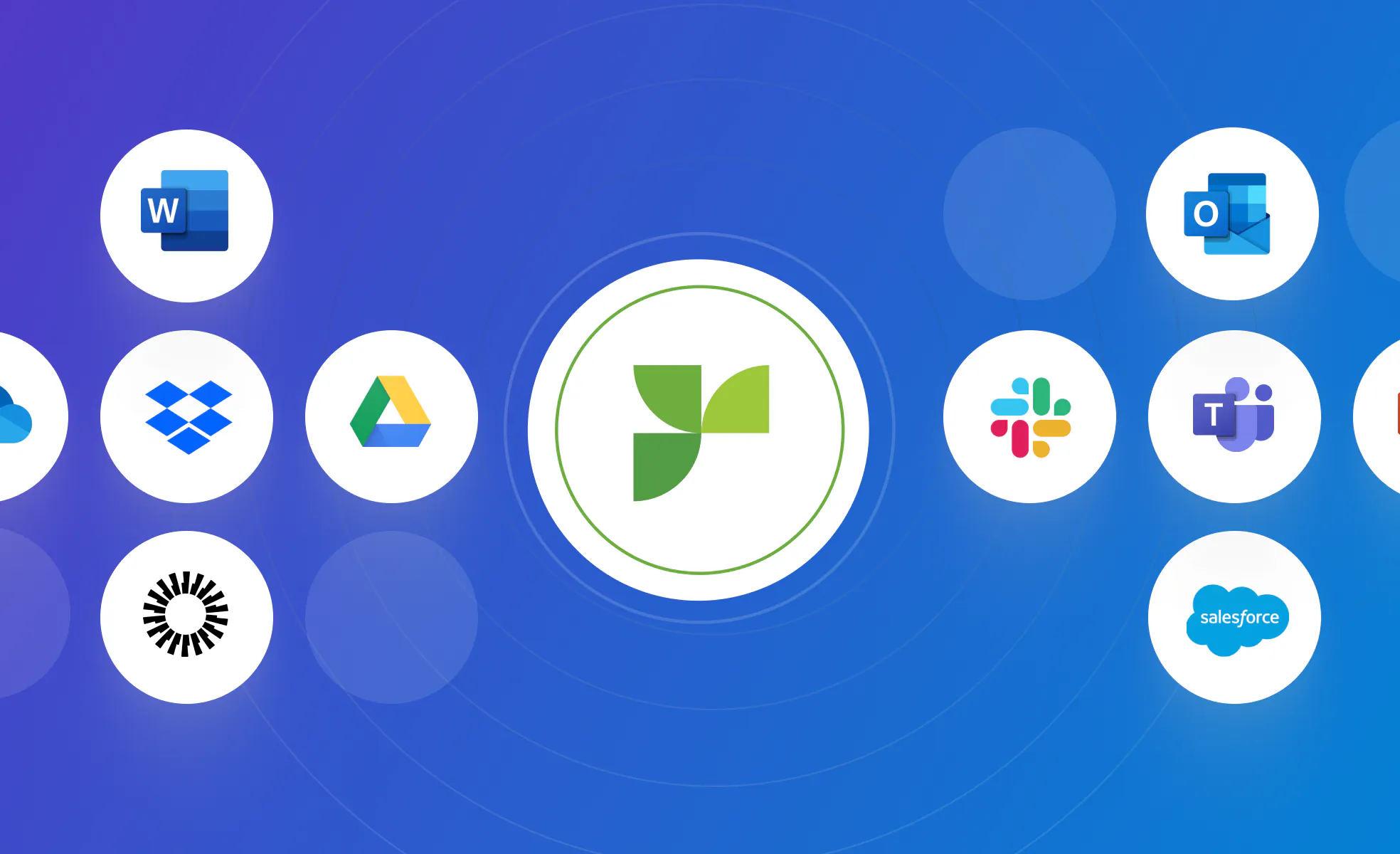
Your knowledge management software should enhance your existing workflow by seamlessly integrating with Word, Excel, Slack, Teams, and Google Workspace, allowing you to access and apply knowledge without leaving your daily tools.
You can follow Swisscom's example, which built a structured content block library and paired it with AI that understands natural language queries. As highlighted on page 38 of the 2025 State of SRM Report, this approach enables teams to speed up content retrieval, maintain compliance, and ensure consistent messaging across every response.
AI you can trust
In the Mining for Gold: Knowledge Management for the AI Era webinar, you learn that the actual value of AI comes from reliability as much as speed. To make AI work effectively for you, it should always cite its sources, measure accuracy, and rely on approved content rather than public data.
When comparing platforms, look for evidence that their AI models are trained responsibly and that you can verify every generated answer. The most dependable AI provides full transparency and traceability, connecting directly to your organization’s curated knowledge base so that you can trust every result.
Scalability and support
The right vendor gives you more than just software. You can expect access to enablement resources, onboarding programs, and an active customer community that helps you continually improve over time.
You can see the impact of this approach in how Seismic unified its sales and proposal content in one environment, which strengthened collaboration and consistency across global teams. When you choose a mature platform, it should grow with you and provide expert support at every stage of your organization’s development.
Comparing your options: key questions to ask
Does the platform ensure all knowledge comes from approved content?
Your knowledge management platform should provide a single, trusted source for company information. By centralizing content in a controlled library, you can ensure that every response comes from approved, verified material, rather than external or unvetted sources, thereby helping to maintain accurate and consistent answers across the organization.
Can AI responses be verified, cited, and scored for accuracy?
AI-generated answers should always be verifiable and transparent. The best platforms provide clear source citations and accuracy metrics that show how each response was built and how confident the system is in its result, giving your team the assurance needed to share information with trust.
How easily can non-technical users search or ask questions?
Non-technical users should be able to access information through intuitive tools, such as conversational AI or keyword-based search, that work directly within their everyday applications, like Docs, Sheets, or Excel.
This ease of use is important because it empowers every team member to quickly find accurate, approved information, reducing reliance on specialists and helping projects stay consistent and efficient.
Which integrations are included, and which are available at extra cost?
Your knowledge management platform should work where you already do. Look for integrations with tools like Microsoft Word, Excel, Teams, Google Docs, Sheets, and Slack, so your team can access trusted information without changing their workflow.
Advanced options such as CRM or API integrations available in higher-tier plans extend that value by connecting your knowledge base to the systems that power sales, service, and collaboration across your organization.
How transparent is the vendor about pricing, roadmap, and support?
A trustworthy knowledge management provider should make it easy to understand what you’re getting. Look for clear details on pricing, product tiers, and support, along with open communication about roadmap updates and onboarding resources. Transparency builds confidence and demonstrates the vendor's commitment to helping your team succeed over time.
Is there evidence of performance at enterprise scale?
When assessing knowledge management platforms, look for evidence that they can perform at scale. Case studies from large organizations, which show measurable gains in efficiency, accuracy, and cost savings, demonstrate that the platform can support complex teams and deliver consistent results across the entire enterprise.
Taking the next step with Responsive
Choosing the right knowledge management software begins with understanding what will enable your team to move faster and work with greater confidence. Responsive brings everything together in one platform, combining centralized content, trusted AI, and secure governance that naturally integrate with the tools you already use, such as Word, Excel, Slack, and Google Workspace.
When you centralize your knowledge in Responsive, you remove barriers that slow teams down by eliminating duplicate content, reducing manual effort, and ensuring every answer you share is accurate, cited, and compliant. TRACE Score™ gives you clarity on AI accuracy, while Ask and LookUp make it easy for anyone to find verified information in seconds.
With Responsive, your team can work smarter, respond faster, and stay confident in every interaction. Request a demo to see how you can turn your organization’s knowledge into a competitive advantage, and read Best practices for knowledge management for next steps on strengthening accuracy and collaboration.

Laci Texter
Content Strategist @ Responsive
Laci has more than ten years of experience creating content and GTM strategy for B2B SaaS companies which is the kind of organizations that live and die by the proposal process. At Responsive, she focuses on content that helps proposal managers, bid teams, and sales leaders understand how to respond faster, win more, and build scalable response operations. She's data-driven by nature and believes the best content answers the question the buyer is already asking.