
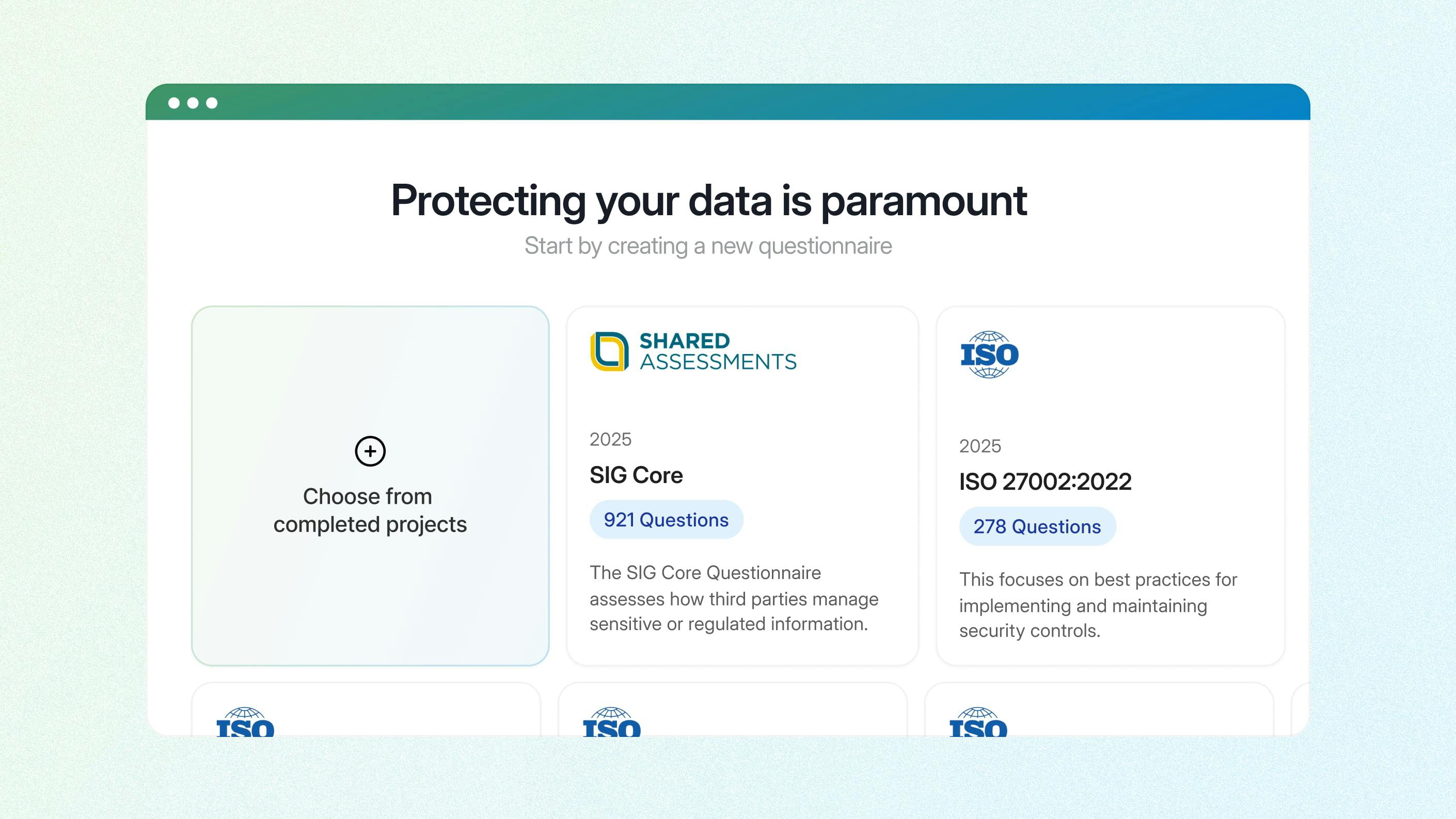
You are likely not short on content. You manage dozens or even hundreds of answers that appear across security questionnaires, RFPs, Trust Centers, and buyer follow-ups. Those answers often originate from different teams and systems, even though buyers expect them to be consistent and current every time they see them.
As response volume grows, cracks quickly begin to appear. A security detail shared in a Trust Center may not align with what appears in an RFP, and reviews slow down when ownership is unclear. In day-to-day workflows, this shows up as repeated questions, last-minute subject matter expert (SME) escalations, and mounting pressure to respond faster without increasing risk. This is a familiar tension in security response workflows, where you are expected to balance speed, accuracy, and trust at the same time.
Content governance automation brings structure to this reality without slowing you down. It makes ownership, review status, and reuse part of the response process itself, rather than something managed separately in documents or inboxes. When governance is automated, you spend less time re-validating content and more time responding with confidence.
This post is for you if you support responses at scale across proposals, sales, security, or content ownership. You will learn what content governance automation looks like in practice, where unmanaged content creates risk, and how Trust Center helps you control and share trusted content as response volume grows.
What content governance automation actually means
Content governance defines how your response content is owned, reviewed, approved, and reused across the organization. At its core, it ensures that the answers you share with buyers reflect current policy, accurate product information, and your organization’s risk posture. Governance is not a one-time effort. It is an ongoing operational practice that supports consistent responses over time.
Automation makes this possible at scale by weaving governance into everyday response work. Instead of depending on spreadsheets, inbox approvals, or individual memory, rules around ownership and review are applied naturally as content is created and shared. You gain visibility into what content can be used without adding extra steps to the response process.
With content governance automation in place, you can quickly understand:
- Who is responsible for an answer
- Whether it has been reviewed and approved
- Where it can be reused with confidence
- When it needs attention or updates
It also helps to clarify what content governance automation is not. Simply storing answers in a repository does not indicate whether they are approved or current. Generative AI can help you draft responses, but governance ensures those drafts are grounded in approved content and used appropriately.
Knowledge management frames governance as centralized, secured access to trusted content, supported by automation that controls how information is shared. When this structure is in place, governance stays practical and closely tied to real response outcomes. When it is not, gaps in ownership, accuracy, and reuse begin to surface, often in ways that are difficult to detect until they create downstream risk.
The risks of unmanaged response content
When your response content is not governed, you often reuse answers that were accurate at one point but no longer reflect current controls, certifications, or product capabilities. These gaps are easy to miss internally and usually surface only when a buyer or reviewer flags them.
In practice, unmanaged content introduces several recurring risks:
- Inconsistent answers across channels, where the same topic appears differently in RFP responses, Trust Centers, and security questionnaires
- Unclear ownership and review status, making it difficult to know who is responsible for updates or when content was last reviewed
- Longer review cycles, as SMEs are pulled in late under tight deadlines and/or in many directions at once
As questionnaire volume increases, these risks only compound. Security response workflows show how repeated requests and manual reviews amplify friction in day to day work. Unmanaged content contributes to longer sales cycles and makes it harder for you to scale response operations with true confidence.
How AI agents simplify governance
The core building blocks of content governance automation
Content governance automation works best when it is built on a few foundational capabilities rather than a long list of rules. These building blocks help you bring consistency, accountability, and confidence to response content as volume grows. Together, they create a structure that supports complexity without slowing teams down.
Centralized content with clear ownership
Content governance starts with a single place for approved answers. When you work from a shared system of record, you are less likely to copy, modify, and circulate content in isolation. Centralization makes it easier to keep responses consistent as they are reused across proposals, questionnaires, and buyer-facing materials.
Centralization alone is not enough. Each critical answer also needs a clear owner who is responsible for keeping it accurate over time. Ownership does not mean control by one team. It means accountability is visible so updates happen deliberately rather than reactively.
Once you know where approved content lives and who maintains it, the next challenge is ensuring that content is ready for reuse.
Review and approval workflows
Review and approval workflows establish when content can be shared with certainty. Instead of relying on informal sign-offs in documents or chat threads, governance automation tracks review status as part of the content lifecycle.
This structure reduces last-minute escalations. When content is already reviewed and approved, you spend less time chasing confirmations and more time responding. Review workflows also create a clear record of how decisions were made and who approved them, which becomes increasingly important as content volume grows.
As content moves through review and approval, it naturally builds history, which leads directly to version control and audit readiness.
Version control and audit readiness
Version control allows you to see how responses evolve over time. This visibility matters for internal reviews, audits, and incident response, where accuracy and timing are often scrutinized. Without version history, you are forced to recreate context after the fact.
Governance automation preserves review history and updates timelines as content changes. This supports audit readiness without adding overhead to daily response work and allows you to demonstrate reliability in your content rather than reconstruct it under pressure.
How Trust Center supports content governance automation
Trust Center extends governed content beyond internal response workflows into external sharing. Instead of operating as a separate Trust Center, Profiles are built on the same approved content you use to respond to RFPs and security questionnaires. This keeps external and internal responses aligned.
That alignment simplifies maintenance. When Profiles pull from governed content, updates happen once and carry through everywhere the content appears. You no longer need to track down and update multiple versions of the same answer across documents, portals, or shared links.
Trust Center functions as a centralized, secure, always-on source for sharing security, compliance, and governance information. It is designed to extend governance outward, not duplicate it, keeping review and approval processes consistent across internal and external responses.
As a result, you can:
- Share trusted content externally without duplicating review work
- Keep responses consistent across RFPs, questionnaires, and buyer-facing materials
- Reduce review cycles while increasing buyer confidence
With this foundation in place, you can be more intentional about how content is packaged and shared for different audiences.

Using Profiles to control what gets shared and when
Profiles also give you a flexible way to share the right information with the right audience. Instead of creating new documents for every request, you can package approved content into Profiles that support specific needs, such as sales conversations, security reviews, or compliance disclosures.
Access controls make this approach safe and scalable. You can decide exactly who sees what based on context, which reduces risk while still enabling proactive sharing. Profiles can be configured by:
- Audience, such as prospects, customers, or partners
- Purpose, including security posture, compliance documentation, or product information
- Timing, so content is shared at the appropriate stage in the sales cycle
Because Profiles pull from governed content, updates are reflected automatically wherever that content appears. This removes the need to refresh multiple external assets and reduces the chance that outdated information circulates outside your organization.
Profiles work best as living extensions of managed content. When they stay connected to governed answers, you maintain control without slowing response workflows.
How to start applying content governance automation in Responsive
Step one: Focus on high-impact content first
Begin with content that carries the most risk or appears most often in your responses. Security, legal, and compliance answers are strong starting points because they are reused across teams and closely examined by buyers.
Starting here helps you see value quickly without trying to govern everything at once. Once these answers are trusted, expanding governance becomes much easier.
Step two: Define ownership and review cadence
With high-impact content identified, clarify who owns it. Ownership does not require centralizing all work on one team. Each content area simply needs a clearly defined owner who understands review expectations.
Review cadence should reflect risk and rate of change. Some answers need regular attention, while others remain stable longer. Governance works best when review timelines match real usage.
Step three: Tie governance into response workflows
The final step is connecting governed content to everyday response work. Approved content should power answers in projects and Profiles so you can reuse it with confidence.
When governance is built into response workflows, duplicate reviews decrease and you spend less time re-validating content. Trust Center guidance reinforces the value of sharing governed content earlier in the response lifecycle to reduce effort and improve speed.
How content governance automation supports faster responses
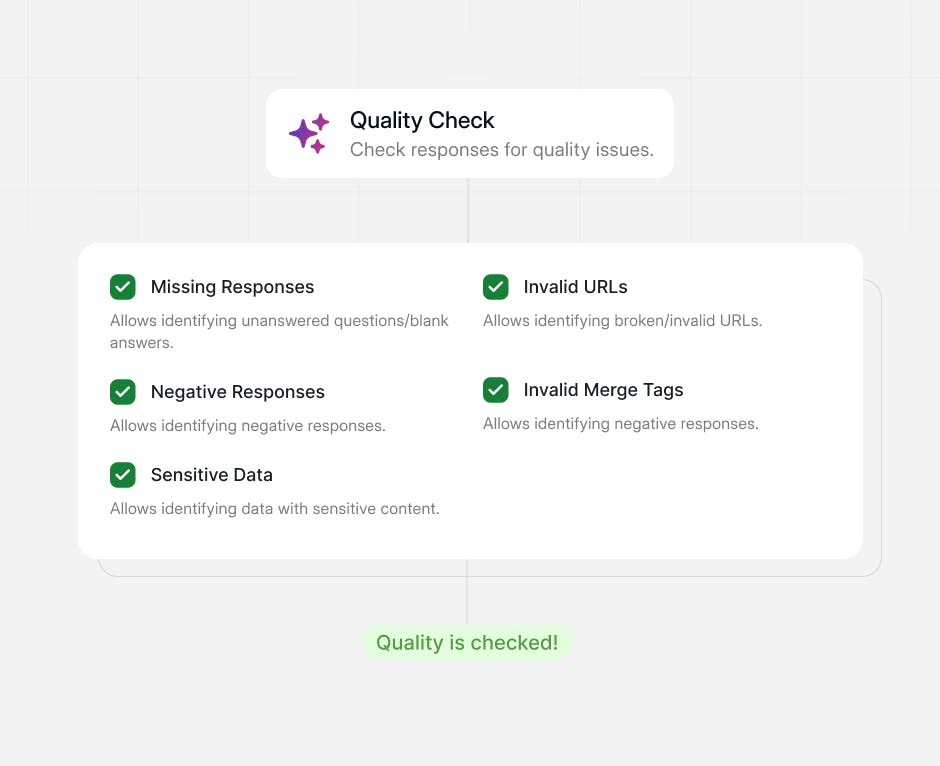
Speed breaks down when you don’t trust your content. Governance automation removes that friction by ensuring responses are already reviewed, owned, and approved before deadlines hit. Instead of pulling SMEs into last minute validation, you can respond knowing your content is current and accurate.
This changes how work moves through the response process. With governed content in place, you gain:
- Fewer last minute SME escalations
- Clear visibility into which answers are ready for reuse
- Less time spent rechecking content that has already been reviewed
Self-service access to governed content builds on this framework. When sales, proposal, and security teams can confidently find and reference approved answers, they respond earlier in the buying process and avoid delays caused by handoffs.
Proactive sharing extends these gains beyond internal workflows. When you share governed security and compliance content earlier, you reduce inbound follow-up questions and repeated questionnaires. This pattern shows up clearly in real security response workflows, where proactive sharing shortens turnaround time and reduces repeated requests.
Taken together, these changes allow governed content to move cleanly through projects, Profiles, and buyer interactions. You respond faster not by cutting corners, but because trust, ownership, and reuse are already built into your workflow.
Governance that keeps up with your response strategy
Content governance automation allows you to move faster without sacrificing trust. When ownership, review, and reuse are built into how response content is managed, structure becomes part of your workflow rather than an added layer of process.
That outcome depends on more than tooling alone. Automation works best when it reinforces clear ownership and shared accountability across teams. Tools provide the framework, but consistent responsibility and review habits keep content accurate as response volume grows.
Teams that see the strongest results tend to start small. By focusing on high-impact content and embedding governance directly into response workflows, you build confidence early and expand from there. Over time, governance shifts from a perceived constraint into an operational advantage that supports scale, faster responses, and stronger buyer trust.
Profiles build on this foundation by making it easier to share governed content proactively as response volume increases. By extending approved content into buyer-facing interactions without creating parallel systems or extra review cycles, Trust Center supports trusted, controlled sharing as you grow.
Next steps
If you’re just getting started, focus on progress over perfection:
- Identify a small set of high impact responses that appear frequently or carry higher risk
- Assign clear ownership and realistic review cadence
- Ensure governed content powers both response projects and Profiles
From there, expand governance gradually as trust builds. When governance is embedded into daily response work, speed and consistency follow naturally.
Ready to wade deeper? These Responsive articles build naturally on the themes of governance, trust, and scalable response workflows:
- Introducing TRACE Score™: A useful next read for understanding how trust, citations, and content accountability are measured in practice. TRACE Score connects directly to governance by showing how approved content supports confidence in AI-assisted responses.
- What is Strategic Response Management?: This post provides broader context on how governance fits into the full response lifecycle, including RFPs, security questionnaires, and buyer interactions. It helps frame content governance automation as part of a larger operational strategy.
- Knowledge management best practices: This piece outlines practical approaches for organizing, maintaining, and reusing response content as teams scale. You’ll find foundational guidance that supports content governance automation by helping teams keep answers accurate, discoverable, and ready for reuse across response workflows.
Together, these reads provide deeper context on how trusted content is created, governed, and shared as response volume grows.