Starting in 2027, FedRAMP certification becomes something you maintain at all times. Two deadlines make that official. If you’re a cloud service provider (CSP) preparing for FedRAMP 20x, mark these dates on your calendar:
January 1, 2027: The Consolidated Rules for 2026 become mandatory for all new FedRAMP certifications, including Rev5. Existing Rev5 certifications begin transitioning to the new rules on January 1, with additional requirements phasing in through August 2027 and grace periods extending into 2028.
June 11, 2027: FedRAMP stops accepting new Rev5 applications. Existing Rev5 certifications stay active until at least December 31, 2028, but after this date, 20x is the path forward for new certifications.
For more information, see FedRAMP’s official timeline and ruleset-specific deadlines.
The main shift behind these dates: compliance is becoming continuous. CSPs will need to maintain and demonstrate their security posture all the time, in contrast to gathering evidence for periodic assessments.
What FedRAMP 20x changes mean for your day-to-day
FedRAMP opened its 20x certification pipelines in July 2026, allowing CSPs to begin pursuing certification under the new model, but there’s still time to understand the changes and act.
Keep these elements top of mind:
- CSPs must keep the security, compliance, assessment, and service information behind their certification accurate and up to date.
- The Security Decision Record and Certification Package Overview replace the System Security Plan (SSP). The SDR is a continuously maintained record of how your offering meets each applicable rule and why you made the security decisions you did.
- CSPs must submit an Ongoing Certification Report (OCR) every three months. This regular update to FedRAMP and agencies covers changes to Certification Data, planned changes, accepted vulnerabilities, and reportable incidents.
- Many required certification records and data must be available in both human-readable and machine-readable formats, with JSON schemas specified for applicable data.
- 20x Class B and Class C offerings must complete an independent assessment, covering all Key Security Indicators, at least once a year. Class A offerings follow the assessment requirements of their underlying security framework.
Some milestones begin even before 2027. For example, new vulnerability rules are taking effect December 7, 2026. Every offering that holds or is pursuing FedRAMP certification must follow the new Vulnerability Detection and Response rules. A grace period runs through March 7, 2027. After that, offerings that don’t comply risk losing certification.
Why Certification Data is the hard part
The new rules are clear about what CSPs need to deliver. The harder question is whether your organization can keep the data behind those deliverables accurate, current, and ready to share at any moment.
That’s difficult for three reasons. First, many teams own the data: security, engineering, compliance, and assessors each hold a piece, so one unrecorded change can put your records out of date. Second, an OCR is due every three months, and if your data hasn’t been kept current, the report will show it. Third, key records must be machine-readable, which Word docs and spreadsheets can’t manage on their own.
Bottom line: Your certification is only as good as your data, so keep it current and in one place.
Making sense of FedRAMP changes
The transition is already underway, so let’s take a closer look at the January and June milestones.
January 1, 2027: Mandatory adoption
The Consolidated Rules for 2026 reach a major mandatory-adoption milestone. For new 20x certifications, applicable rules have been required since July 2026. Existing providers must follow the adoption deadlines established for their certification type and individual rulesets.
Deadlines and grace periods vary by ruleset, so check the ones that apply to your certification. If you haven’t adopted a required ruleset by its deadline, you may need a corrective action plan showing how you’ll complete the transition.
June 11, 2027: End of new Rev5 certifications
On June 11, 2027, FedRAMP stops accepting new Rev5 applications. Existing Rev5 certifications don’t expire on this date. If you’re pursuing Rev5, plan backward from June 11 with your sponsor and assessor.
5 steps to prepare for FedRAMP 20x milestones
Step 1. Confirm your FedRAMP path
Start by confirming which path you’re on and the requirements that apply. If you’re new to FedRAMP, determine which 20x certification class aligns with your intended federal use cases.
Should you still pursue Rev5 before June 11? FedRAMP’s guidance is that agencies should generally encourage CSPs to pursue 20x rather than start new sponsored Rev5 efforts, and that Rev5 providers should transition “as quickly as possible.” If you’re already well into a sponsored Rev5 effort, assess whether you can meet the submission deadline and the requirements taking effect before then.
The silver lining for new entrants: You can build around the new model from day one, without undoing years of legacy processes.
If you’re already FedRAMP certified, start with a gap analysis. Map your existing certification against the Consolidated Rules to identify which requirements you already meet, which processes need updating, and which transition deadlines apply.
Step 2. Know what Certification Data you’ll need, and where it lives
Once you know your path, take inventory of your data.
Under the new rules, Certification Data is the full set of information you maintain to prove your offering meets FedRAMP requirements. Depending on your certification, it can include:
- Certification Package Overview: a summary of your cloud service offering and its certification
- Security Decision Record (SDR): how you meet each applicable rule, and the security decisions behind it
- Key Security Indicators (20x only): the measures that show how you achieve key security outcomes
- Assessment information: results from your independent assessments
- Ongoing certification information: your quarterly OCRs, plus vulnerability, incident, availability, and change information
Most of this information already exists somewhere in your organization. The challenge is that it’s spread across teams and tools, and it changes as your service changes.
For each required data element, write down four things:
- Source: where the information lives today
- Owner: who is responsible for keeping it accurate
- Update frequency: how often it changes, or needs to be reviewed
- Staleness signal: how you’ll know when it’s out of date
This inventory becomes your map for Step 3. It shows where the information comes from, who maintains it, and where gaps are most likely.
Step 3. Identify the manual and fragmented parts of your process
Next, examine how your teams collect, update, and validate that information.
If your compliance team has to spend weeks tracking down information every time you need to demonstrate compliance, that won’t work going forward. Having this in a trust center is a requirement.
Look for the handoffs that still depend on email, spreadsheets, static documents, or one person knowing where something lives. Identify where teams repeatedly have to request the same information, manually verify whether it’s current, or reconcile different versions.
Prioritize the gaps that create the greatest risk of outdated, incomplete, or difficult-to-access information.
Step 4. Choose how you’ll maintain and share Certification Data
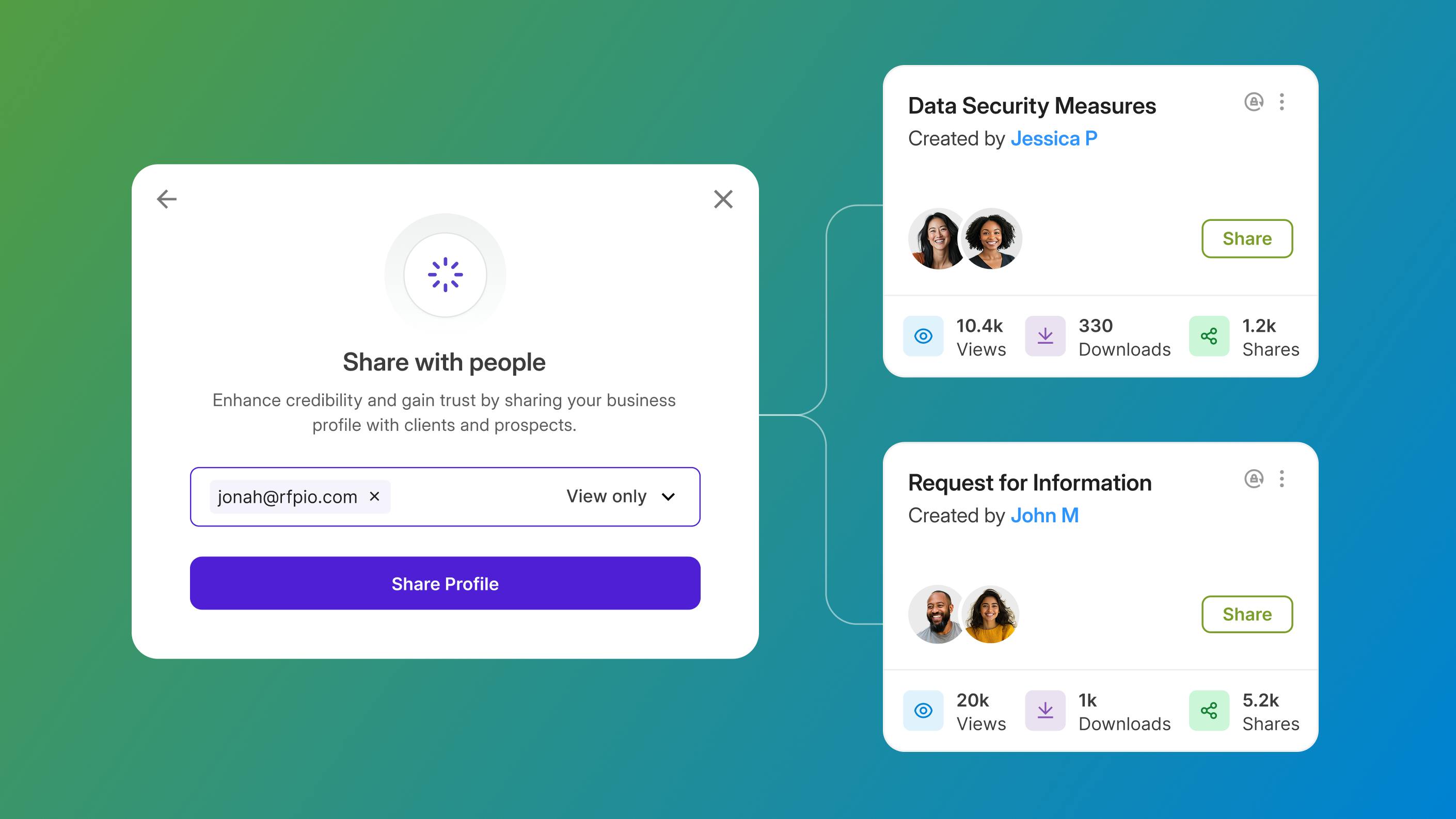
FedRAMP requires providers to use a FedRAMP-compatible trust center to store and share Certification Data with FedRAMP, agencies, and other necessary parties. A compatible trust center must share that data without interruption and give programmatic access to all of it, including human-readable materials.
You can build your own FedRAMP-compatible trust center or use a third-party solution. Either way, confirm that it meets FedRAMP’s requirements for data maintenance, access controls, and sharing for your certification.
Most CSPs also sell to commercial buyers, who expect the same security information through a different channel. A solution such as Responsive’s Trust Center can centralize that information. Keeping your security information in one place makes it easier to keep what you share with each audience consistent.
Step 5. Build an ongoing certification rhythm
Finally, make certification maintenance part of your normal operations.
Establish processes for reviewing service changes, determining their certification impact, updating required information, and validating its accuracy. Make sure your underlying data is ready before each quarterly OCR is due.
The more you can make certification maintenance part of your normal operating processes, the less likely compliance is to turn into a quarterly fire drill.
Preparation for 2027 starts now
The most important step is to establish which requirements and deadlines apply to your organization. From there, you can identify gaps, prioritize changes, and put the right processes and infrastructure in place.
Whether you’re pursuing your first certification or maintaining an existing one, the goal is the same: make compliance part of how you operate, not something you scramble to demonstrate when an assessment arrives.
Start with your certification path, your data, and your highest-priority gaps. That’s how you build a more sustainable approach to FedRAMP compliance in 2027 and beyond.

Andrew Martin
Content Marketing Manager @ Responsive
Andrew Martin covers AI adoption, RFP strategy, and proposal management at Responsive, drawing on insights from Responsive's 2,000+ enterprise customer base and original research.