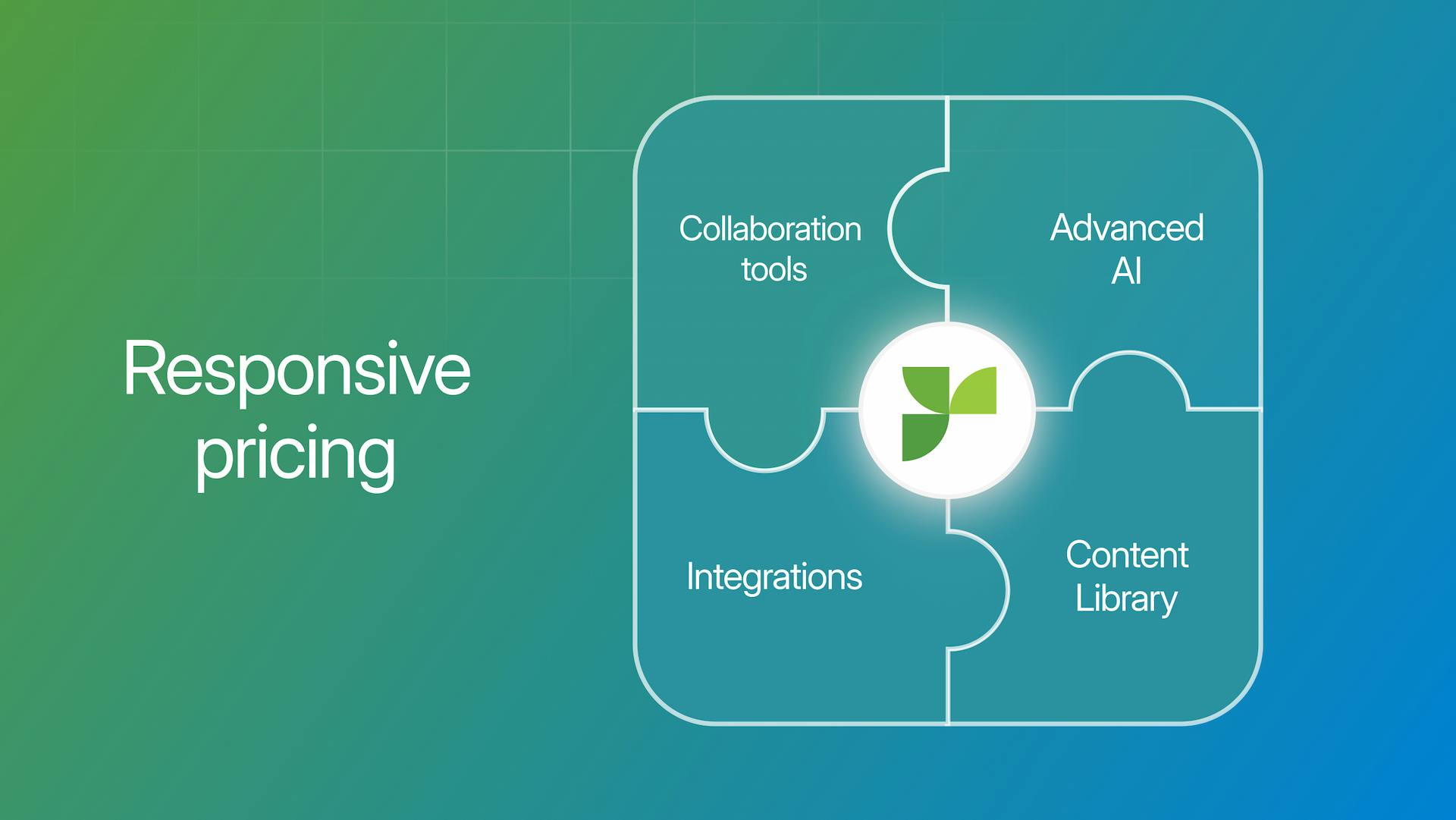
When evaluating RFP response software, cost is often a critical factor in decision-making. Understanding how our pricing compares to competitors requires looking beyond simple dollar amounts to consider the value proposition, feature depth, and potential return on investment.
What is Responsive’s pricing?
We operate on a custom pricing model – this approach allows us to tailor solutions to each organization's specific needs and ensures that enterprise clients receive appropriate support levels.
Our pricing reflects the comprehensive feature set and market position we've established. We serve 20% of the Fortune 500 companies, including Microsoft, Adobe, and Google. These organizations have reported impressive returns on investment—Microsoft's proposal team documented a $746 return for every dollar invested in our platform.
Organizations evaluating our platform should consider their RFP volume and complexity needs when assessing our pricing structure.
Feature depth and value proposition

We provide extensive capabilities, including AI-powered answer recommendations, advanced content management, robust integrations with major business systems, and sophisticated workflow automation. Our AI capabilities encompass multiple specialized agents for tasks such as document import, answer generation, and content scoring.
Consider a hypothetical technology company responding to 50 RFPs per month: our AI might reduce response time from 40 hours per RFP to 15 hours, potentially saving 1,250 hours per month. At an average hourly rate of $75 for proposal professionals, this represents a monthly labor savings of $93,750.
Alternative platforms focus on core functionality—template management, basic content libraries, and simple collaboration tools—without the advanced AI and automation features we provide. For a small consulting firm handling 5-10 RFPs per month, these solutions may provide sufficient capability at a lower investment. Organizations must evaluate whether our advanced features align with their specific needs and volume requirements. (See how proposal software products compare)
Understanding total RFP process costs
How much does the RFP process cost?
The cost of the RFP process varies significantly depending on the chosen software solution and the organization's specific needs. For RFP response software, costs range from budget-friendly options like Proposify and Better Proposals at $500-2,000 per month for small to mid-sized teams, to comprehensive solutions like ours with custom annual pricing for mid-market companies. Beyond subscription fees, organizations must consider the total cost of ownership, including implementation costs, training expenses, time required for content migration, and ongoing support services. (Learn more about RFP process metrics and costs)
Implementation investment considerations
Beyond the subscription fees, organizations should consider the total investment when evaluating RFP solutions. Our platform's comprehensive capabilities require thoughtful onboarding and training to maximize value. We recommend budgeting for professional services, which may incur a moderate cost in the first year, as well as ongoing training to accommodate team member changes or platform updates.
Content migration represents another consideration. Moving existing RFP content into our library system requires careful attention, especially for organizations with extensive historical responses. We provide import tools and AI assistance to streamline this process, though human oversight ensures accuracy and proper categorization. While simpler platforms might offer quicker initial setup, they often lack the sophisticated content management capabilities that make our platform valuable for high-volume operations.
Value realization and investment analysis
The question of whether our pricing makes sense ultimately depends on an organization's RFP volume and complexity. High-volume responders often find the investment highly worthwhile.
Consider a software company pursuing enterprise deals with average contract values of $500,000. If our platform helps them win just two additional deals annually through faster, higher-quality responses, the return on investment becomes substantial. The efficiency gains from our AI and automation features become increasingly valuable as response volume increases. (See data-driven strategies for increasing RFP win rate)
Competitive landscape considerations
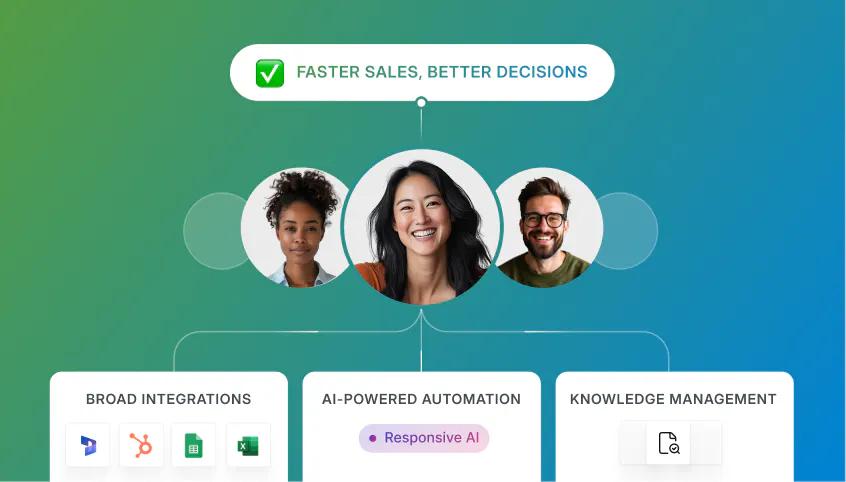
When comparing our pricing to competitors, organizations should consider their specific use cases and growth trajectories. We excel in supporting enterprise teams that manage hundreds of complex responses annually, where our sophisticated features provide substantial value. The key is matching any solution's capabilities and investment level to your organization's actual needs and ensuring you can fully utilize the features you're investing in.
Responding to RFPs can be an expensive undertaking, so evaluating software on both price and feature set is essential to drive long-term ROI. (Read about RFP automation, cost, and efficiency)

Andrew Martin
Content Marketing Manager @ Responsive
Andrew Martin covers AI adoption, RFP strategy, and proposal management at Responsive, drawing on insights from Responsive's 2,000+ enterprise customer base and original research.