Every proposal manager knows the feeling. An RFP comes in, everyone on the team is aligned, and while deadlines are tight, everything feels manageable. Then the security questionnaire arrives, and suddenly that same smooth process starts to wobble.
Answers live all over the place. Someone from InfoSec needs to weigh in. Legal has an entirely different version of the document. Sales wants an update. Oh, and the buyer needs it tomorrow. What once looked and ran like a well-oiled machine now feels like an engine sputtering to a complete stop.
Marcea Say, Responsive Academy Customer Education Specialist, called this feeling “the modern trust bottleneck” in Responsive Academy’s latest Coffee Chat. It’s the pileup that happens when repeated security questionnaires come in at volume, multiple teams need to collaborate, but there’s not a single, easy way to get buyers the right answers, especially when deadlines are tight.
However, security reviews don’t have to be a bottleneck. When handled well, security questionnaires can become part of what helps deals move forward. Here’s how.
Why do security reviews slow down strong response processes?
Proposal teams are used to managing complexity. That’s not the problem. The real problem starts when strong proposal workflows run headfirst into scattered trust workflows.
A team may have a clean process for RFPs, RFIs, and formal reviews, only to hit friction the minute security questions require input from new SMEs (subject matter experts). Suddenly, the process depends on finding the right people, locating the right document, confirming whether the answer is still current, and redoing work that has already been done a hundred times.
That’s what makes security reviews so draining. They’re not usually hard because the answers do not exist. Security reviews are hard because the answers are all over the place.
And in today’s pressurized buying environment, that fragmentation can deal a more critical blow. Buyers need faster responses, more proof, and less back-and-forth. They are asking more than just whether your company is secure. Buyers are asking whether your team can make trust easy to verify. When the answer process is slow, inconsistent, or overly manual, it creates drag that buyers can feel, even if they never see the mess behind the curtain.
Marcea put it well during the session: the goal is to stop being reactive and start being proactive, so that trust becomes a revenue accelerator rather than a delay.
Build trust before the questionnaire even arrives
Trust centers are often easy to underestimate. They can be mistaken for just a polished destination page or treated as a substitute for the broader security process, when their real value is much more practical.
In the Coffee Chat, Chris McKillop, Director, Product Sales Specialist, framed Responsive’s Trust Center as a practical way to build trust, save time, and accelerate sales cycles.
Trust centers build trust (it’s in the name)
Buyers, auditors, and risk teams are trying to answer a basic question: can we trust this company enough to move forward? A proactive trust workflow gives them validated information earlier, in a format they can self-serve and actually use.
Instead of waiting for the questionnaire to trigger the scramble, teams can make core security, privacy, and compliance information easier to access from the start. Trust Center is a way to proactively share up-to-date security posture and documentation because trust works better when it is visible, not buried.
Trust centers save time
Reducing redundant questionnaires is one of the clearest instances of the operational value. Many repetitive questions can be answered through a governed, independently accessible source of truth, reducing manual rework.
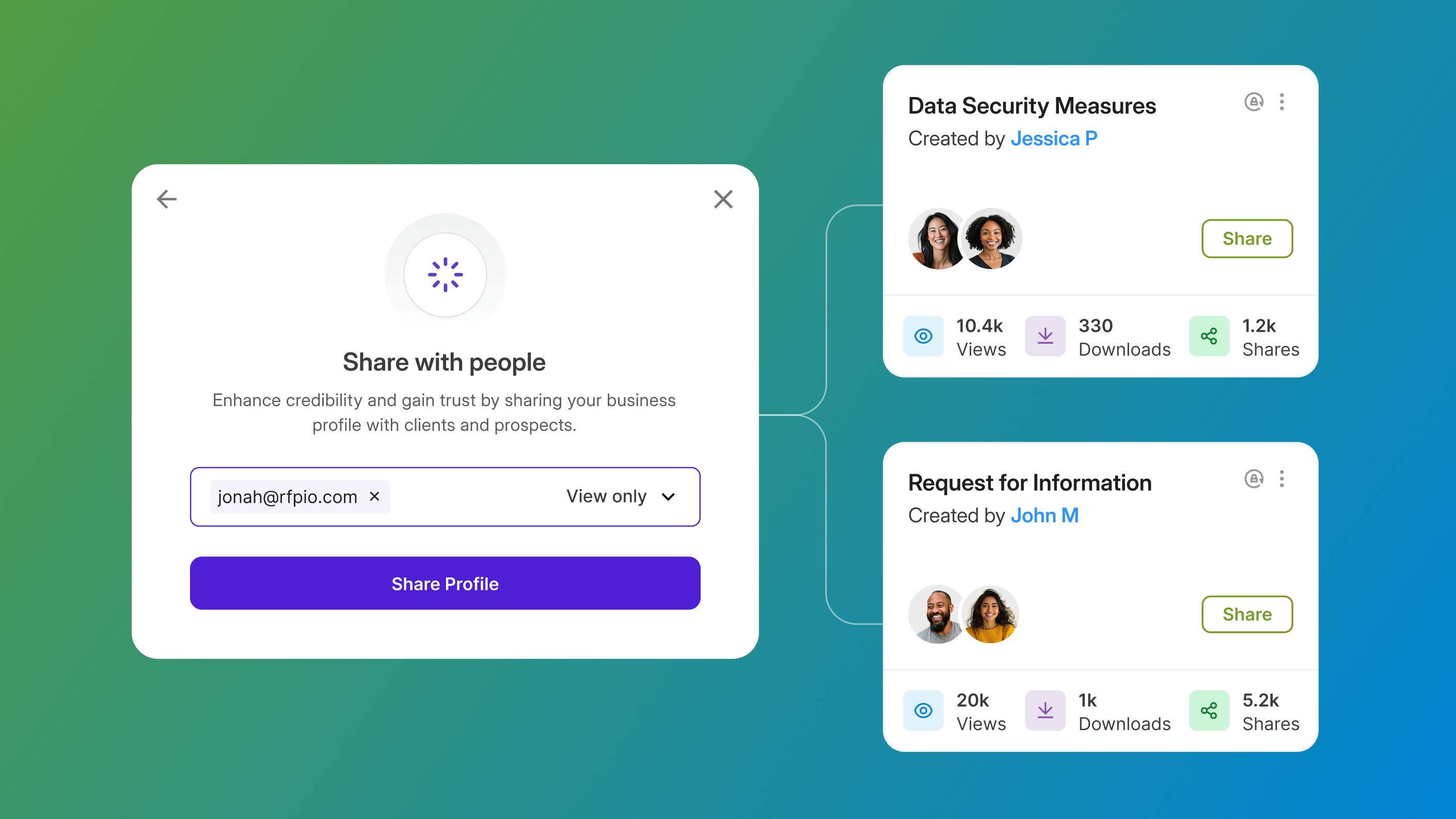
Features like audience-specific views, access controls, and NDA workflows in the Responsive Trust Center support that balance between transparency and control.
Trust centers accelerate sales cycles
Trust centers enable buyers to access the information they need without waiting for a long chain of internal handoffs. As a result, security review starts to feel less like a separate obstacle and more like a natural part of evaluation. Your goal is to make trust easier, not invisible.
What you gain when security becomes proactive, not reactive
Proposal managers and bid and proposal teams may not own security, but they often live with the consequences of an inefficient security review process. When trust becomes more proactive, the gains show up quickly.
- Fewer repeat requests land in active project workflows.
- SMEs spend less time answering the same questions.
- Sales gets faster follow-up.
In the end, response teams get more confidence that the answers being shared are current, approved, and grounded in the same trusted knowledge base that powers the rest of the response process. There is also a subtler benefit: visibility.
Responsive’s Trust Center can show who is engaging with trust content, what they are reviewing, and when they are doing so. Proposal managers are often asked to help move deals forward, but they may not always be able to see where buyers get stuck. Better engagement insight makes trust work feel less like a black box.
And, most importantly, visibility changes the role that proposal teams can play. They don’t need to become security experts. Instead, they can help their organizations build better response infrastructure: cleaner content, stronger governance, and a more repeatable way to deliver trust when buyers need it.
The new opportunity with security reviews
Security reviews are not going away. If anything, they are becoming more frequent, more detailed, and more influential earlier in the sales process. Proposal managers and security teams now have an opportunity to help shape a better system by centralizing the process on a platform like Responsive Trust Center, which offers complete visibility at every step.
The modern trust bottleneck is real, but so too is the opportunity on the other side. When teams build trust, save time, and make security information easier to access, questionnaires become faster to answer, helping the teams behind the deals move forward with more confidence.

Andrew Martin
Content Marketing Manager @ Responsive
Andrew Martin covers AI adoption, RFP strategy, and proposal management at Responsive, drawing on insights from Responsive's 2,000+ enterprise customer base and original research.