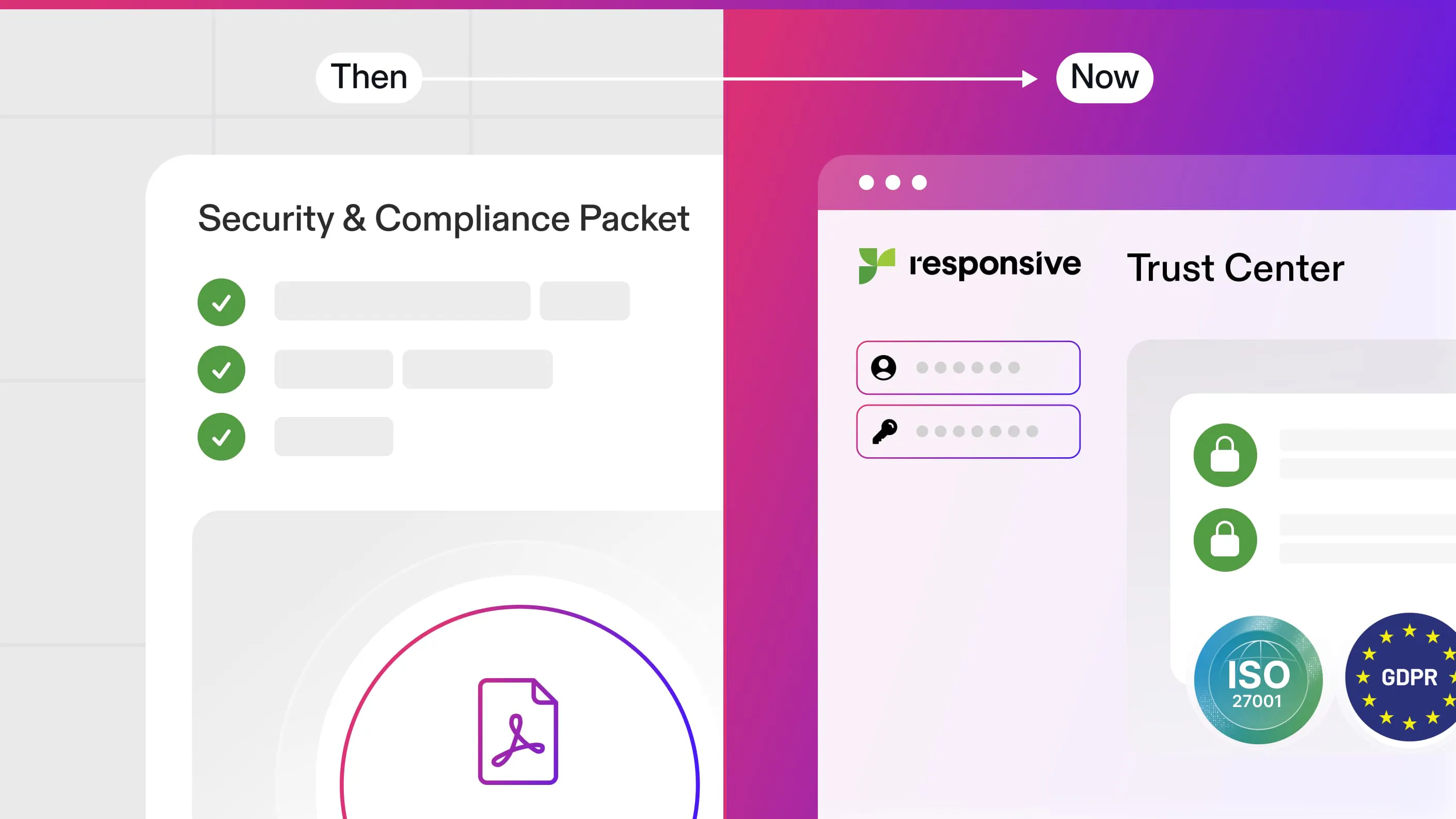
Most InfoSec and compliance teams still measure their workload by the number of questionnaires in the queue. By the time a formal security review lands in your inbox, the buyer has often already made up their mind about whether your organization looks like a safe bet.
That's the uncomfortable truth in Responsive's report, Inside the Buyer's Mind: What Shapes B2B Decisions Today, based on a survey of 350 B2B buyers. According to the survey, 90% of buyers conduct research on a vendor before ever making first contact.
More than half describe that research as "a lot" or "extensive", including financial reviews, competitor comparisons, and case studies. 61% say they start the buying process with a preferred vendor already in mind.
In other words, buyers are quietly building (or losing) confidence in your organization while your security team is still waiting for the RFP to arrive.
For a long time, trust programs were built to answer that RFP: a security packet assembled at the eleventh hour, a SOC 2 report emailed on request, a spreadsheet of prior questionnaire answers hastily edited and reused.
This model treats trust as a late-stage procurement checkpoint. But Responsive’s data suggests late-stage procurement needs to evolve into an early-stage buyer-confidence engine.
What does a mature trust program actually include?

A mature trust program isn't a folder of PDFs. It's an organized, governed system that gives prospects an early and accurate view of an organization's full risk profile. At minimum, this governance system includes:
- Security documentation: Architecture diagrams, penetration testing summaries, and security best practices
- Compliance certifications: SOC 2, ISO 27001, ISO 42001, GDPR, and HIPAA attestations, kept current
- Privacy practices: Data retention policies, subprocessor lists, and privacy policies
- AI governance information: How models are used, what data they touch, and what oversight exists
- Customer-facing FAQs and self-attested responses to standard frameworks like SIG, SIG Lite, and CAIQ
- Incident disclosures: A clear, current channel for communicating breaches or vulnerabilities
- NDA-gated content for sensitive material, with defined ownership, review cadence, and approval workflows
The purpose has shifted from just having these assets to having clear ownership of who maintains each one, how often it's reviewed, and who can approve what gets shared externally. Without that governance layer, even a well-stocked trust program degrades into the same scattered mess it was meant to replace.
Why are static security packets no longer enough?
The old model of a PDF security packet, a buried SOC 2 report, or an ad hoc reply from a spreadsheet breaks down for a few reasons.
- It's not current: By the time a document reaches a buyer, it may already be a version or two behind.
- It's not accessible: Buyers have to ask, wait, and often ask again for the same information a different way.
- It's not governed: Multiple people may be sending slightly different answers to the same question, with no single source of truth to check against. And it's not measurable: there's no way to know whether the material you shared actually built confidence or just checked a box.
- It's not measurable: There's no way to know whether the material you shared actually built confidence, moved the deal forward, or just checked a box.
A mature program needs to be current, accessible, governed, and measurable. In other words, modern solutions need to be the opposite of a static packet.
Plus, buyers are increasingly researching vendors using generative AI tools. Nearly two-thirds use GenAI as much as traditional search, which means the stakes for “static and buried” get higher. If your trust content is gated, unclear, or blocked from being crawled, GenAI tools can't surface it, and buyers may never see it at all.
How does trust content shape buyer confidence?
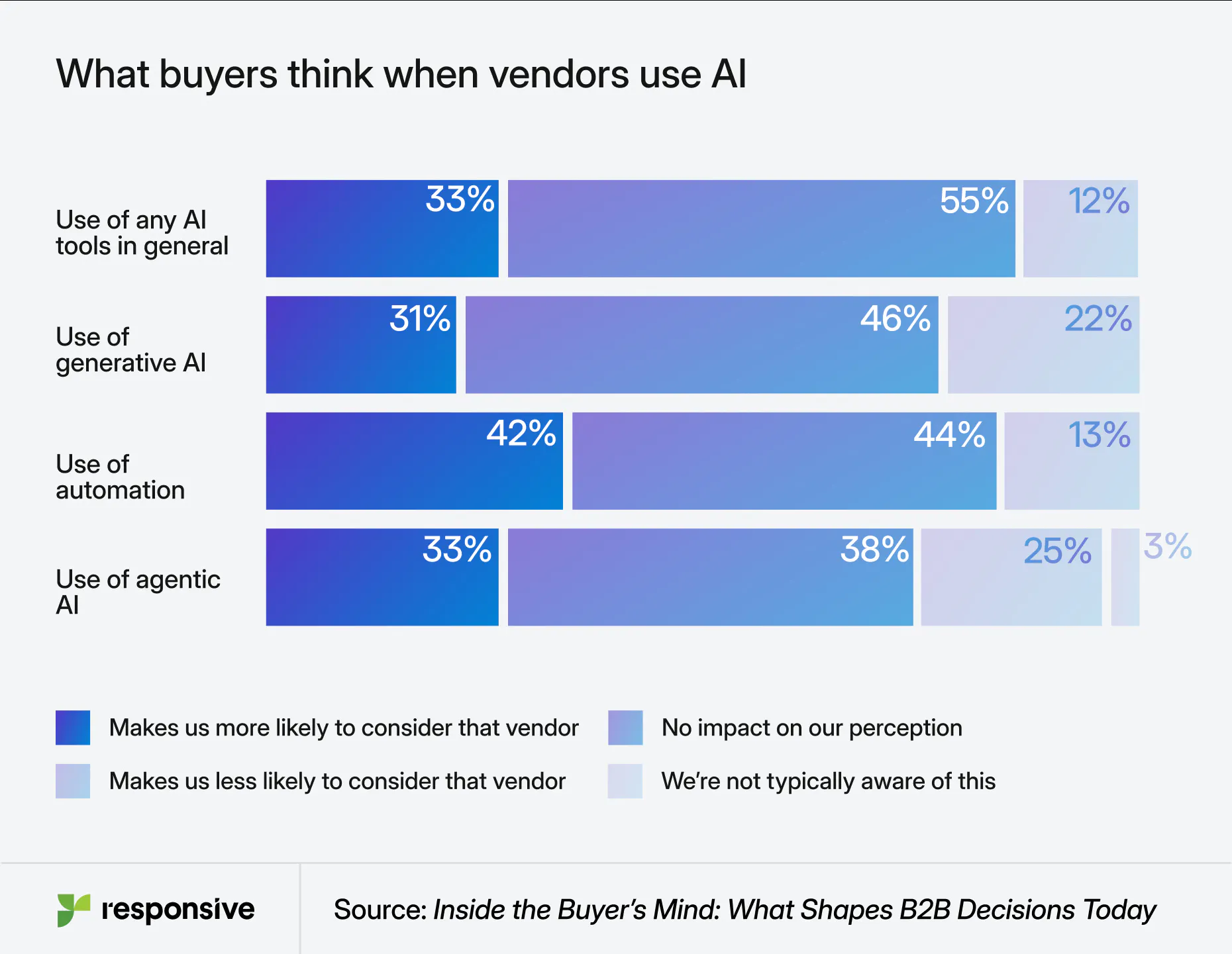
The connection between trust visibility and buying behavior isn't theoretical. Most buyers are actively running their own reviews long before you ever engage with them. According to the Inside the Buyer's Mind report, that scrutiny only deepens when the product they're evaluating is AI itself. Beyond a standard security review:
- 49% of buyers run AI-model-specific assessments.
- 45% evaluate a vendor's fairness and explainability.
- 41% test the vendor against their own internal ethics standards.
That's a lot of judgment being formed with or without your input, which is exactly why vendors shouldn't wait for buyers to request documentation. You can get ahead of these early judgments by sharing a security profile or trust center early in the process, ideally publicly accessible, self-serve, and searchable, so buyers can explore security, compliance, and AI governance materials at their own pace.
Early visibility does three things for buyer confidence:
- It reduces the friction of internal stakeholder alignment. Procurement, legal, and security reviewers on the buying side can pull answers from a central location, rather than chasing them separately.
- It reduces perceived risk before a relationship even starts. A vendor that proactively shows its posture signals operational maturity.
- It keeps deals moving. Buyers aren't stalled waiting on a response that a well-organized trust program could have already answered
The commercial upside shows up in the numbers, too. Organizations using Responsive's Trust Center have:
- Automated 71% of inbound security questionnaires
- Cut questionnaire-related turnaround time by 1.3 days
- Reduced the volume of follow-up questions from existing customers by roughly 35%
One customer using the platform to manage a security and compliance profile cut average response time to information security requests in half.
“Creating a Security and Compliance Profile on Responsive to securely store and share our SOC 2 Type II report, architectural diagrams, and security policies has made a HUGE difference for our organization. After implementing the Trust Center, my average response time for information security requests from prospects and clients went from an average of 8 business days to an average of 4 business days.”
Information Security Questionnaires Analyst
Internet Software & Services Company
What does maturity look like in practice?
Trust programs tend to evolve through five recognizable stages:
- Reactive: Security information exists, but it's scattered across folders, inboxes, and SME memory. Every questionnaire starts from scratch, and response time depends entirely on who's available that week.
- Organized: Documentation is consolidated into a single source of truth, with defined owners and a review cadence, but sharing it still requires a manual request-and-response cycle.
- Self-service: Buyers, auditors, and partners can access approved, governed content directly through a public or gated trust profile, without waiting on a person to respond.
- Intelligent: AI-assisted tools help buyers get specific answers on demand (with sources cited) and help internal teams self-attest to standard questionnaires, such as SIG or CAIQ, in minutes.
- Strategic: Trust content and engagement data connect directly to revenue systems. Security and compliance teams can show measurable impact on deal velocity and win rates, not just questionnaire volume.
The gap between "organized" and "self-service" is usually the biggest jump, and it’s the jump that determines whether InfoSec keeps getting pulled into every deal for the same standard questions.
How does Responsive Trust Center support mature trust programs?
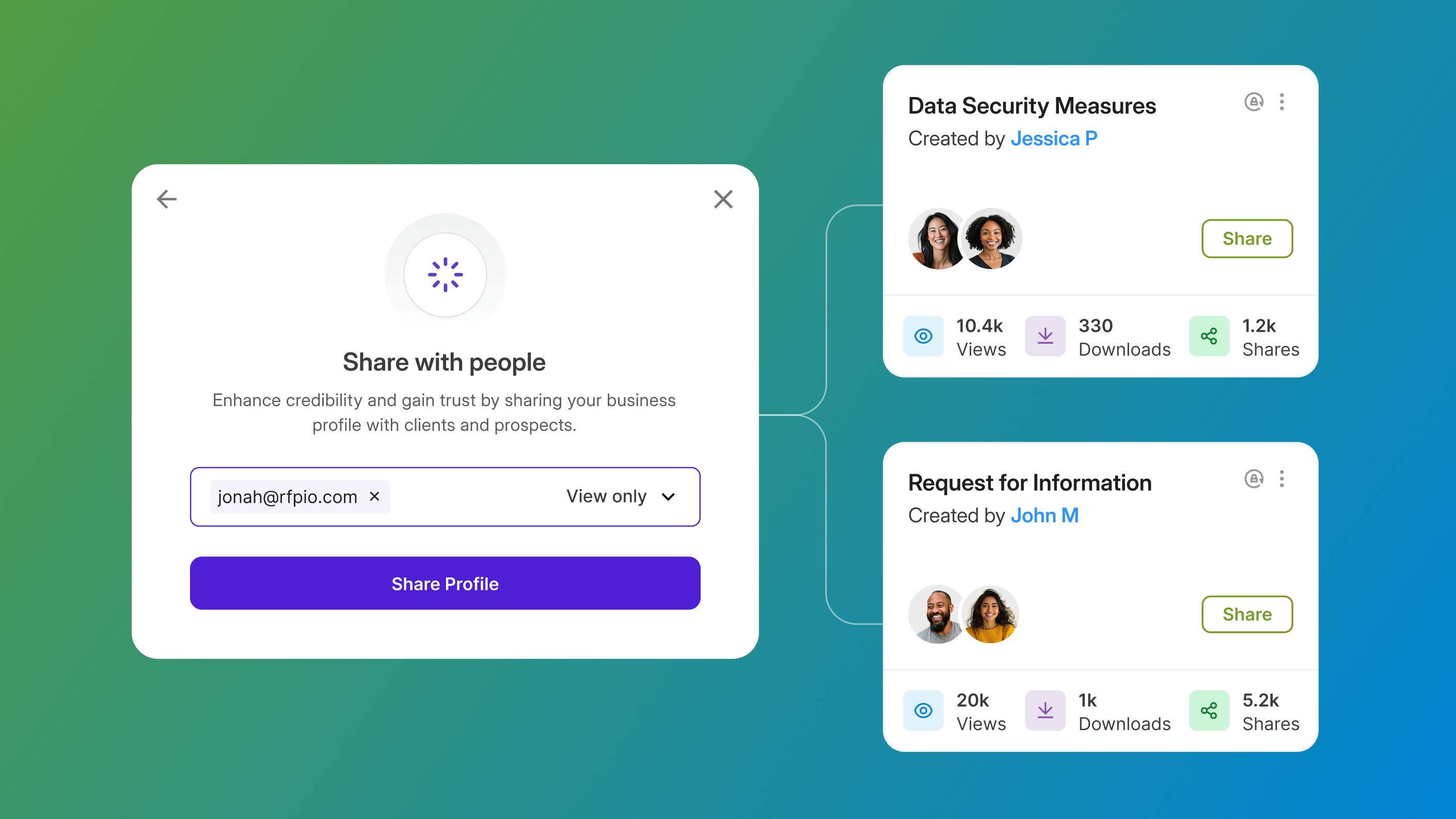
Getting from "security information on request" to "trust information by design" doesn't mean rebuilding a security program. Instead, it means giving it one centralized, governed home. That's the role Responsive's Trust Center plays.
The Trust Center addresses the organized and self-service stages directly. Certifications, policies, risk assessments, and disclosures live in a single governed hub, with segmented views so different audiences see only what's relevant to them. Ask by Responsive lets buyers get cited answers to ad hoc questions without waiting on a person.
Trust Center also pushes teams toward intelligent and strategic maturity. AI-assisted self-attestation against SIG and CAIQ templates turns days of manual questionnaire work into minutes. Built-in analytics tie Trust Center engagement to CRM opportunity data. This integration closes the measurability gap a static security packet could never close and gives InfoSec a way to show impact on deal velocity, not just questionnaire volume.
However, none of this replaces the judgment InfoSec brings to a genuinely complex review. What it does is take the repetitive, standard-question volume off the team's plate and put current, approved information in front of buyers before they ever have to ask for it, which is exactly what buyers say they want to see.
Ready to learn more about Responsive Trust Center? See how Responsive Trust Center provides governed, self-service access to current security information.

Andrew Martin
Content Marketing Manager @ Responsive
Andrew Martin covers AI adoption, RFP strategy, and proposal management at Responsive, drawing on insights from Responsive's 2,000+ enterprise customer base and original research.