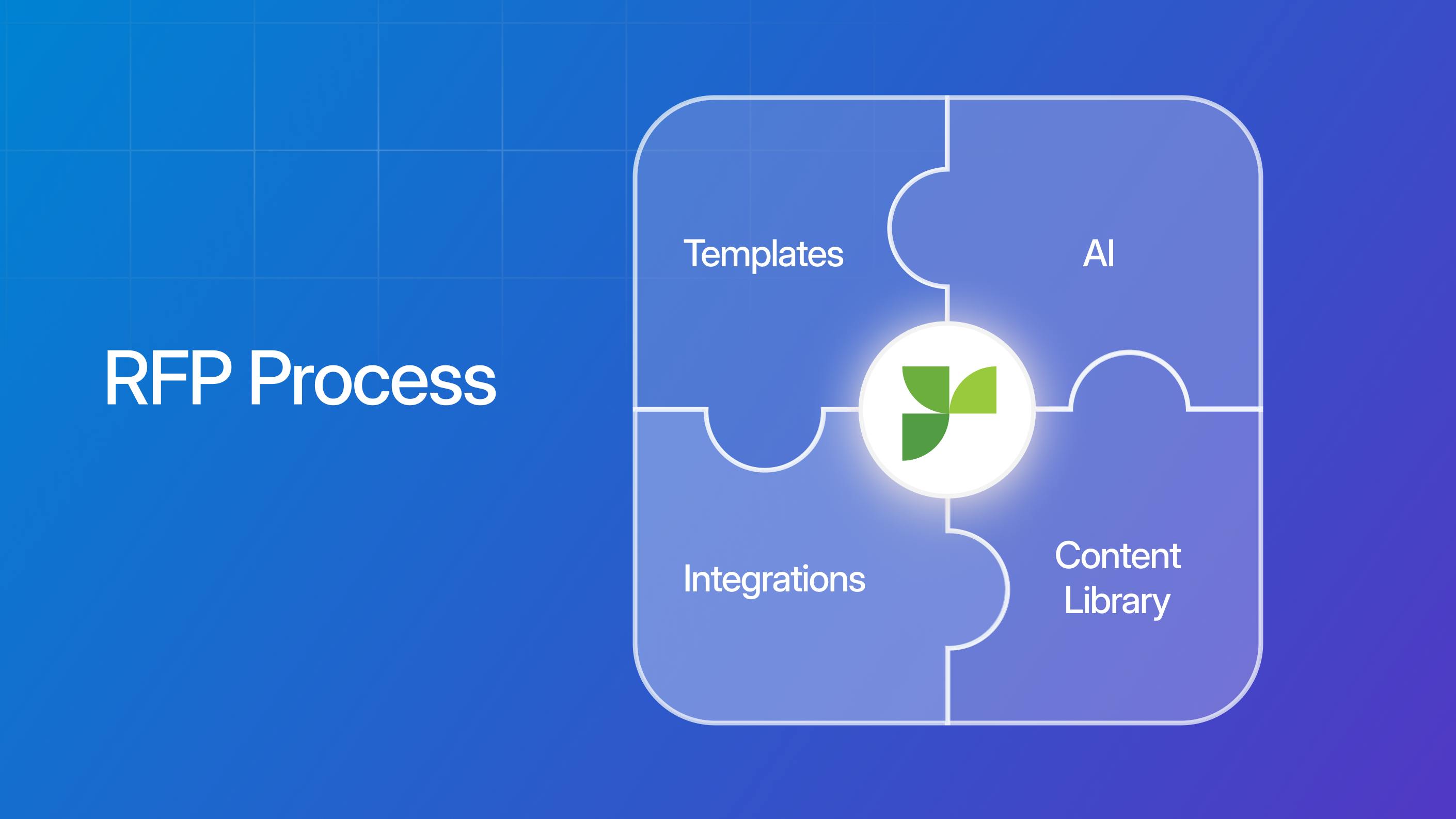
When evaluating RFP response software, customization capabilities often determine whether a platform can truly adapt to an organization's unique processes and requirements. At Responsive, we've designed our comprehensive solution for proposal and RFP management with flexibility in mind, though understanding the platform's actual customization capabilities helps organizations make informed decisions about whether Responsive can meet their specific needs.
What is Responsive?
Responsive is a comprehensive software platform we've developed for proposal and RFP (Request for Proposal) management. We help organizations automate, centralize, and accelerate RFP responses with AI, streamlining workflows for faster, high-quality results. Our platform is particularly effective for teams managing high-volume, standardized RFPs and offers features like AI-generated first drafts, AI-powered content suggestions, automated project setup, and integration capabilities with other business systems. We aim to improve efficiency in proposal creation while maintaining consistency and quality across responses.
Core customization features
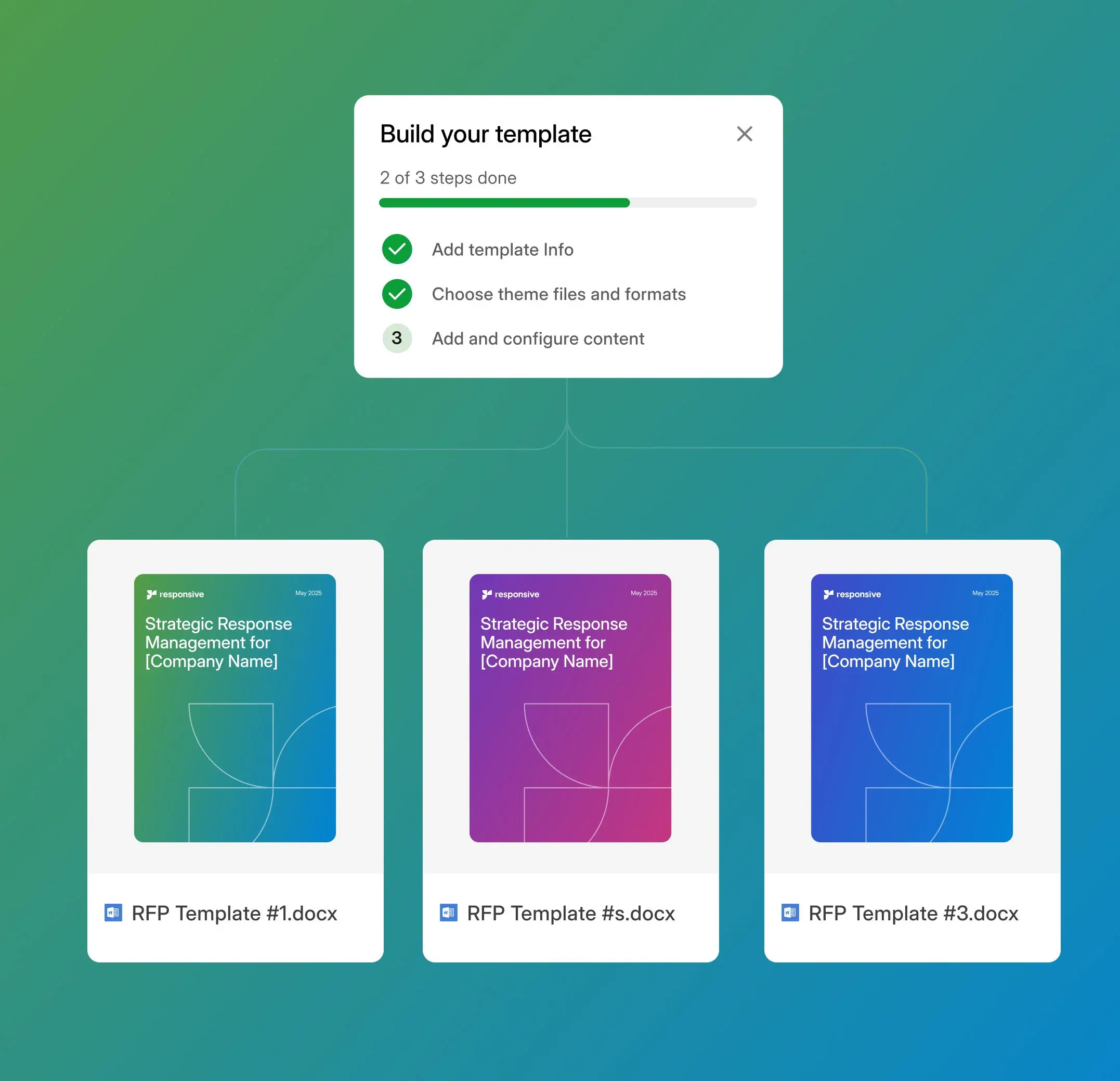
We offer several foundational customization options designed to accommodate different organizational workflows. Our platform provides customizable templates that allow teams to create branded proposal documents and maintain consistency across responses. Organizations can build their own custom templates directly within Responsive, ensuring that output documents align with corporate brand guidelines and formatting requirements. Consider a technology company that needs to maintain distinct proposal formats for government contracts versus commercial opportunities: our platform allows them to create separate templates for each use case, complete with different layouts, required sections, and branding elements.
Our content library supports extensive customization through tags, collections, custom fields, and categorization options. A financial services firm, for instance, might organize their content library with custom fields for compliance approval dates, regional variations, and product-specific categories. This organizational flexibility helps teams structure their knowledge base according to their specific terminology and hierarchies. Users can create custom workflows that mirror their existing approval processes, setting up review stages that match their internal governance requirements. (Learn more about knowledge management in the AI era)
Interface and workflow structure
We've designed Responsive to excel at handling high-volume, standardized RFPs, though organizations requiring highly specialized proposal responses may find our structured framework requires some process adaptation. A consulting firm creating proposals that combine standard RFP responses with custom case studies and dynamic pricing models might need to work within our established framework to achieve their goals.
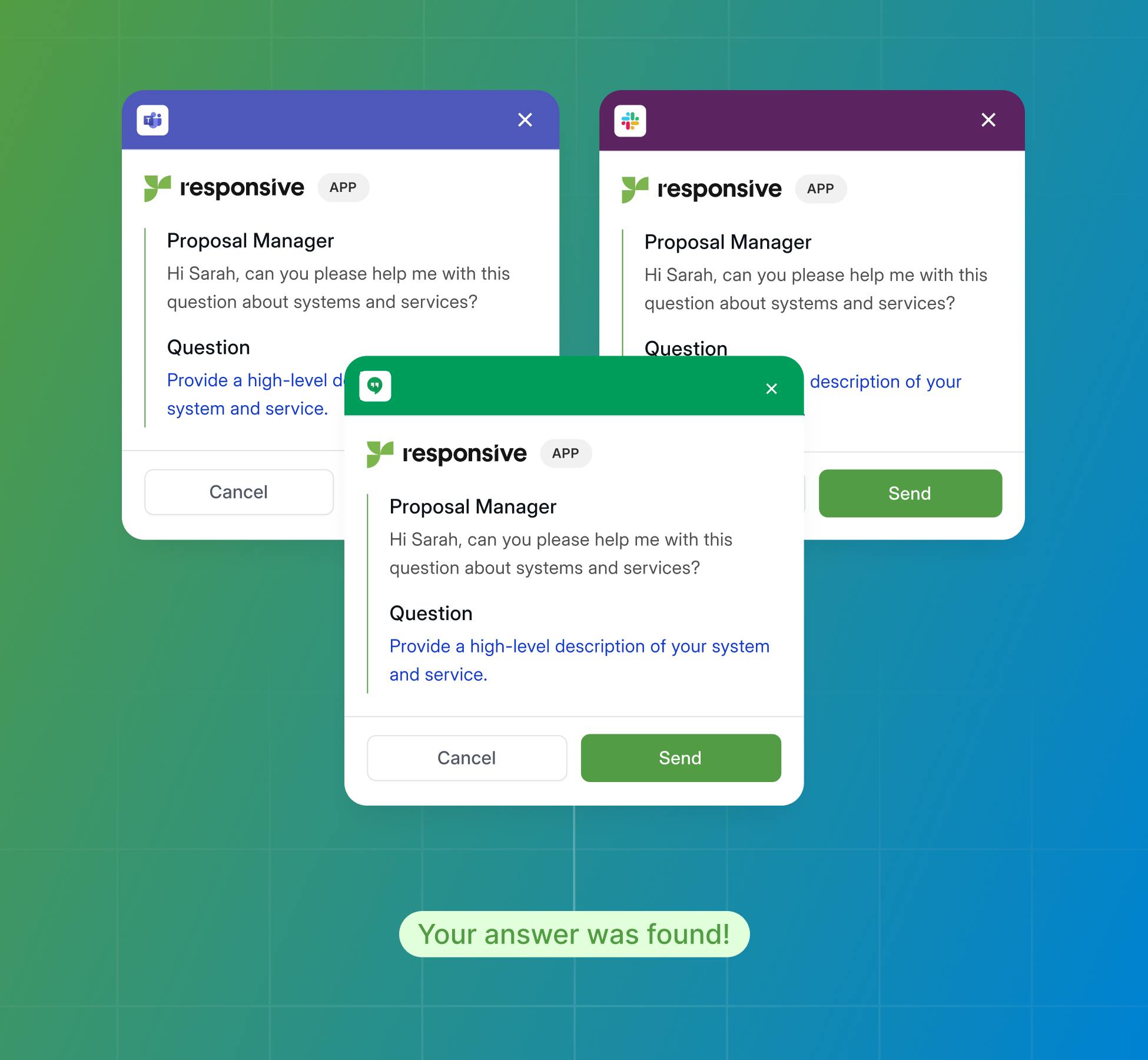
Our project setup phase provides a structured framework for importing and creating RFP project templates, though this structure may require configuration adjustments for unique intake needs. An engineering firm responding to technical RFPs with complex requirement matrices might need multiple attempts to configure the system to properly handle their specialized question-and-answer format. We've built certain workflows into the platform that provide consistency and efficiency, though teams with atypical requirements may need to adapt their processes to work optimally with our system. (See how Response Projects helps streamline RFP responses)
Template and format capabilities
Organizations using Responsive's template creation tools generally find good flexibility for most standard proposal needs, though some teams desire more granular control over formatting options and layout flexibility. A marketing agency accustomed to creating visually rich proposals with custom graphics, dynamic content blocks, and creative layouts might find our formatting options work differently than dedicated design tools.
Our Proposal Builder feature provides enhanced capabilities for creating customized sales proposals quickly. Teams seeking comprehensive proposal design functionality similar to specialized presentation tools may find they can achieve their goals by creating certain elements externally and importing them, rather than building them natively within Responsive. For example, a professional services firm wanting to embed interactive elements, custom calculators, or sophisticated data visualizations can incorporate these into their proposals through our import capabilities.
Content management customization
Our content library customization presents significant opportunities for organization-specific implementation. Organizations can implement custom taxonomies, create specialized content categories, and establish unique approval workflows. A healthcare technology company might customize their content library with specific categories for HIPAA compliance statements, clinical evidence, and regulatory approvals, each with different review cycles and ownership structures.
Maintaining these customizations works best with ongoing governance and organization. We recommend that organizations establish clear content governance policies to ensure custom organizational schemes remain effective as content volumes grow. A large enterprise with multiple business units contributing to the content library will find success by implementing dedicated resources for maintenance and refinement of their custom structure.
Integration and API customization
We provide API access for organizations needing to create custom integrations beyond our native connectors. This capability allows technically proficient teams to build customized data flows between Responsive and their other business systems. An enterprise using a proprietary CRM system could potentially develop custom integration to automatically populate RFP projects with account information and historical win data.
Implementing these custom integrations works best with technical expertise and development resources. Smaller companies or those without dedicated IT support typically find success with our pre-built integrations, which cover many common business tools. A company using industry-specific proposal management tools alongside Responsive might consider our custom development options to achieve enhanced data exchange between systems.
Winning Business in the Age of AI
User role and permission customization
Our platform allows organizations to customize user roles and permissions to match their team structures and security requirements. Administrators can create custom role definitions that align with their organization's hierarchy and responsibilities. A global corporation might establish region-specific reviewer roles, subject matter expert permissions, and tiered approval authorities that mirror their organizational structure.
We've made recent updates to our licensing model, and we recommend that organizations review the distinctions between different user types and the permissions available at each licensing tier. Understanding these options helps organizations customize access levels effectively while managing licensing costs.
AI and automation customization
Our AI capabilities include customization options through features like Agent Studio, which allows organizations to create custom AI agents for specific tasks. A software company might configure AI agents to automatically identify and flag technical requirements, extract specific data points from RFPs, or generate industry-specific response variations. (See how Responsive Agent Studio works)
Our AI customization operates most effectively when augmenting existing content and established patterns. Organizations seeking to train the AI to generate entirely novel responses or adapt to highly specialized industry terminology will find the customization works best when building upon existing knowledge rather than creating fundamentally new content approaches. (Read more about Responsive AI)

Practical customization scenarios
Real-world implementation reveals how organizations can leverage Responsive's customization effectively. A manufacturing company successfully customized our platform to handle their complex technical specifications by creating elaborate tag structures and custom fields for product specifications, compliance certifications, and regional variations. They invested time in the initial setup and achieved a system that effectively manages their unique requirements.
A creative agency using Responsive for RFP responses found they could create effective templates for their standardized response needs. For their design-heavy pitch materials that required features beyond our current customization capabilities, they developed a workflow that leveraged our strengths for the RFP components while using complementary tools for specialized creative elements.
Balancing customization with standardization
The customization question in Responsive reflects the balance between flexibility and standardization in RFP response management. We provide substantial customization options for organizations whose needs align with our core architecture — teams managing large volumes of question-and-answer based responses with relatively standardized formats. Within these parameters, organizations can extensively customize templates, workflows, content organization, and integrations to match their specific requirements. (Explore flexible criteria and scorecard support in RFP creation)
For organizations requiring approaches that differ significantly from this model — such as those creating highly visual proposals, managing non-standard response formats, or requiring extreme workflow flexibility — we recommend evaluating whether our structured framework can accommodate their core needs while potentially using complementary tools for specialized requirements.
Success with Responsive customization comes from understanding our platform's strengths early and designing customizations that leverage these capabilities effectively. Organizations that align their customization efforts with our core functionality typically achieve significant efficiency improvements and find our structured approach enhances their overall proposal process consistency and quality.
See more: Best proposal templates, RFP response examples, proposal formats and tools

RD Symms
Sr. Copywriter @ Responsive
With more than 15 years in writing, content development, and creative strategy, RD brings a rare combination of conceptual thinking and executional range to the proposal management space. He's spent his career turning complex ideas into content that earns attention which makes him a natural fit for an audience of proposal managers and sales leaders who read critically and buy carefully.