Generative AI (GenAI) tools like ChatGPT, Claude, Gemini, and Perplexity have become powerful tools for workplace productivity. Many teams, including ours, now use large language models (LLMs) to accelerate work.
However, when it comes to responding to RFPs, security questionnaires, due diligence requests, and other buyer inquiries, generic LLMs aren’t enough.
These responses directly impact revenue, compliance, and customer trust. They must be accurate, trusted, and optimized to win business.
That’s where Strategic Response Management (SRM) comes in. SRM is defined as the people, practices, and technology that unlock organizational knowledge for profitable growth.
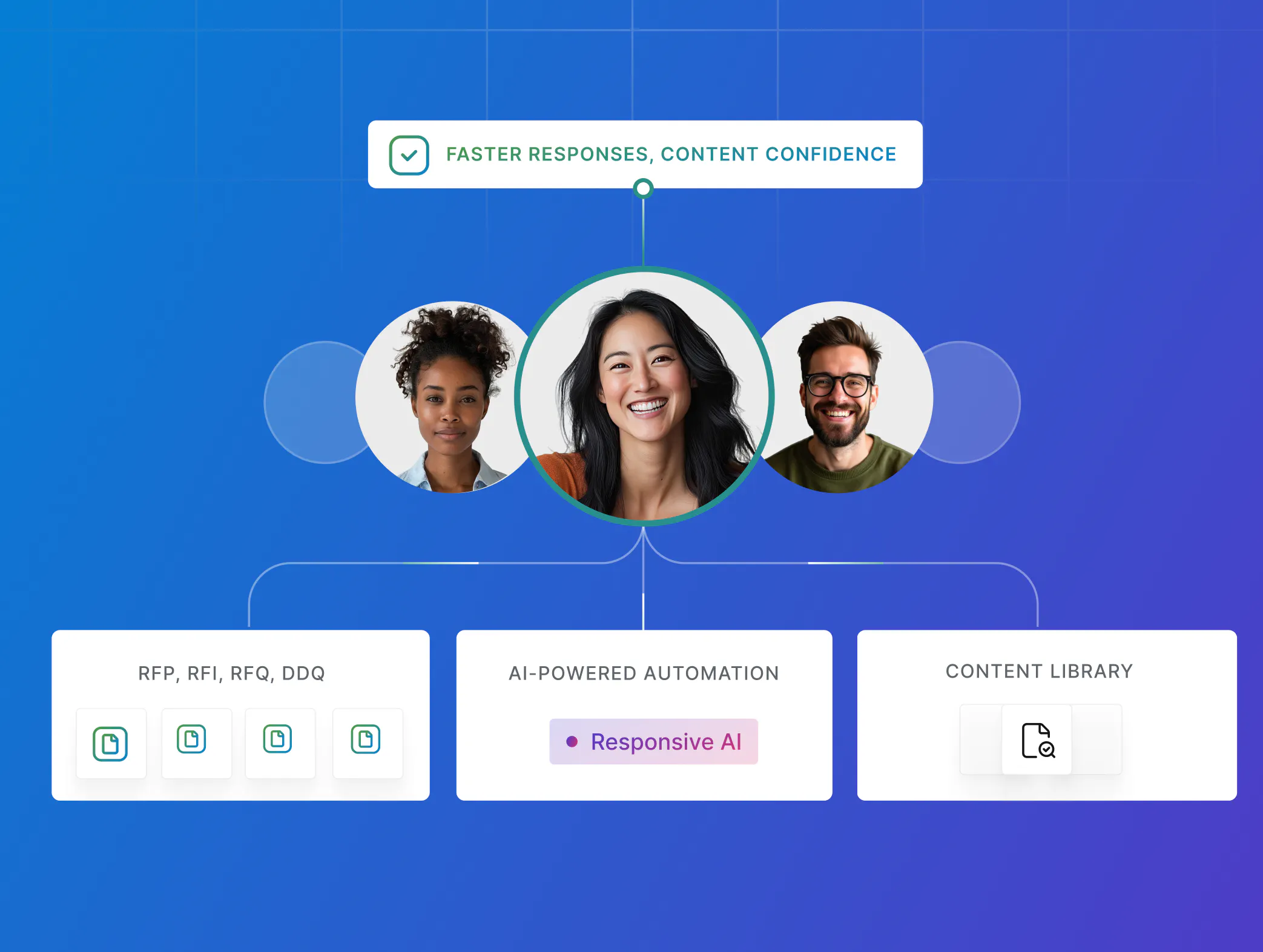
SRM also refers to a category of software designed to help organizations manage and automate responses to business inquiries using trusted company knowledge and structured workflows. SRM platforms like Responsive ensure responses are correct, consistent, and aligned with winning sales strategies.
Can LLMs be used for RFP responses?
LLMs help teams move faster by generating initial drafts, summarizing complex documents, and refining content for clarity. However, their value is primarily in accelerating content creation, not ensuring accuracy or readiness for high-stakes use. In enterprise buying scenarios, the quality, accuracy, and trustworthiness of a response matter far more than how quickly it’s produced.
While LLMs can help teams generate faster responses, these generic tools struggle with several challenges in high-stakes enterprise responses:
- They cannot reliably distinguish between approved, current, and customer-ready content.
- They cannot understand organizational context, positioning, or risk.
- They may generate responses that sound correct but aren’t.
- They are vulnerable to hallucinations.
- Their answers may change each time they are generated.
More fundamentally, LLMs operate as standalone tools. They generate text, but they don’t manage knowledge, enforce governance, or coordinate the broader response process.
Five advantages of SRM over generic LLMs
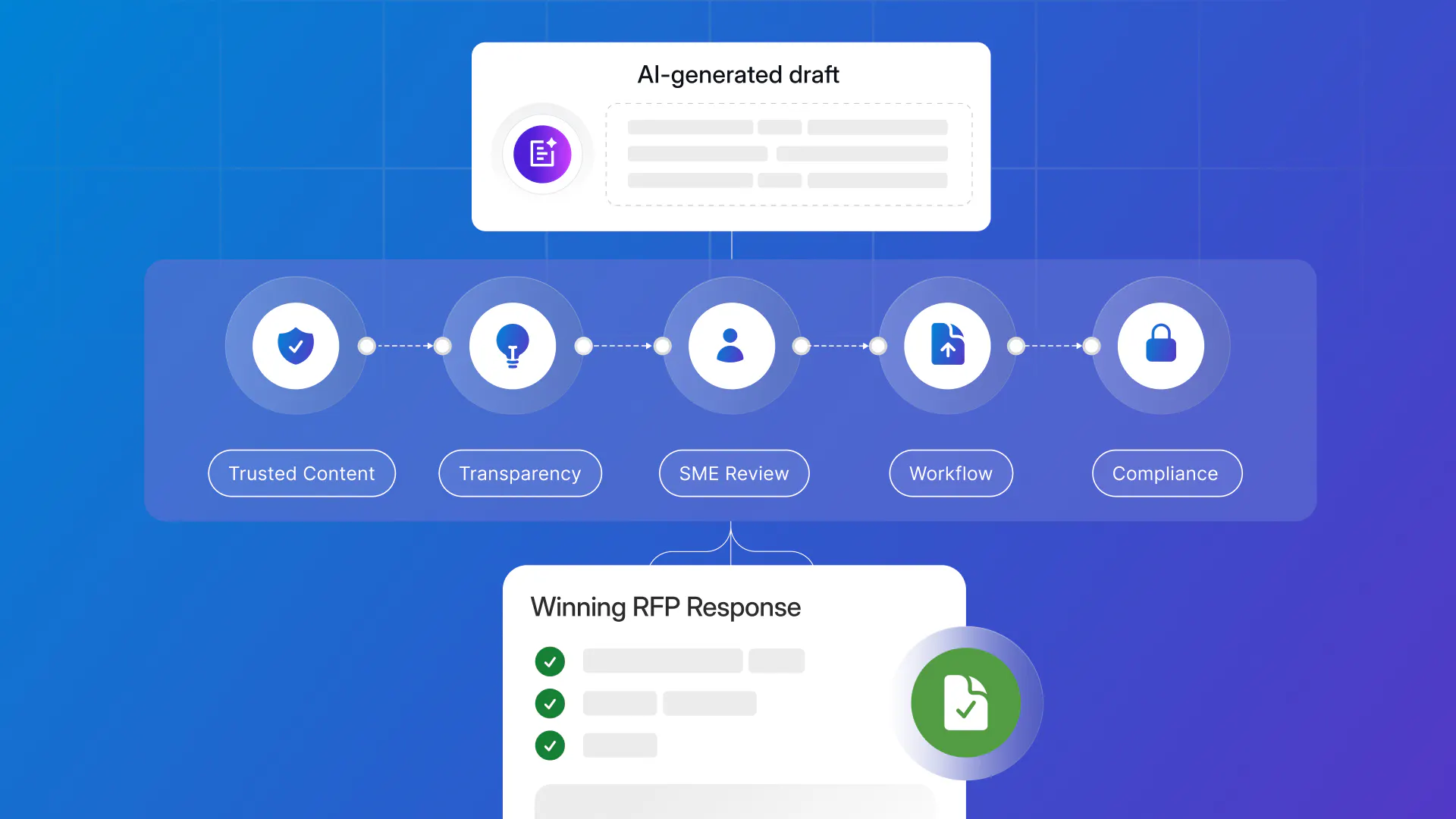
Strategic Response Management platforms combine trusted knowledge, expert collaboration, and purpose-built workflows to deliver five key advantages over generic LLMs.
1. A knowledge base built from winning responses
The source of knowledge is one of the biggest differences between SRM platforms and generic LLMs. Organizations invest significant time and energy in crafting responses to RFPs and questionnaires. These responses often involve product experts, sales engineers, legal and compliance teams, security specialists, and executive leadership.
Over time, these responses become a valuable institutional knowledge base that can dramatically accelerate future responses. SRM turns that knowledge into a governed system where content is curated, maintained, and approved for reuse.
SRM platforms capture and activate this knowledge. Instead of starting from scratch every time, teams can reuse trusted answers that have already helped win deals. In contrast, generic LLMs often pull from mixed information sources across the enterprise. This makes it difficult to determine whether content is current or outdated, internal or customer-ready, or aligned with sales messaging
SRM ensures responses come from trusted, proven answers designed to win business.
2. Transparency and trust scoring
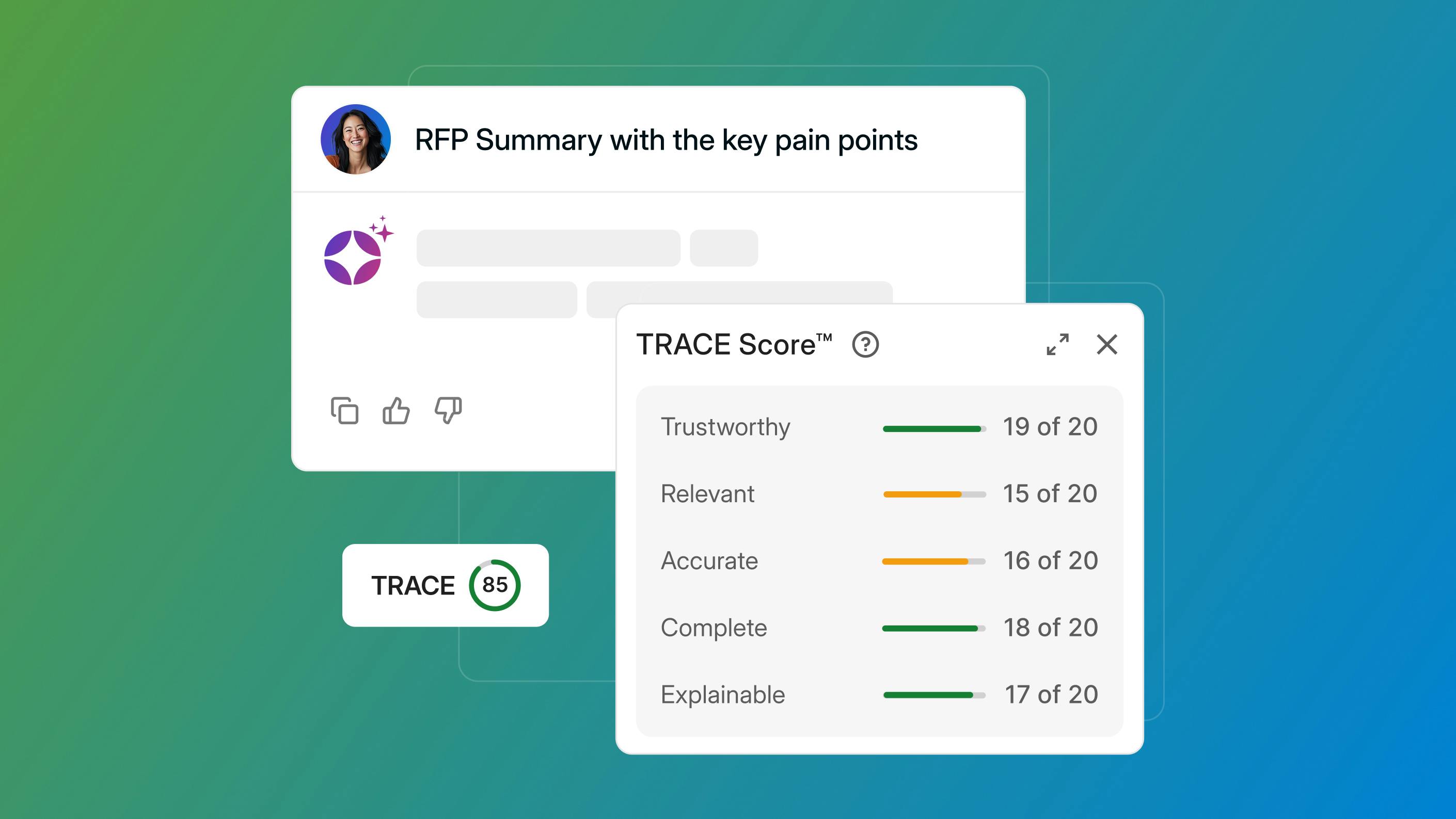
Another challenge with generative AI (GenAI) is confidence. When an LLM produces an answer, it can be difficult to know whether that answer is correct or where it came from. SRM platforms solve this with response transparency and trust indicators.
For example, Responsive provides a TRACE Score™, which evaluates responses based on trustworthiness, relevance, accuracy, completeness, and explainability. Users can also see the source of each answer and determine whether it requires further review. This objective scoring system helps teams quickly identify responses that are ready to use versus those that require refinement.
3. Access to subject matter experts
Even the best knowledge bases can’t anticipate every question. That’s why SRM platforms make it easy to involve subject matter experts (SMEs) when new information is required.
If a response requires forward-looking insight or new product information, platforms like Responsive can recommend the right expert and route the request accordingly. This creates a continuous loop in which answers improve over time as human expertise is systematically incorporated.
While generic LLMs lack the ability to tap into the latest thinking from the people who actually know the answer, SRM platforms combine institutional knowledge with human expertise.
4. End-to-end workflow management
Responding to an RFP is about more than just writing answers; it’s about managing a complex process across multiple teams.
Typical response workflows include:
- Ingesting and analyzing RFP
- Considering whether to pursue or pass
- Defining win strategy and themes
- Completing “first pass” of responses
- Assigning select questions to SMEs
- Tracking deadlines and reminders
- Managing reviews and approvals
- Maintaining audit trails for compliance
- Providing insights and reporting on the overall process
LLMs generate text, but they cannot manage enterprise response workflows. SRM platforms manage the entire response lifecycle, helping teams move faster without sacrificing quality.
5. Insights that inform business strategy
One of the most powerful and overlooked benefits of SRM is the strategic insight it provides. Over time, RFP responses and security questionnaires reveal valuable information about:
- Emerging customer expectations
- Competitive positioning
- Product feature demand
- Security and compliance requirements
SRM platforms can analyze these trends and surface insights that inform product roadmaps, go-to-market strategies, competitive positioning, and more. These benefits turn response management into a strategic intelligence engine for the entire business.
The bottom line: LLMs draft. SRM wins.
Generative AI will continue to transform how organizations create content. But when the goal is winning enterprise business, organizations need more than quick answers. They need responses that are trusted, accurate, compliant, consistent, and optimized for buyers.
Strategic Response Management platforms ensure those responses are trusted and ready to win deals.
How should you deploy AI for response management?
SRM vs LLMs at a glance
SRM platforms are built to help companies win business. See below for a direct comparison of capabilities between generic LLMs and SRM platforms.
| Capability | Generic LLMs | Strategic Response Management |
|---|---|---|
| Knowledge Source | Mixed enterprise data and training data | Verified RFP response knowledge base |
| Accuracy | Can hallucinate or produce inconsistent answers | Trusted, curated responses |
| SME Collaboration | Not built for expert workflows | Built-in subject matter expert collaboration |
| Compliance | Limited visibility and tracking | Audit trails and approval workflows |
| Business Insights | None | Market and competitive insights from responses |
| Workflow Automation | Text generation only | End-to-end response management |
Strategic Response Management FAQ

Michael Londgren
CMO @ Responsive
Strategic, passionate, high-impact leader with a strong record of helping companies scale rapidly. Michael drives marketing for SaaS businesses ranging from startups to enterprise organizations.