
Buyers have not stopped valuing SOC 2 reports, ISO certifications, and other formal evidence. But those documents describe a defined assessment period, while buyers must evaluate a vendor’s current risk.
Changes to how AI is used, subprocessors, data locations, and security practices are leading reviewers to ask for current information alongside formal compliance evidence. Continuous assurance gives vendors a governed way to provide it.
Compliance reports still matter, but buyers increasingly want current, accessible, and governed visibility into a vendor’s security posture throughout the evaluation process.
Point-in-time compliance still matters
Point-in-time compliance remains essential in B2B buying, especially in enterprise, financial services, healthcare, technology, and other risk-sensitive markets and heavily regulated industries. It's how your buyers will understand whether (and how) you meet baseline expectations for security, privacy, availability, confidentiality, and risk.
This can be a SOC 2 report, ISO 27001 certification, penetration test summary, data processing agreement, or cyber insurance attestation.
The challenge is that compliance documents often answer only part of the buyer’s question. They show what was assessed, when it was assessed, and under which criteria. They do not always show what has changed since the assessment, how controls are maintained, or how new risks are being handled.
Another common issue: Compliance reports are essentially snapshots. A SOC 2 report may cover a defined review period. A certification may confirm that a standard was met at a certain point. A policy may explain an approved process. But the buyer still needs to make a decision based on current risk, adding yet another point of friction.
The question buyers are trying to answer is both practical and obvious: Can we trust this organization with our data, our customers, and our business right now?
Why buyer expectations are changing
AI is raising expectations even further. Buyers evaluating AI-enabled products are asking how/ and if the product works while also needing to understand how data is handled, how outputs are governed, how claims are validated, and whether human oversight exists.
Responsive research found that buyers evaluating AI products often conduct reviews focused on AI-specific security and privacy, fairness, explainability, ethical AI standards, and data governance.
For Infosec and IT teams, this amount of up-front vendor research changes the role of trust content. Now, the information you’ve made available has to do more than just satisfy a checklist. The documentation you provide needs to help buyers build confidence across the entire evaluation journey, even before they reach out to sales.
More specifically, due to the increased use and scrutiny of AI and the potential interactions with sensitive data, buyers want to know your security posture upfront, and continuous assurance is one way to do that. In practice, this means being upfront about:
- Current security documentation
- Compliance status
- Privacy practices
- AI governance materials
- Subprocessors
- FAQs
- Incident response information
- Access control practices
- Product security updates
- Approved answers to recurring buyer questions
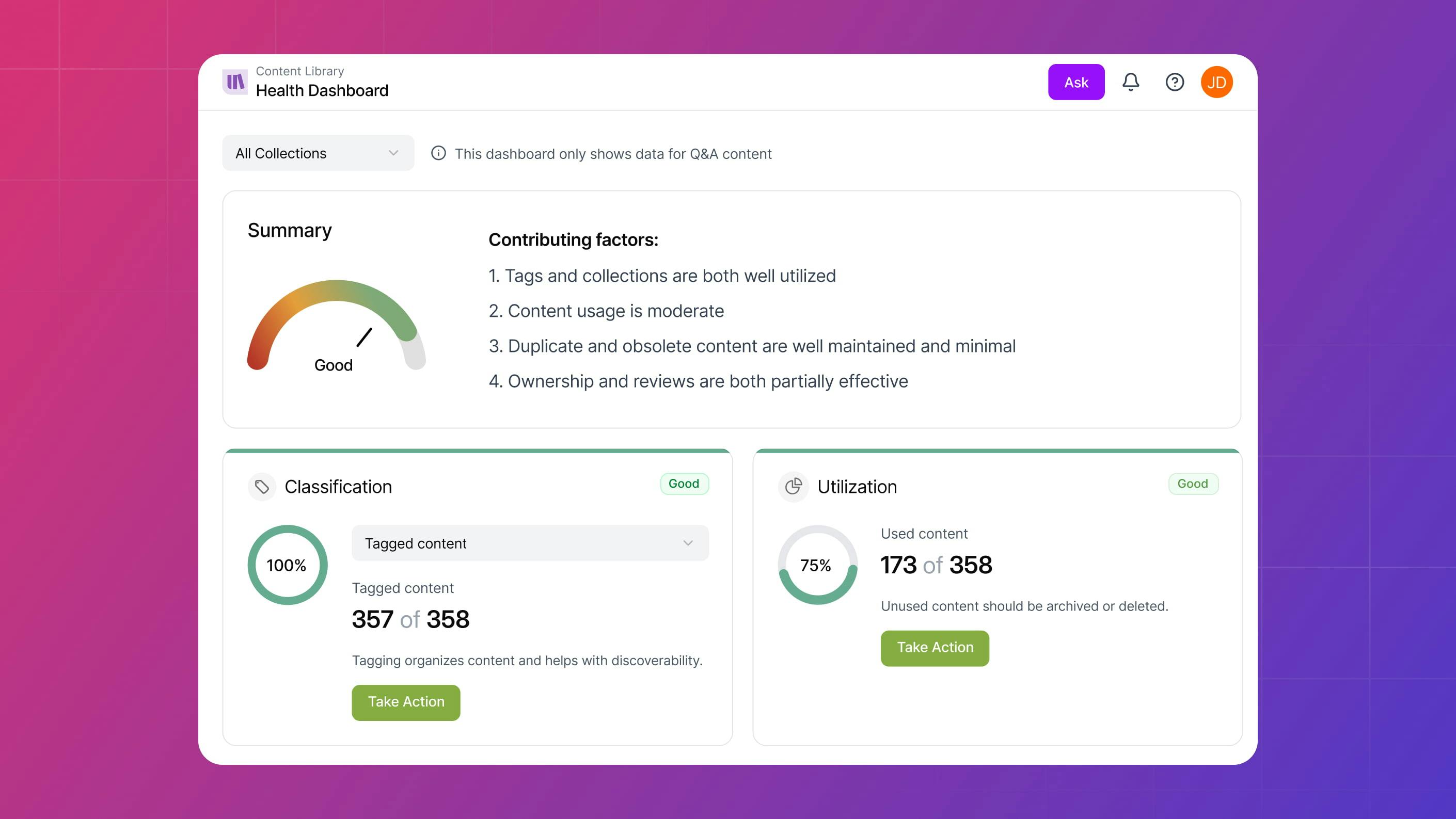
Continuous assurance gives security teams more control. Instead of sending files across scattered email threads, teams can provide a structured path to approved information. Instead of answering the same question repeatedly, they can maintain a trusted, single source of truth in the form of a content library that buyers can use as needed.
The goal is controlled transparency. Buyers get easier access to credible information. Vendors maintain governance over what is shared, who can access it, and how it stays current.
Trust Centers make continuous assurance practical
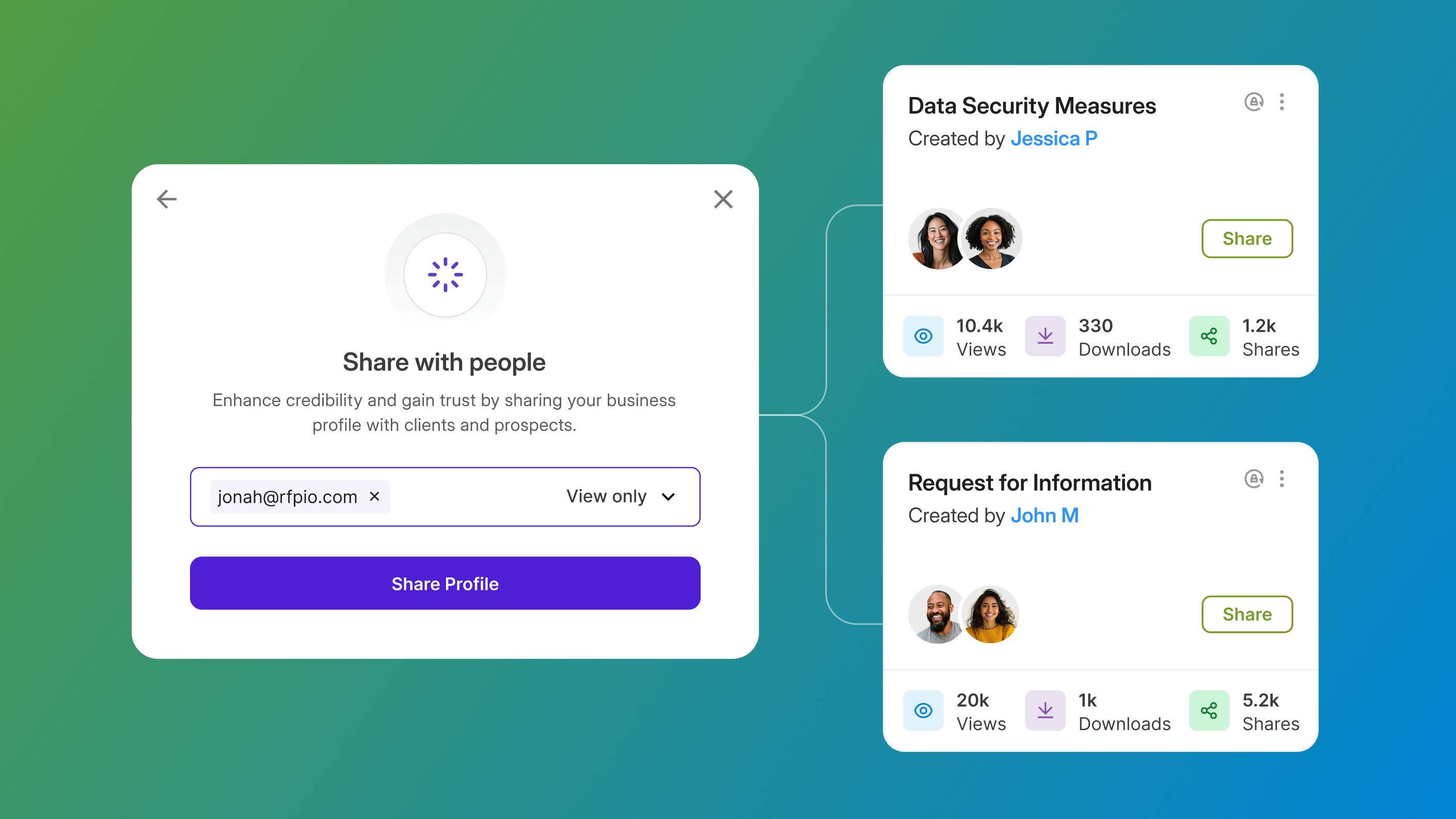
A Trust Center provides buyers a centralized place to access approved, up-to-date security, privacy, compliance, and risk information. The upside for buyers is a clearer evaluation experience that makes information easy to find. Buyers can also review information quickly, without waiting for every answer to complete a manual review cycle.
For security teams, a Trust Center reduces repetitive requests while preserving control. General security overviews, compliance summaries, and frequently asked questions can be made publicly available. More sensitive assets, such as SOC 2 reports, penetration test summaries, or architecture documentation, can be gated behind access controls or NDA workflows.
Responsive Trust Center supports this always-available trust motion by helping organizations proactively share validated security posture, streamline risk assessment, and provide buyers with quick access to answers with Responsive AI.
The workflow evolves with a Trust Center in place. Buyers get answers earlier. Sales teams keep momentum. Security teams spend less time responding to repeat questions and more time on issues that require expert review.
What continuous assurance looks like in practice
Continuous assurance does not require a massive program on day one. In practice, it can begin with the questions buyers most often ask. A practical program might include:
- Current SOC 2 report
- ISO documentation
- Privacy and data handling information
- AI governance materials
- Subprocessor details
- Data residency information
- Common security questionnaire answers
- Access-controlled document sharing
- A clear path for custom follow-up questions.
The most important ingredient is ownership. Trust content cannot sit untouched for months and still build confidence. Consistency and timeliness in updates are equally important. Teams need assigned owners, review cadences, and approval workflows.
When you want to establish a continuous assurance practice, start with a simple exercise: review the last 10 security questionnaires your team completed. Identify the questions that appear repeatedly. Then ask three things:
- Which answers can be published publicly?
- Which assets should be gated?
- Who owns each answer and update?
That exercise can form the foundation of a continuous assurance program. It also helps teams move from reactive response to proactive trust management.
How Responsive supports continuous assurance
Responsive Trust Center helps organizations turn static trust evidence into an ongoing buyer experience, which comes into play around level three of the above maturity model.
For InfoSec and compliance teams, it creates a governed source for approved security and compliance information. For buyers, it provides a clearer way to evaluate risk. For sales and solution consulting teams, it reduces avoidable back-and-forth during security review.
When incorporated into a larger platform strategy, Trust Center becomes a proactive, essential, always-available trust and assurance motion that provides a consistent way to build buyer confidence, reduce repetitive requests, and keep trust information aligned with the current state of the business.
Moving from compliance in the moment to assurance built over time
Point-in-time compliance will always have a place in security review. Buyers need formal proof, and vendors need credible evidence. But buyers are now asking for more than proof from a past review period. Reviewers want to understand how trust is maintained today.
Continuous assurance answers that question by giving buyers current, governed access to the information they need. A Trust Center makes that practical by centralizing approved content, managing access, supporting self-service, and reducing repetitive work for security teams.
For teams ready to start, the path is straightforward: identify recurring buyer questions, centralize approved answers, define what should be public or gated, assign content owners, and review trust content on a regular cadence.
Compliance helps buyers verify. Continuous assurance helps them believe. In a buying process shaped by risk, scrutiny, and earlier research, that confidence can make all the difference.
Ready to learn more about Responsive Trust Center? See how Responsive Trust Center provides governed, self-service access to current security information.

Andrew Martin
Content Marketing Manager @ Responsive
Andrew Martin covers AI adoption, RFP strategy, and proposal management at Responsive, drawing on insights from Responsive's 2,000+ enterprise customer base and original research.