
The competition for capital has never moved faster, or demanded more precision. Asset managers today are juggling rising investor expectations, shrinking response windows, and relentless due diligence.
In the 2025 State of SRM: Financial Services Industry Report, we learned that nearly 90% of firms say clients want quicker turnarounds, while three-quarters report rising demands for customization. Firms are turning to AI to help them get from “request received” to “mandate won” faster. But they’re proceeding with caution: the report also found that only 22% of firms have fully deployed AI solutions for revenue-generating activities.
However, nearly twice as many firms are piloting AI solutions and another 31% are considering doing so in the next year. The race is on, and firms that are already using AI tools across RFPs, DDQs, and other responses — and achieving positive ROI in the process — have a big advantage in every pursuit.
The Guide to AI in Asset Management
To show asset managers how nearly 250 peers around the world are operationalizing AI across the asset pursuit lifecycle — from analyzing deal fit to drafting responses to RFPs to answering investor questions on the fly — we developed The Guide to AI in Asset Management.
The guide includes the six use cases you see below, but it also covers:
- A step-by-step playbook to implement 10 AI features
- Analysis of the AI adoption landscape in the industry
- Case studies of firms using Responsive AI
- Questions you should ask any AI solution provider to ensure your data, clients, and firm are protected
The Guide to AI in Asset Management
AI’s early impact on revenue pursuit in asset management
One curious note about AI is that it learns as you use it, improving and innovating new ways to lend assistance — with your guidance and oversight, of course. The same pattern emerges in its impact. It might be small early, but as AI benefits accumulate across your revenue pursuit lifecycle, its impact grows exponentially.
Take GenAI or agentic AI-based answer generation, as an example. First, your proposal or RFP team benefits from near-instant first drafts that move an investor closer to the finish line faster. Then, subject matter experts (SMEs) see how easy it is to review and modify content with AI. Next thing you know, your entire investor relations team is querying conversational AI to find immediate answers while emailing with or talking to investors. An AI snowball effect gains momentum, scaling accurate, compliant responses to every information request that comes into the firm.
And this snowball effect takes shape elsewhere beyond drafting answers. Firms are using AI to qualify opportunities faster, flag risks before they escalate, and ensure every response aligns with both client priorities and regulatory expectations. The following examples illustrate how asset managers are already applying AI across the pursuit lifecycle to work faster and make smarter, more confident decisions.
“Right now, firms are starting with low-risk applications like compliance checks, data analysis, and operational efficiency. But the real value is going to emerge in how we communicate with clients. That’s where I think AI can fundamentally change the game. When you’re responding to an RFP or following up on a DDQ, you need to deliver the right information — and make sure the message lands.”
Matt Schiffman
Co-founder at Totumai
The inevitability of AI for asset gathering pursuits
Asset management AI use cases across the pursuit lifecycle
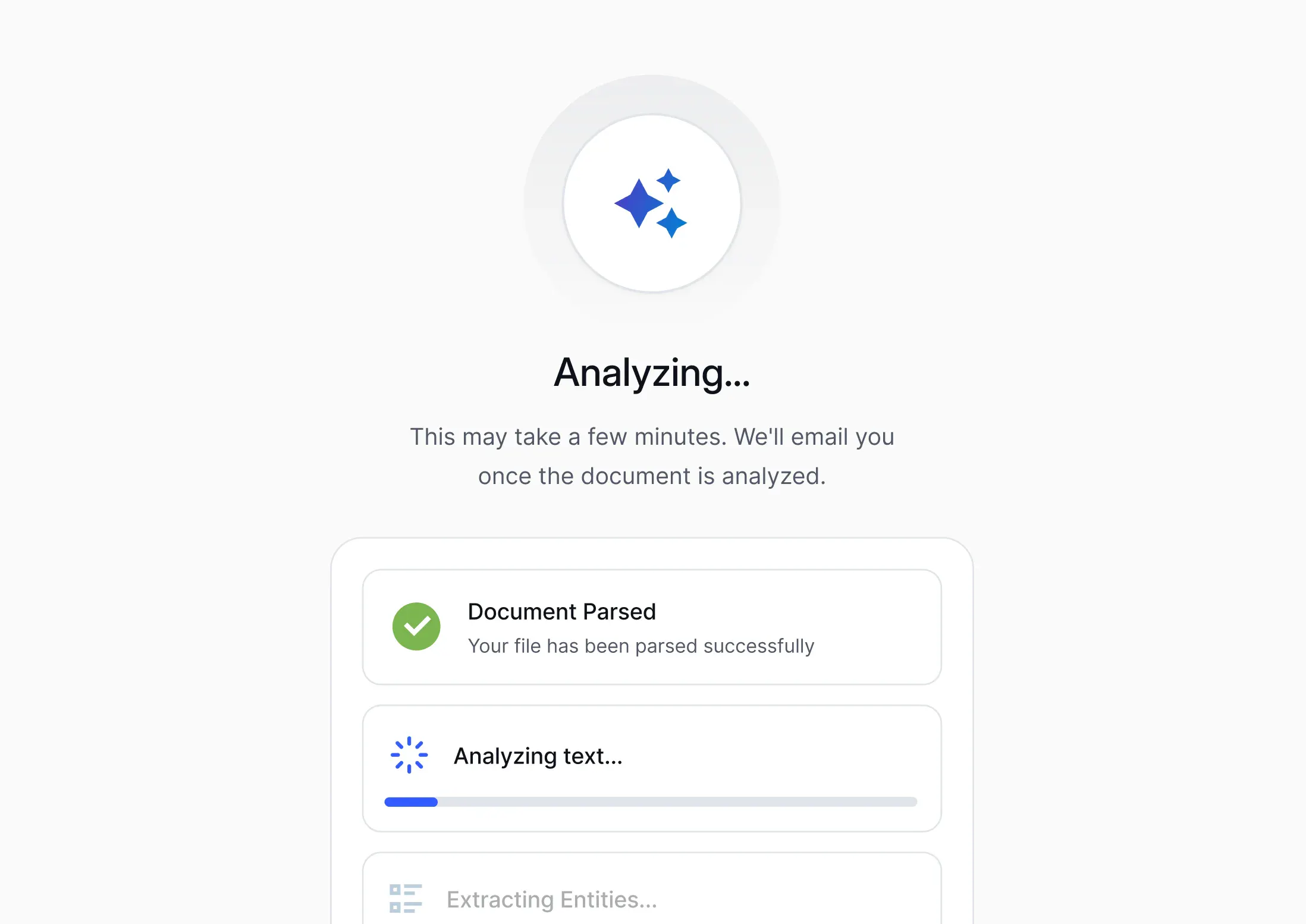
Identify deal killers early
Disqualifiers like AUM minimums, strategy restrictions, or track record requirements are often buried deep in RFPs. AI accelerates early screening by using NLP to extract and flag terms that match predefined disqualification criteria. It understands context, not just keywords, so it can identify nuanced language that might signal a deal breaker. Some SRM platforms even compare RFP language against your firm’s historical wins/losses and internal benchmarks to assess viability. This lets your team make faster go/no-go decisions, avoid wasted effort, and focus only on opportunities where you’re positioned to compete.
“Our go-forward rate for RFPs is sitting at 93%, where last year we were at 65%. That’s huge. It’s impacting the bottom line at the company because we don’t have the stumbling blocks anymore and are advancing to the next phase of an RFP.”
Andrew Mersman
Vice President of Sales Enablement at Netsmart
Flag client engagement risks
Some clients place higher demands on their asset managers, requiring detailed updates, exposure alerts, or complex reporting. In some cases, the operational strain may outweigh the value of the mandate. AI tools use NLP and pattern recognition to scan for high-maintenance requirements within RFPs, such as frequent reporting cadence, monitoring obligations, or custom benchmarks. By flagging these signals early, AI enables more informed internal reviews and helps teams assess the true cost of servicing the opportunity.
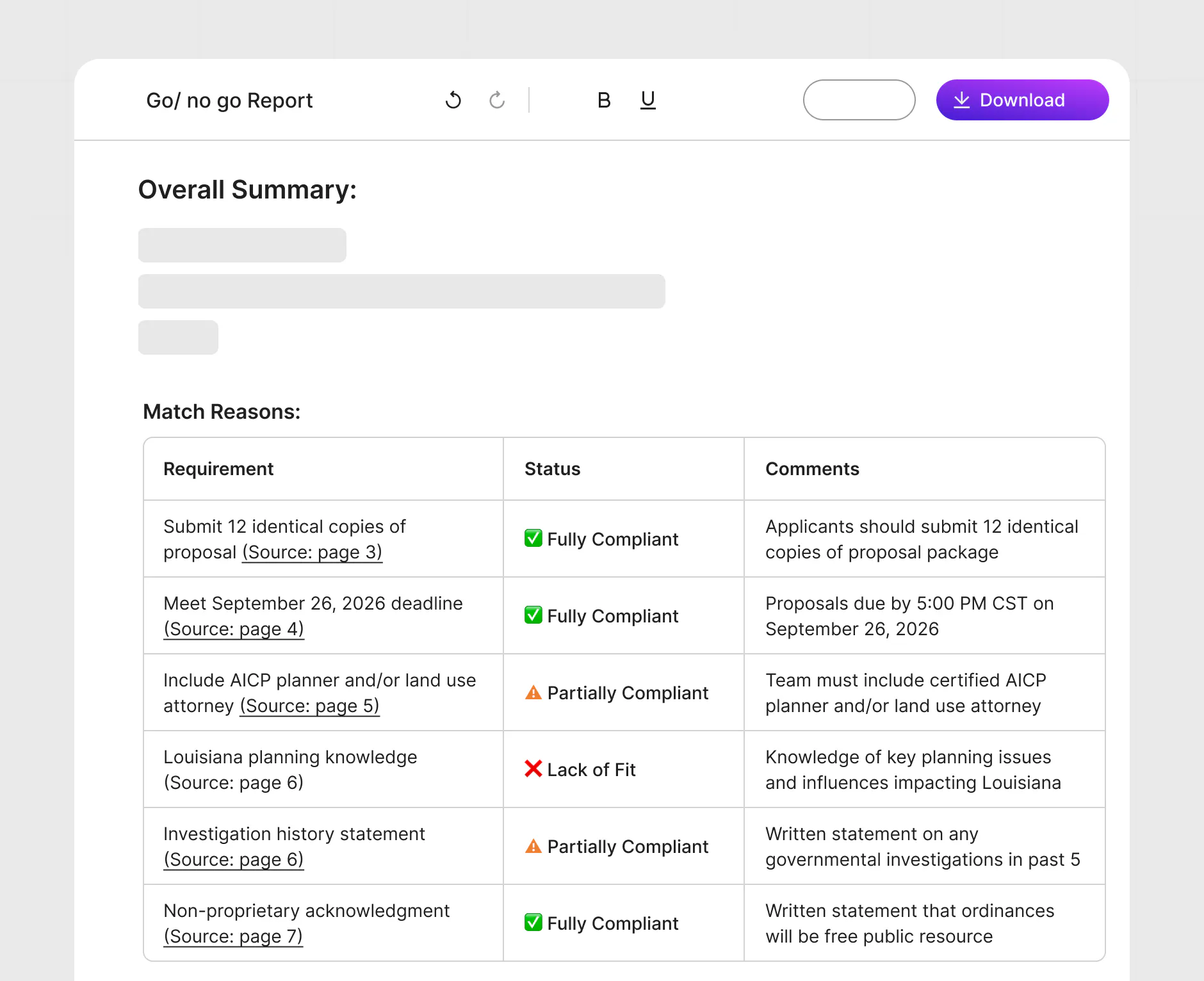
Check firm alignment with investor requirements
AI streamlines the alignment process by tagging RFP requirements as a “fit,” “caution,” or “not a fit” using predefined investment criteria. Unlike manual reviews, AI evaluates contextual signals such as performance, geography, and capabilities against historical outcomes and internal performance benchmarks. AI tools or agents that summarize and analyze RFPs against go/no-go criteria accelerate decision-making by highlighting critical RFP details, aligning them with your firm’s strengths, and flagging mismatches early.
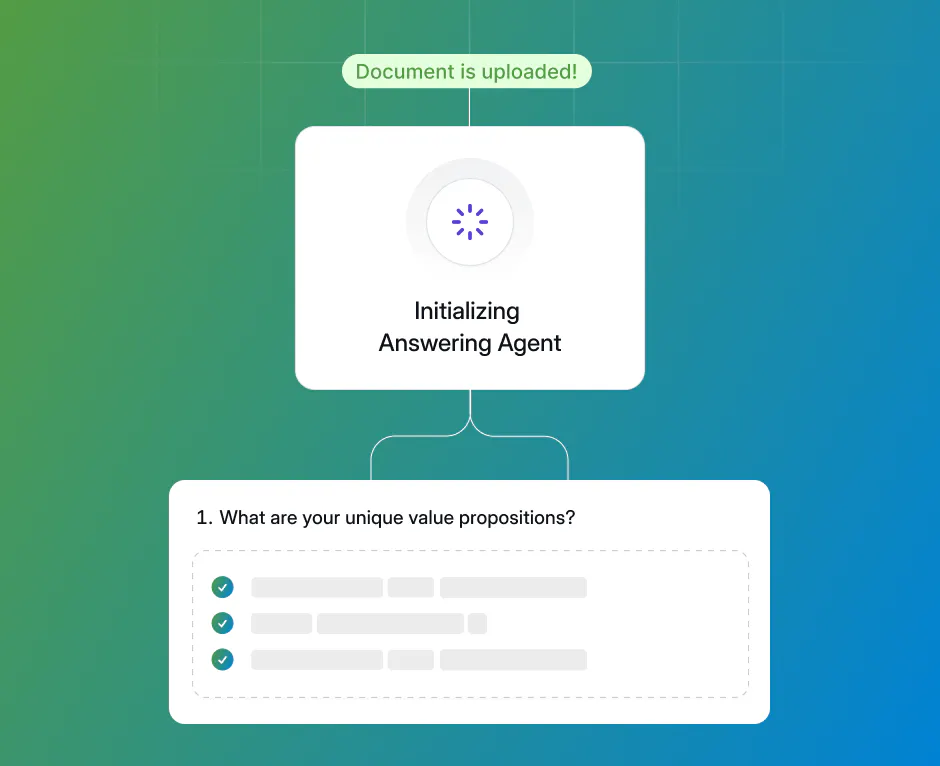
Work faster, with more confidence
AI efficiency improvements have been the low-hanging fruit for asset management firms since the 1980s. BCG reports gains of 10-15% across asset managers, with some functions improving by up to 50%. AI-powered SRM tools use NLP and semantic search to match incoming questions with vetted answers from a centralized content library. As more RFXs and DDQs are processed, the system learns patterns, improving accuracy over time. With a well-maintained library, up to 80% of an RFx can be completed automatically, allowing proposal teams to focus on strategic customization and take on more opportunities without risking burnout.
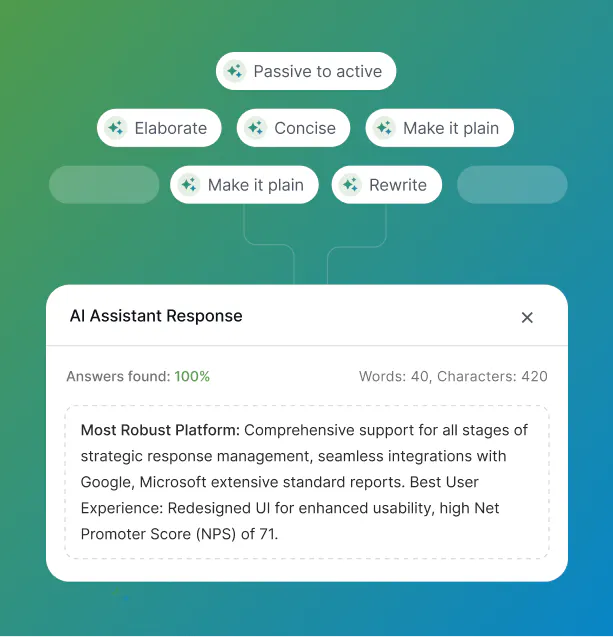
Tailor answers to investor information requests
Investors’ priorities vary, and they’ll judge your firm based on how you tailor your approach to those priorities. An insurance company, for instance, expects emphasis on risk management, relevant portfolio management experience, and similar client examples. AI-powered SRM platforms use NLP and metadata tagging to identify the investor type, then retrieve and adapt content accordingly. Guided by user-defined prompts or templates, the AI automatically incorporates insurance-specific language, team references, and any available case studies into responses, so your answers can be both relevant and compelling.
Improve compliance
AI can improve compliance in asset management when used with proper safeguards. The top concern is protecting behind-the-fence IP and client data. SRM platforms address this by ensuring GenAI only draws from a firm’s vetted content, never training on private data. Leading SRM tools offer granular control over who can access specific content and provide “verbatim” modes that ensure phrasing aligns exactly with pre-approved language. This gives firms the flexibility to engage GenAI or not, depending on the context, helping you meet compliance standards without sacrificing efficiency.
Take Verbatim for a spin
From early adopters to asset management leaders
The momentum around AI in asset management is unmistakable, and the firms leading the charge are already seeing measurable returns. According to the Financial Services Industry Report, nearly three-quarters of financial services firms that have deployed AI are realizing ROI within the first year.
As client demands accelerate and investor expectations grow more complex, asset managers can’t afford to wait. AI-enabled SRM turns knowledge into a competitive asset for firms, empowering teams to make smarter go/no-go decisions, deliver more tailored responses, and uncover patterns that drive growth.
The firms that invest now will be the ones shaping the next era of investor communication.

RD Symms
Sr. Copywriter @ Responsive
With more than 15 years in writing, content development, and creative strategy, RD brings a rare combination of conceptual thinking and executional range to the proposal management space. He's spent his career turning complex ideas into content that earns attention which makes him a natural fit for an audience of proposal managers and sales leaders who read critically and buy carefully.