If you spend your days chasing down proposals, herding SMEs, and trying to keep content libraries maintained, the stakes are higher than ever: buyers ask for more details, expect faster responses, and involve more people in the decision-making process.
“The ground is shifting beneath the feet of every B2B organization,” Ganesh Shankar, Responsive Co-Founder and CEO, wrote in the 2025 State of Strategic Response Management (SRM) Report. So, what are organizations supposed to do about this rapid evolution? At EXL, an already high-performing business unit turned its SRM approach into a company-wide growth engine.
In this blog, we’ll unpack how a centralized knowledge library, an array of integrations, and Responsive AI helped EXL raise response quality and win rates. Then, we will examine three other customer examples that demonstrate how the same playbook works across multiple companies. Finally, we will share a practical checklist that you can take action on right away.
EXL’s leap from content repository to enterprise growth engine
When Stephanie Benavidez joined EXL, a global analytics and digital solutions company, the healthcare business unit was already using Responsive. There was value, but the platform operated independently, separate from Salesforce, HubSpot, Teams, or Slack. In her words, it “was standalone,” effective but limited.
Once EXL connected the SRM platform to the systems where people already work, everything changed. Volume went up, quality rose, and win rates moved in the right direction. That impact caught the attention of EXL’s executive and operating committees, which led to a broader rollout.
Stephanie also lifted the curtain on the human side of proposals at EXL. On complex pursuits, the proposal team coordinates with 40-50 SMEs. Without strong version control and a living library, that coordination gets messy. With SRM, that messy process becomes a repeatable, scalable workflow that maintains consistent branding and messaging, all while preventing burnout for SMEs.
Two takeaways from EXL’s SRM journey include:
- Integration matters. When knowledge becomes accessible within the revenue stack, fingertip access stops being a dream and starts becoming an everyday habit. Something as simple as a seller pulling up Responsive Ask conversational AI during a live call or while replying to an email can make a world of difference.
- Proposal teams are sitting on a gold mine. Proposal leaders connect the dots across sales, solutioning, legal, and delivery, making them curators of institutional knowledge. Put that knowledge at everyone’s fingertips, and you expand from a few power users into a more innovative, more informed company.
EXL is also expanding its use of AI. The team is leaning on Ask today, with next steps for TRACE Score, Quality Check, and Agent Studio. The goal is simple: More decisions supported by AI, fewer manual steps, and a stronger focus on the work that wins.
The success that Stephanie’s team saw positioned the proposal function as a strategic hub for the entire organization. However, she credited making version control and brand consistency a daily value, not just end-of-quarter hygiene, as the most significant and immediate impact for her own team, which would then affect the rest of the organization.
The cultural signal was also important. EXL’s leadership noticed when Stephanie’s healthcare unit results improved and asked to scale the same approach to other groups. That kind of top-down curiosity only appears when SRM is adopted effectively. It signals momentum.
The blueprint that EXL and other leaders follow: Adopt, Align, Amplify
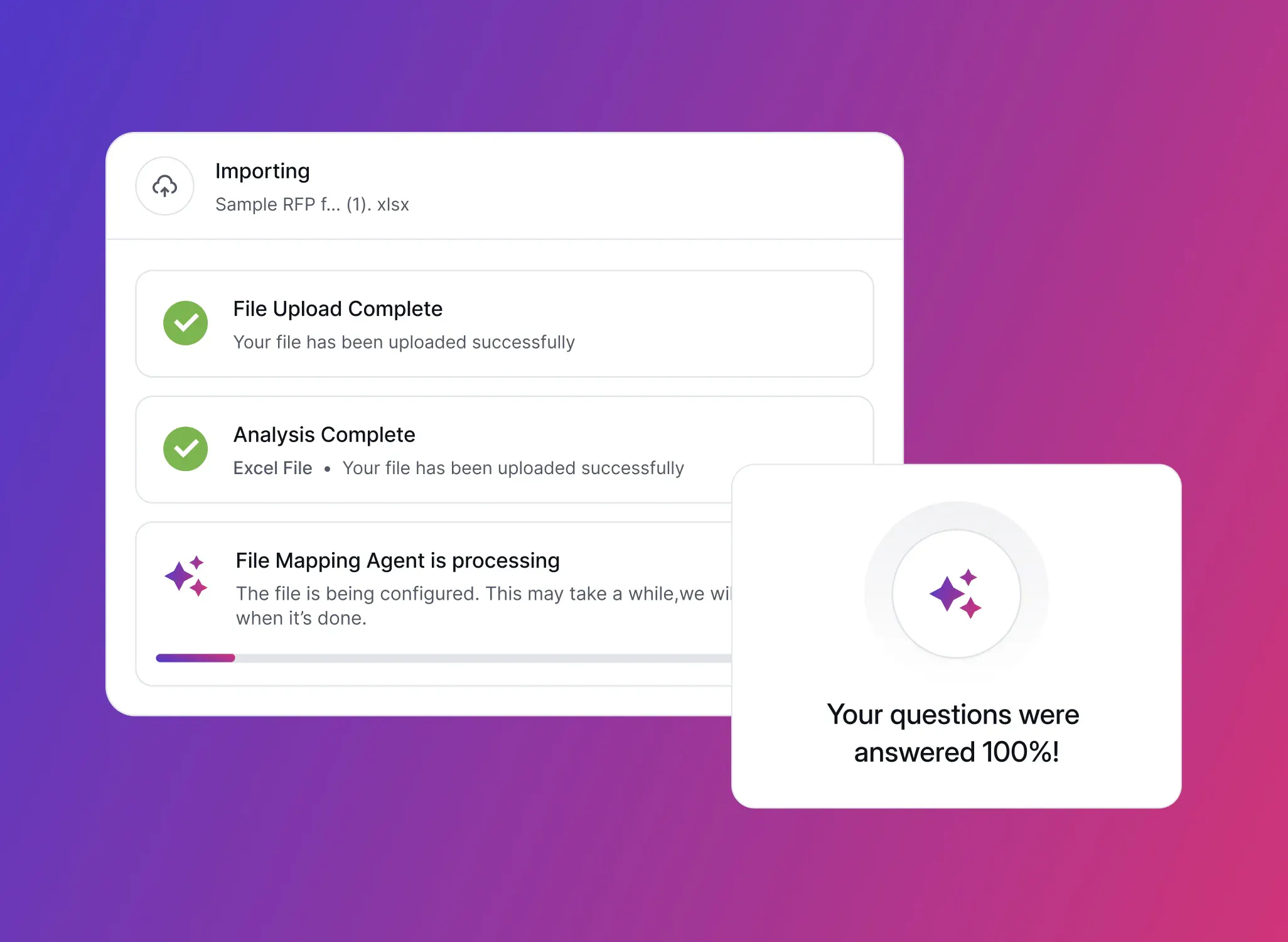
The 2025 State of SRM Report found that leading proposal and strategic response teams like EXL’s were proactively adopting new technology (such as AI), aligning teams and people with it, and consistently amplifying their results through organization-wide adoption. The report classified leading teams as those who saw in a single year:
- 25%+ growth in revenue
- 25%+ increase in revenue generated directly from RFPs
- 40% or greater increase in RFP win rate
The report found that leaders consistently build AI and SRM into the foundation of their revenue strategy, ensure their teams use AI and SRM effectively, and measure what matters and scale what works.
Adopt the right technology with intention
Leaders deploy AI and AI agents across go-to-market and response workflows, doing so alongside a centralized, curated knowledge base. Organizations that lead the pack are about six times more likely to have fully deployed AI agents and about three times more likely to embed AI across revenue functions.
That’s the winning combination that drives trusted speed and consistent answers.
Align people, processes, and knowledge
Better tools do not carry a team by themselves. Leaders also invest in people, reduce bottlenecks with structured libraries, and give every role access to accurate, up-to-date content through self-service platforms. This three-fold alignment maintains high quality while the team moves faster.
Amplify results with a data-driven strategy
Amplification means that every improvement you make (better content, sharper qualification, smarter use of AI) lifts performance across the entire organization. For proposal and strategic response teams, broader adoption of tools and processes results in more wins, greater efficiencies, and insights that compound rather than remain trapped in individual silos.
Amplification comes down to defining content ownership and roles, connecting roles to outcomes, and making the impact visible. Measure what revenue was influenced, team efficiency, and content effectiveness. Build feedback loops with pursuit data to ensure your content, qualification, and processes continually improve.
For those curious about where AI agents fit, the 2025 State of SRM Report outlines a practical system of agents that can handle intake, qualification, answering, cleanup, routing, and submission, then work together. When people and agents collaborate, proposal professionals spend more time on strategy, story, and relationships.
How three companies use SRM for growth
Microsoft made relevance effortless for sellers
Microsoft’s Proposal Center of Excellence supports thousands of sellers with a central Proposal Resource Library. The team uses Responsive as a cornerstone for content, support, and winning insights, which means sellers can access the right company-approved details faster.
There is a clear indication that the approach is effective. Microsoft increased proposal library usage by 60% after introducing AI to help surface and refine content. This only happens when relevance becomes easily attainable.
Payscale established measurable speed and scale
Payscale cleaned up a chaotic content library and turned it into a trusted company-wide resource. The returns show up on the clock and in throughput. The team cut turnaround time by 25% and increased response volume by 50%.
Those numbers closely align with the pillars of Align and Amplify we mentioned earlier. Better knowledge and ownership reduce friction, and instrumentation tells a credible story about time saved and capacity created.
Netsmart found compounding gains when AI meets adoption
Netsmart leaned into AI and integrations to accelerate response work. Their team responds ten times faster and submits 67% more proposals. The shift also unlocked SME engagement, a common sign that content is easier to find and trust.
Checklist for turning AI-powered SRM into a revenue growth engine
Watch the EXL video included at the beginning of the blog. Short on time? Then read this short checklist that any strategic response team can use to start converting lessons into practice.
Centralize and clean the knowledge
- Inventory your most used answers, proof points, pricing guardrails, and policy language.
- Move the right content into a curated, governed library with clear owners.
- Give every role read access to the same truth so accuracy improves as speed increases.
Meet people where they work
- Turn on CRM and communications integrations so sellers, SEs, and proposal managers can search and answer in the flow of work.
- Use Teams or Slack notifications to keep reviews moving, and tie content to Salesforce or HubSpot objects for context.
Put AI to work on decisions and drafts
- Start with retrieval and first drafts.
- Add quality checks, scoring, and content cleanup to reduce rework.
- Explore agents for intake, qualification, and orchestration once your library is healthy.
Instrument outcomes that matter
- Track cycle time, response volume, content freshness, SME touch time, and win rates by segment.
- Share the story with leadership using real data to build support for the next wave of improvements.
Build change muscles
- Identify champions in sales, solutioning, and security.
- Share short wins early, then scale what works.
- Invite feedback on prompts, templates, and the library, and turn it into small weekly improvements.
Share the wealth of the proposal team’s gold mine
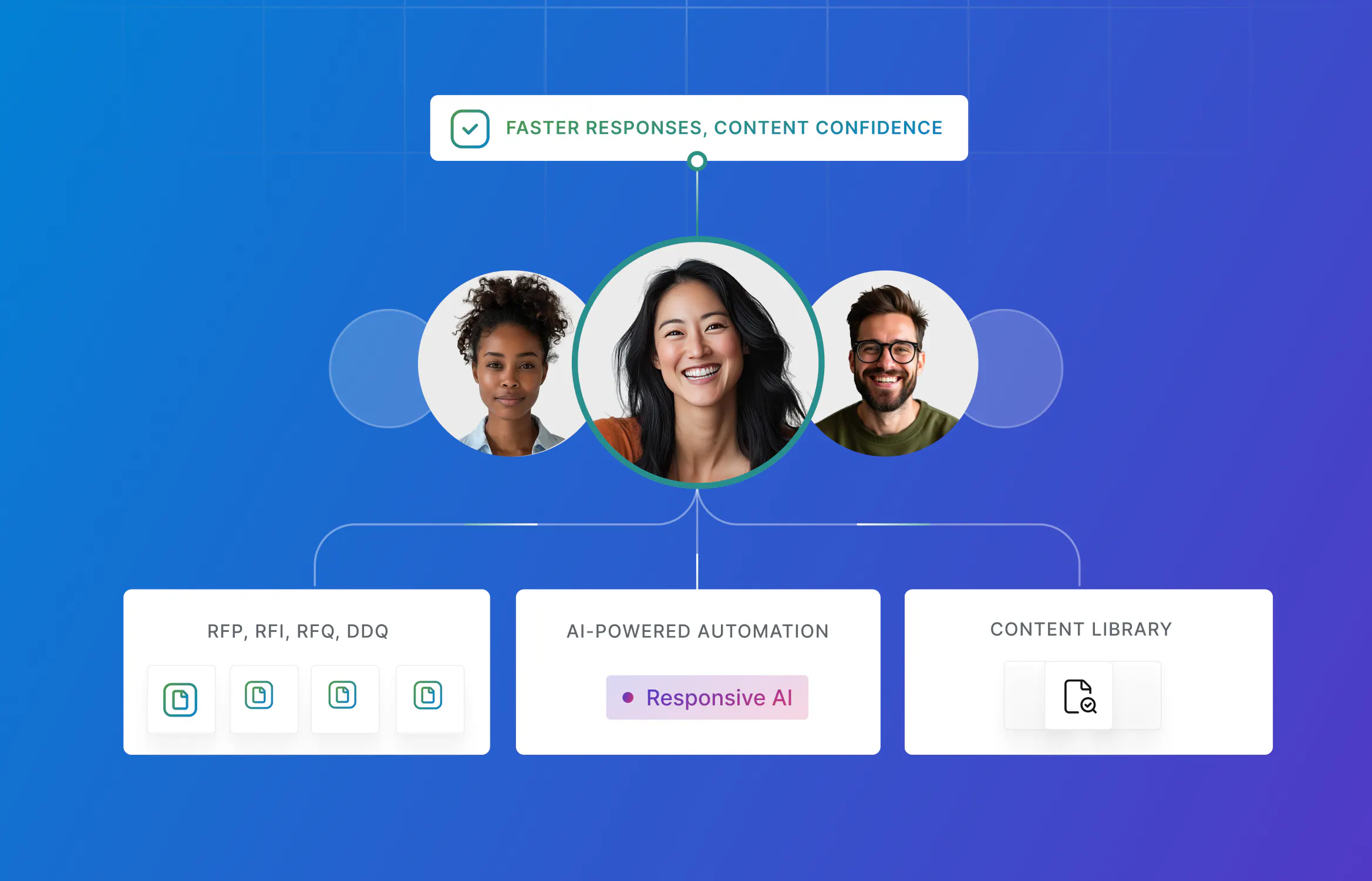
Proposal leaders sit close to the organizational knowledge that shapes deals, and when that organizational knowledge is connected across the company, it’s a gold mine that elevates everyone. The opportunity is to open that gold mine to the rest of the business with SRM.
Leaders are already doing it. They adopt AI with intention, align people and process around a trusted library, and amplify what works with data. In our research, those leaders are far more likely to have AI agents in place and to use AI across revenue activity. That advantage shows up in speed, quality, and win rates.
EXL’s story shows the pattern in real life. Integrate SRM with the systems your teams use, open up access to knowledge, and build simple habits around AI. Do that, then the proposal team becomes a strategic hub for growth. The stage gets bigger from there.

Andrew Martin
Content Marketing Manager @ Responsive
Andrew Martin covers AI adoption, RFP strategy, and proposal management at Responsive, drawing on insights from Responsive's 2,000+ enterprise customer base and original research.