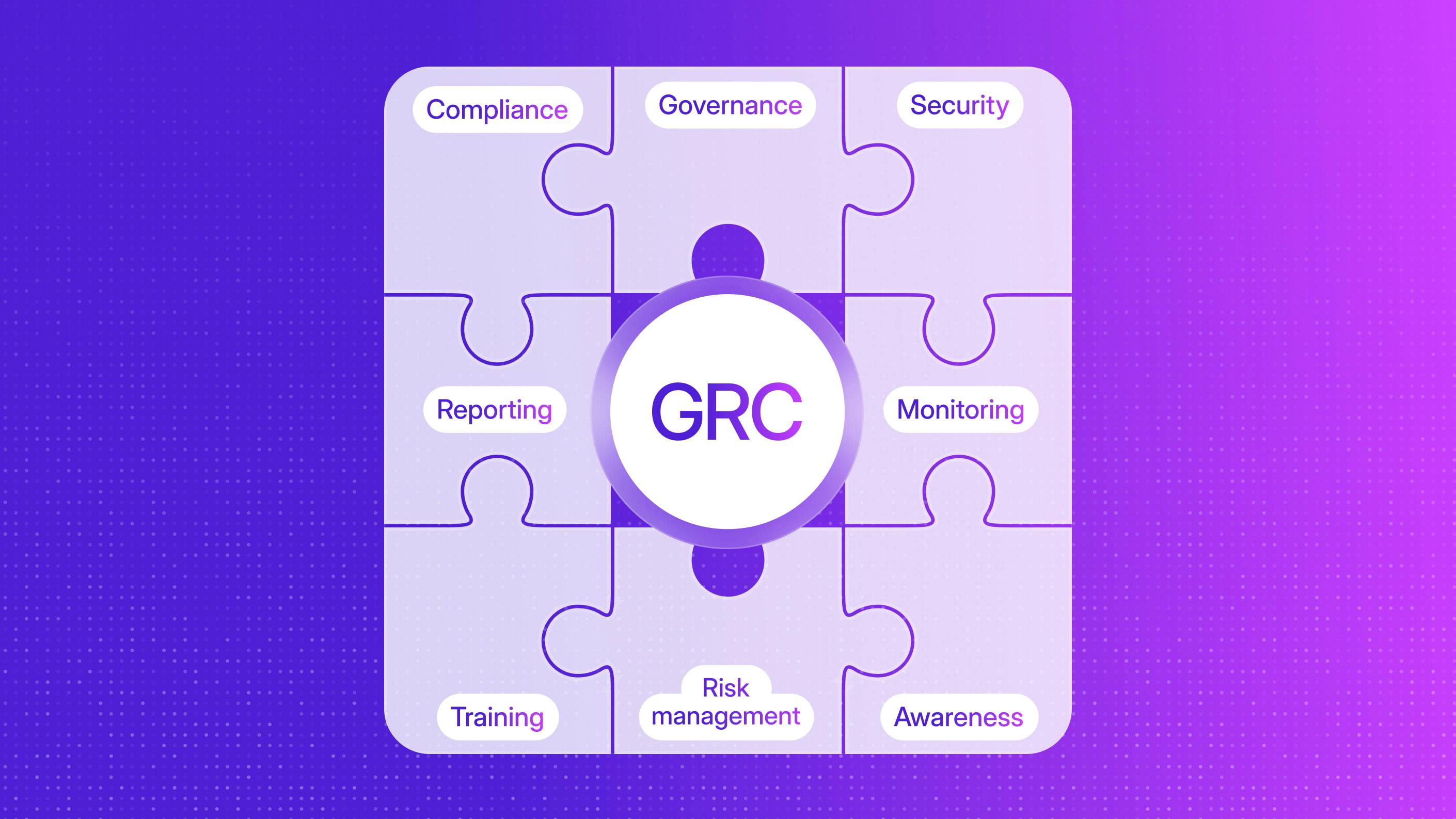
A governance, risk, and compliance (GRC) framework provides structure for how organizations manage internal oversight, risk exposure, and regulatory obligations. Teams often adopt a GRC framework when compliance work becomes harder to manage, audits become more frequent, or leadership needs clearer visibility into how risk is managed across the organization.
Understanding the key components of a GRC framework clarifies what this structure is designed to support and where it fits within broader trust and response workflows. It also helps set realistic expectations about what a framework can and cannot address on its own.
This post breaks down the core components of a GRC framework, explains how they work together over time, and clarifies how internal governance frameworks typically coexist with systems for managing external trust requests.
What a GRC framework is designed to support
A GRC framework is designed to support internal governance, risk management, and compliance programs. At a functional level, it provides a shared framework for documenting policies, defining ownership, tracking controls, and demonstrating compliance with regulatory or operational requirements.
Unlike one-time compliance efforts, a GRC framework supports ongoing programs and repeatable processes. It helps organizations maintain consistency across audits, reviews, and assessments rather than rebuilding processes each time a new requirement appears.
It is also important to distinguish between governance structure and execution tools. A GRC framework defines how governance, risk, and compliance should operate internally, while software supports that structure rather than defining it.
Key components of a GRC framework
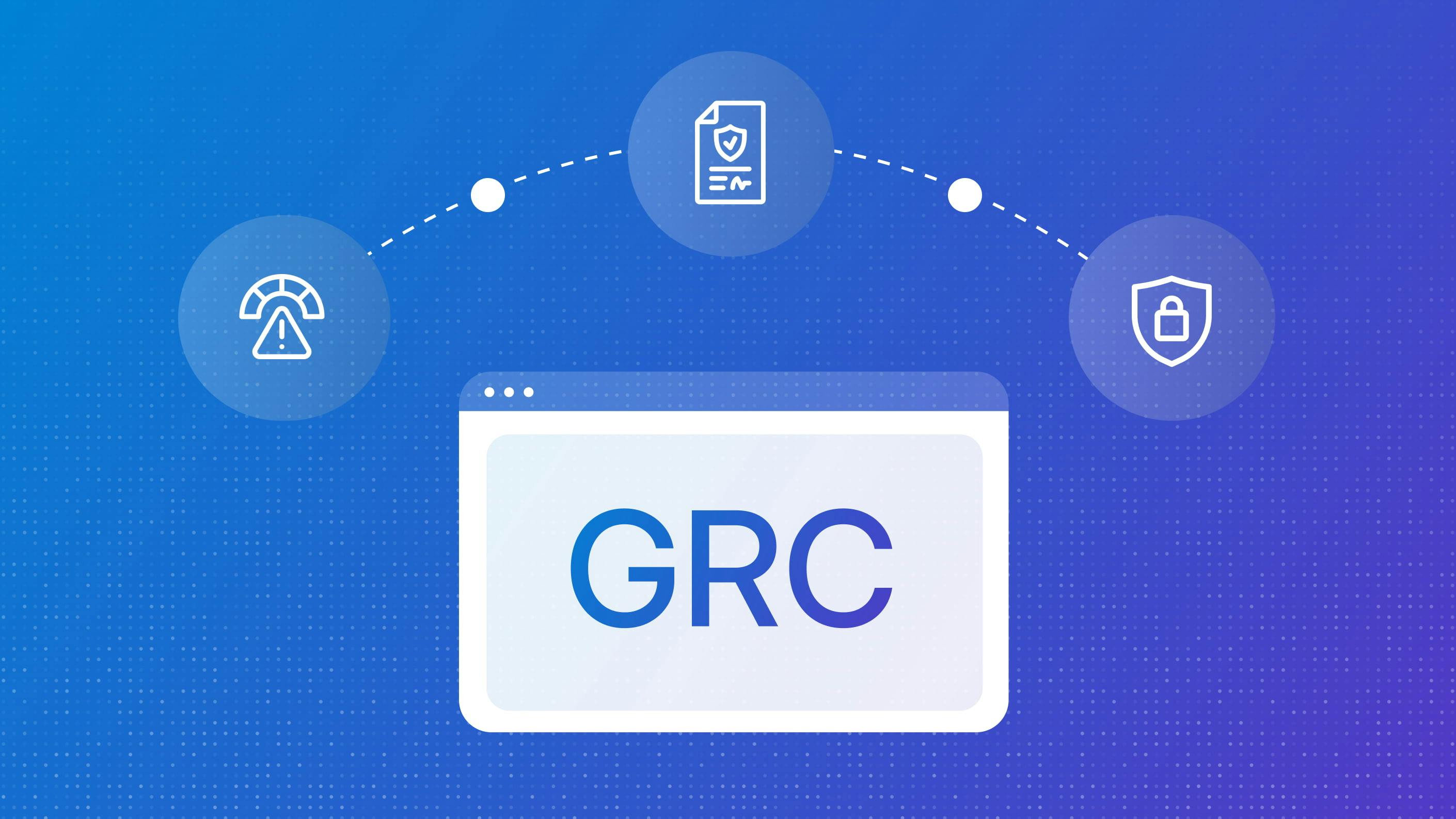
Together, the following six components define a complete GRC framework and describe the core capabilities required to manage governance, risk, and compliance in a structured way.
While these six components form a unified framework, they are often supported by different teams and systems, each focused on a specific aspect of oversight, control, or execution. Understanding these distinctions helps clarify how GRC operates in practice.
- Governance (policies and structure) establishes the rules, roles, responsibilities, and decision-making structures that guide how risk and compliance are managed internally. This includes defining ownership, approval processes, and how governance aligns with overall business objectives.
- Risk management (identification and mitigation) focuses on identifying, assessing, and addressing risks that could affect the organization, including operational, financial, and reputational risks. This component also includes defining risk appetite and determining how mitigation efforts are prioritized over time.
- Compliance (regulatory alignment) ensures that the organization adheres to external laws, industry regulations, and internal policies. This work often includes audit preparation, evidence management, and internal reporting to support regulatory reviews.
- Security controls and technology refer to the technical safeguards used to protect systems and data, such as access controls and encryption. These controls support compliance and risk mitigation but sit outside the governance structure itself.
- Monitoring and reporting involve tracking the risk environment and the effectiveness of controls within governance and compliance programs to inform internal decisions. This visibility helps teams identify gaps or changes that require attention before audits occur.
- Training and awareness reinforce policies and procedures through employee education and communication. This component supports a compliance-focused culture by helping employees understand their responsibilities and how governance expectations apply to daily work.
Together, these components form the foundation of a GRC framework, though their implementation and governance often evolve as organizations grow.
How GRC frameworks evolve as organizations grow
Early-stage organizations often manage governance and compliance informally, relying on shared documents and ad hoc ownership. While this approach can work at a small scale, it becomes harder to sustain as requirements and stakeholder expectations increase.
As organizations grow, scale introduces complexity across teams, frameworks, and audits. At this stage, organizations often introduce more formal governance structures and clearer ownership to maintain consistency.
This evolution is driven by the need for reliability over time, not solely by regulatory pressure. A mature GRC framework adapts as the scope expands and responsibilities change.
Where technology fits into a GRC framework
Technology supports a GRC framework by helping teams centralize documentation, track evidence, and maintain visibility into controls. These capabilities reduce manual effort and help teams apply governance and compliance practices more consistently across programs.
It is important that software decisions follow governance decisions rather than define them. Selecting tools before roles, ownership, and processes often leads to misalignment and added overhead later.
Because different components of a GRC framework are often supported by different systems, organizations often use multiple tools in combination. This approach reflects how governance, risk, and compliance responsibilities are distributed across teams and workflows.
Internal versus external workflows within a GRC framework
A GRC framework primarily supports internal workflows, including audits, risk assessments, and policy management. These workflows focus on understanding and managing internal risk and compliance posture over time.
External workflows introduce different constraints, including tight timelines and cross-functional collaboration during sales or due diligence cycles. These workflows require approved language and fast coordination.
GRC frameworks are not designed for live response coordination. This separation explains why organizations rely on adjacent systems to manage external trust workflows.
How a GRC framework works alongside response management
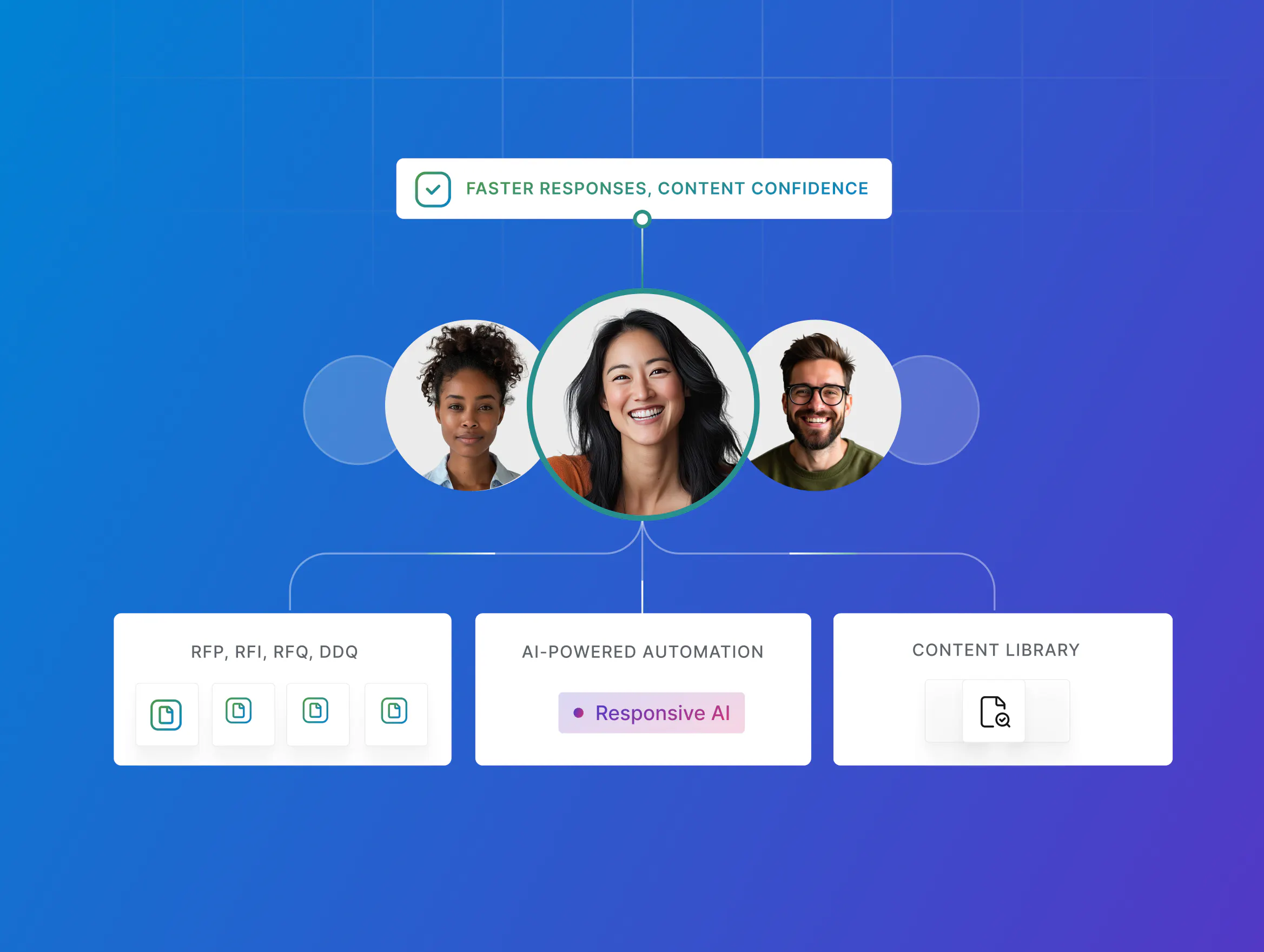
Internal governance frameworks establish approved, accurate information on policies, controls, and risk practices, which serves as foundational knowledge for external communication.
Response management focuses on how that information is shared externally across questionnaires, RFPs, and audits. It supports collaboration, reuse, and consistency during live requests.
This complementary approach, called Strategic Response Management, recognizes that internal governance and external responses rely on the same information but require different workflows.
How to assess whether your GRC framework is working
An effective GRC framework shows clear ownership and accountability across policies and controls. As programs mature, responsibilities remain consistent.
Operational signals such as reduced duplication and smoother audit preparation indicate growing sustainability. Consistency across frameworks further suggests that governance processes are functioning as intended.
Ultimately, effectiveness is measured by internal confidence from all stakeholders in documentation and processes.
Your next steps
If you want to better understand how compliance information is organized and maintained internally, reviewing best practices for compliance centers can help clarify how teams centralize policies and documentation over time. Exploring the difference between DDQs and security questionnaires can also help you understand why external trust requests often require distinct workflows and review processes.
For teams managing growing volumes of repeat questions, learning how knowledge management supports consistency and accuracy across responses can provide a helpful perspective when evaluating next steps.

Laci Texter
Content Strategist @ Responsive
Laci has more than ten years of experience creating content and GTM strategy for B2B SaaS companies which is the kind of organizations that live and die by the proposal process. At Responsive, she focuses on content that helps proposal managers, bid teams, and sales leaders understand how to respond faster, win more, and build scalable response operations. She's data-driven by nature and believes the best content answers the question the buyer is already asking.