
We often hear that bid and proposal managers can feel the ground shifting beneath them. Buying cycles are faster. Expectations for accuracy and personalization are higher than ever. Internal oversight continues to get tighter.
The 2025 State of Strategic Response Management (SRM) Report makes this reality clear: organizations that centralize knowledge, govern content, and use AI deliberately are widening the gap. In contrast, response teams that still chase answers across shared drives, meetings, and memory are losing time they can’t afford.
The tension between pressure and progress is why Open Up Resources (OUR), a nonprofit publisher dedicated to delivering high-quality learning experiences for all students, serves as a helpful lens. OUR moved from a knowledge base primarily secured in one person’s mind to a disciplined SRM operating model on Responsive.
OUR didn’t add people. Instead, they changed the system, and the results read like a checklist for modern proposal leadership:
- Cycle times reduced from roughly two weeks to two to three days
- Zero RFPs declined due to the proposal team being at capacity (down from 14%)
- Two minutes instead of two hours to find answers
- Sales requests for the proposal team dropped from 54 to three in just a year
“Responsive has really made us feel so much more confident with what we are submitting,” said Lynda English, Senior Director of Research and Proposals at OUR.
We’ve compiled ten themes from this year’s SRM Report, each brought to life in some way through our discussion with Lynda, which you can watch in full below. Let’s take a look at OUR’s experience so proposal managers, strategic response teams, and revenue leaders alike can see both the “why” and the “how.”
The quotes used in this blog have been lightly edited and trimmed for context and brevity.
1) Faster turnarounds aren’t optional anymore
The SRM Report underscores what you already know:
- 82% of buyers expect faster response times
- 76% of buyers have a more stringent approval process
- 73% of buyers require higher personalization
- 67% of buyers said more stakeholders are involved in the process
In short, turnaround time, personalization, and approvals are now part of the baseline evaluation. The old rhythm of kickoff, content hunt, heroics, and a rushed final pass is no longer feasible due to the increasing complexity of variables.
OUR’s before/after is instructive. By replacing a weekly multi-SME call with a targeted intake survey, they captured only the facts each expert needed to confirm, made go/no-go decisions promptly, and launched work in hours—not days.
“We have actually been able to cancel a meeting… Subject matter experts are only reviewing parts of an RFP that relate to their area of expertise. They answer yes/no right away, and we can move forward. We have gone from an RFP response taking us two weeks to two to three days.”
Lynda English
Senior Director of Research and Proposals at OUR
The lesson? Speed comes from orchestrating the flow, not rushing the work. Intake and early content population buyback account for the final 10 percent, which encompasses voice, nuance, and compliance.
2) The knowledge-hub advantage (why leaders pull ahead)
Leaders, as defined below in the SRM Report, are more likely to maintain a centralized, governed knowledge hub, as evidenced in several key areas: faster start-ups, fewer escalations, and cleaner reviews. OUR’s experience connects the dots.
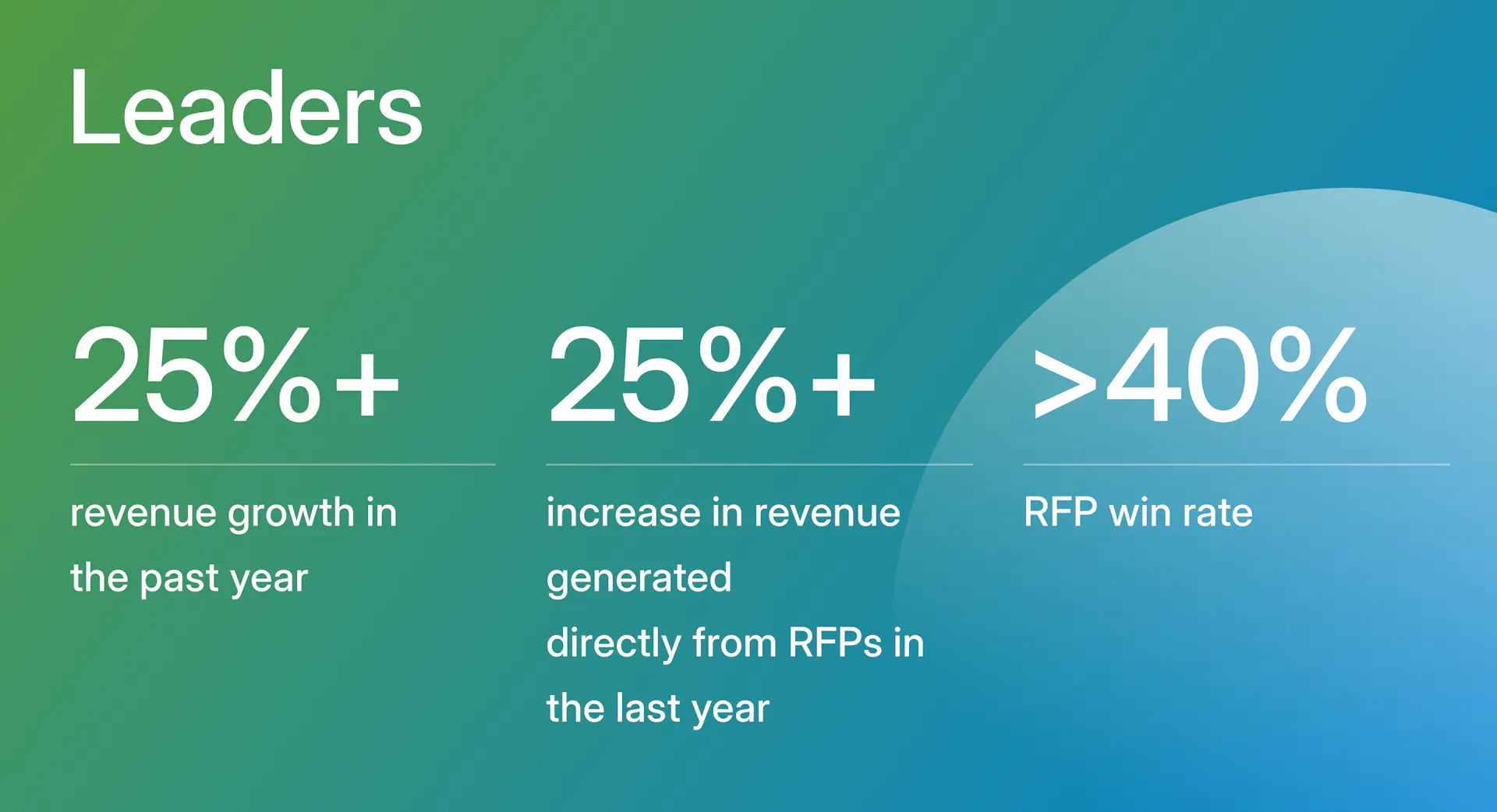
“Responsive has made it so we no longer have to hunt for each answer," Lynda said. "Before, we might search through 18 documents to find the one response. In Responsive, it takes two minutes, where before it would take two hours.”
Lynda pointed to Responsive AI and curated Content Library as the quiet engines behind their speed. Once answers are stored in a shared, reviewed, and findable location, teams stop wasting human resources on scavenger hunts. Instead, they start allocating them to strategy: positioning, differentiation, and tailoring to the buyer’s criteria.
3) Solve the SME bottleneck with structured intake
The 2025 State of SRM Report highlights two persistent blockers: tight deadlines and difficulty obtaining timely SME input. Those problems hide inside meetings that try to do too much. OUR turned a standing cross-functional call into a short, role-aware survey that routed only the relevant questions to each reviewer.
“We’re not waiting six days to get a yes or no," Lynda said. "Experts review on their time frame. We load the criteria into Responsive, pre-populate from approved content, and send it for review.”
This is the pattern to copy: route early, pre-populate with vetted language, and give SMEs a tight, scoped workload. You don’t need more meetings. You need a clear first pass that makes the later passes shorter and better.
4) AI ROI: what “good” looks like in three to twelve months
The 2025 State of SRM Report reveals that teams achieve tangible AI benefits within months when they anchor AI to a governed content base and specific, repeatable tasks. OUR’s approach is pragmatic: let the library do most of the heavy lifting, use AI sparingly for first drafts in projects (especially on straightforward “agree to provide” criteria), and lean into AI-assisted retrieval for sales, where speed matters most.
“For responses in projects, we use AI infrequently because our library is robust," Lynda said. "But sales can be on a call and use the AI tool in the content library to get answers at that time.”
AI doesn’t replace curation; it multiplies it. When the library is strong, AI becomes the fastest way to get the right answer to the right person at the right moment.
5) Capacity is a strategy decision, not a calendar problem
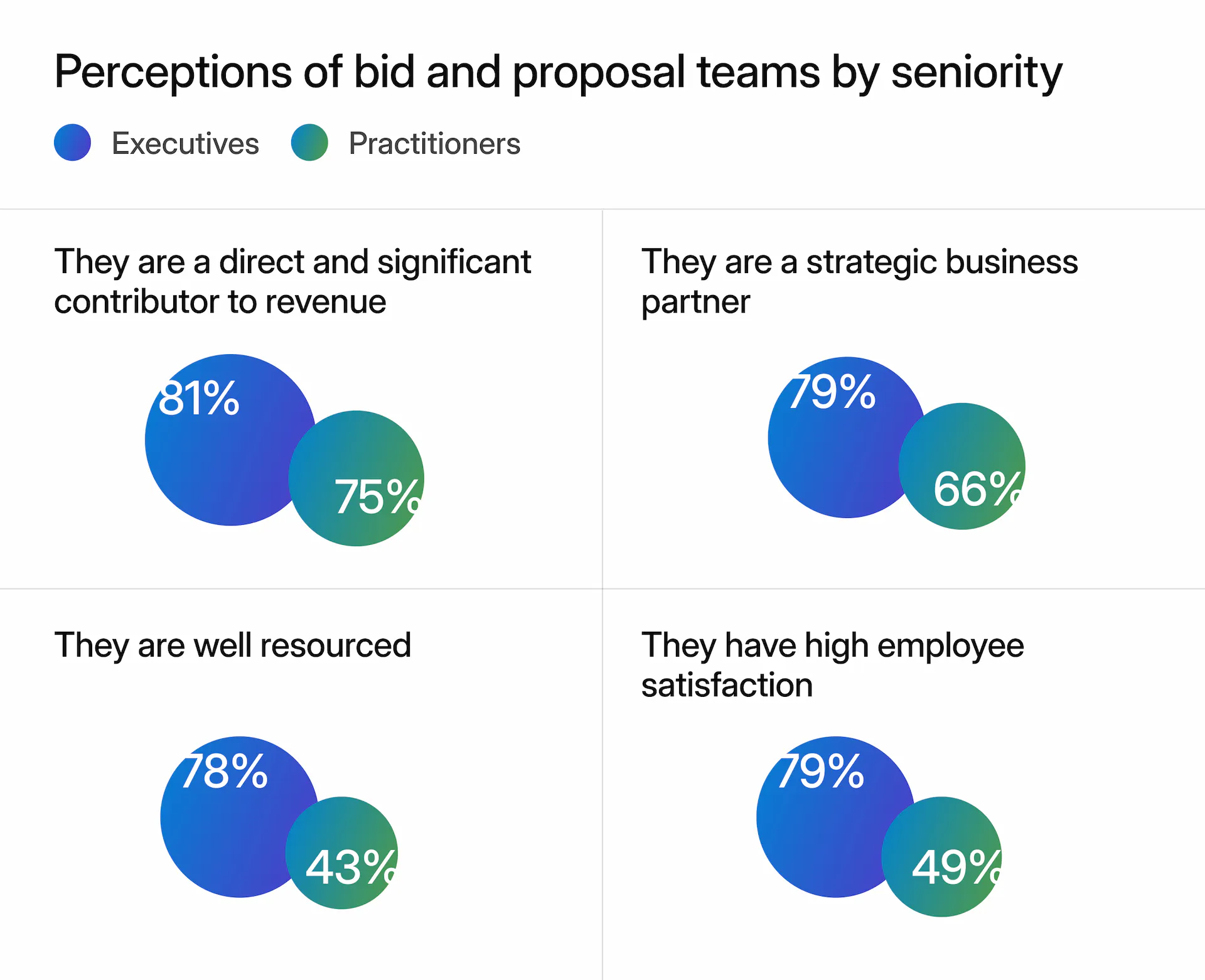
The report highlights a familiar perception gap: executives often think teams are adequately resourced while practitioners report mounting pressure. That mismatch creates missed bids, shallow reviews, and burnout.
OUR’s countermeasure is a case study in capacity by design: intake to eliminate idle time, a governed library to reduce rework, and reviews aligned to pursuit complexity. The result? Lynda said her team turned down zero RFPs due to capacity issues, something she attributed 100% to Responsive making her team more efficient.
Capacity improves when you raise the floor of every pursuit, meaning experts spend time on the hard 10 percent, not the repetitive 90 percent.
6) From automation to decision intelligence
Leaders in Responsive’s SRM Report are orchestrating work, mining win/loss, and closing the loop from outcomes back into intake and content strategy. OUR has laid those rails. Their team now allocates time for sequential reviews to ensure transparency in accountability without creating a traffic jam.
“We’re at the place where we need the sequential review," Lynda said. "[SMEs] can see when somebody has reviewed it, and then they’re doing their final review. Just that feature alone has made things so much better.”
And when content variants multiply (by product, version, or segment), hierarchical tags keep similar responses nested and governed, a real game-changer for OUR, according to Lynda.
Decision intelligence grows when your system (intake, tags, reviews, analytics) remembers what happened and feeds it into what you’re doing next.
7) When more revenue hinges on RFPs, precision matters
The data in this year’s SRM Report indicates that more revenue is tied to strategic responses year over year. For OUR, the implications are real: Lynda’s team can now respond to at least 75 RFPs annually, and the team’s ability to maintain that volume depends on tight last-mile controls, especially formatting and export.
Lynda said her team relies on project templates to keep outputs on-brand and client-ready, eliminating the need for time-consuming cleanup. Responsive makes it easy to export/import content across locations without losing the required formatting, font, and other elements.
Precision is the unsung performance edge. Templates, controlled exports, and a governed library guard against last-minute errors when the clock is at its tightest.
8) Cross-functional reality check: who actually contributes?
Response work is a collaboration across sales, executives, legal, IT, product, and beyond, and participation is rarely as tidy as our org charts make it look. That’s why OUR’s early-state reality is so familiar.
Lynda said OUR had salespeople answering proposals when they had time, content in different Google Docs, and all of OUR’s knowledge lived in her brain before Responsive. The fix wasn’t a bigger meeting or hiring more people. It was a better structure. Categories, tags, owners, and review cadence made it obvious “who does what, when,” while limiting visibility to relevant categories kept everyone focused.
“We mapped out our categories and then our tags… assign an owner and a reviewer to each content piece," Lynda said. "We can see the last and next review.”
Your cross-functional model should guide work, not slow it:
- Make ownership explicit
- Keep gates light but visible
- Show contributors how their inputs move the pursuit forward.
9) Taming scattered information (a top-three blocker)
We’ve frequently heard that an “overwhelming volume of scattered information” is a core brake on performance. OUR lived that very same problem, then fixed it using Responsive as a centralized platform to eliminate scattered Google Docs.
Their cleanup wasn’t one-and-done. It was a program, including this year’s “Summer of Responsive,” aimed at deduplicating, tightening merge tags, and introducing a golden response tag, which are tags that clearly indicate what was reviewed and what sellers could trust. OUR also used analytics to listen to the search bar.
“We use the content search terms report to see what teams are looking for," Lynda said. "If multiple salespeople are searching a term, that shows a shift in the sales environment, and we change from there.”
Scattered becomes governed when you ruthlessly remove duplicates, tag according to how the field thinks, and watch search behavior as if it were a customer signal, because it is.
10) Scale volume without headcount whiplash
AI adoption continues to transition from experimentation to everyday use, particularly in high-volume retail settings. OUR’s stats show what sustainable scale looks like on the ground.
“Last year, the sales team sent over 54 questionnaire documents for my team… This year we have done three. They can do those questionnaires themselves now.”
Lynda English
Senior Director of Research and Proposals at OUR
How? Intake to triage, a truly self-serve content library, conservative use of AI for first drafts inside projects, and templates that kill reformatting. Layer in tags (including “golden responses”) and sequential reviews, and you’ve got a system that says “yes” more often, without quietly shifting the burden onto a few people.
Putting it all together: the Open Up Resources playbook you can adapt
The 2025 State of SRM Report describes a market where pacing and precision determine outcomes, and where winning teams have transformed response work into a repeatable operating system. OUR’s story shows the system in motion: intake instead of meetings, a real content hub instead of shared-drive archaeology, AI where it compounds, and governance that protects the last 10 percent of quality.
If you lead proposal work, here’s the heart of it: speed isn’t the opposite of quality. The proper SRM practices create both. Here’s how you can start putting into practice what OUR already found works well on a short turnaround:
- Start where the friction is highest. OUR didn’t try to “do everything.” They replaced one weekly meeting with intake, then protected the final review window.
- Treat knowledge as a product. Plan the taxonomy before you load content. Govern with owners, reviewers, and review dates. Use categories to narrow visibility, and star ratings to teach new sellers the difference between general-purpose and product-specific content.
- Make AI useful by making content trustworthy. When the library is credible, AI becomes a confident accelerator. That’s why OUR can comfortably let sellers self-serve in live conversations, and why intake, recommendations, and first-draft generation don’t create rework later.
- Keep listening. OUR watches content search terms to decide which answers to polish next and which topics are bubbling up in the market. That loop, from field search to content roadmap, is how SRM transitions from a static repository to a living system.
These takeaways can create a substantial shift in how your team(s) feel about their work and their impact on the organization as a whole, evolving from merely surviving fast cycles to winning them.

Andrew Martin
Content Marketing Manager @ Responsive
Andrew Martin covers AI adoption, RFP strategy, and proposal management at Responsive, drawing on insights from Responsive's 2,000+ enterprise customer base and original research.