Organizations today respond to more requests for information than ever before. From RFPs and security questionnaires to due diligence inquiries and ad hoc questions from prospects, the volume and complexity of these requests continue to grow.
The stakes are also higher than ever. Each response represents an opportunity to build trust, accelerate a deal, or strengthen a customer relationship. For many organizations, however, responding effectively remains a time-consuming and fragmented process.
That’s why Strategic Response Management (SRM) is on track to become the next must-have, go-to-market capability – not just for responding to RFPs, but for helping organizations grow faster, reduce risk, and deliver better customer experiences.
Strategic Response Management is defined as the people, practices, and technology that unlock organizational knowledge for profitable growth.
Go-to-market teams face a hidden operational challenge
In most companies, responding to customer inquiries is far more complex than it appears from the outside.
RFP teams respond to lengthy, complex RFPs. Security teams receive detailed vendor risk assessments. Sales teams field technical questions during customer calls. Product teams are pulled into deep feature evaluations. Legal and compliance teams review contract and questionnaire language.
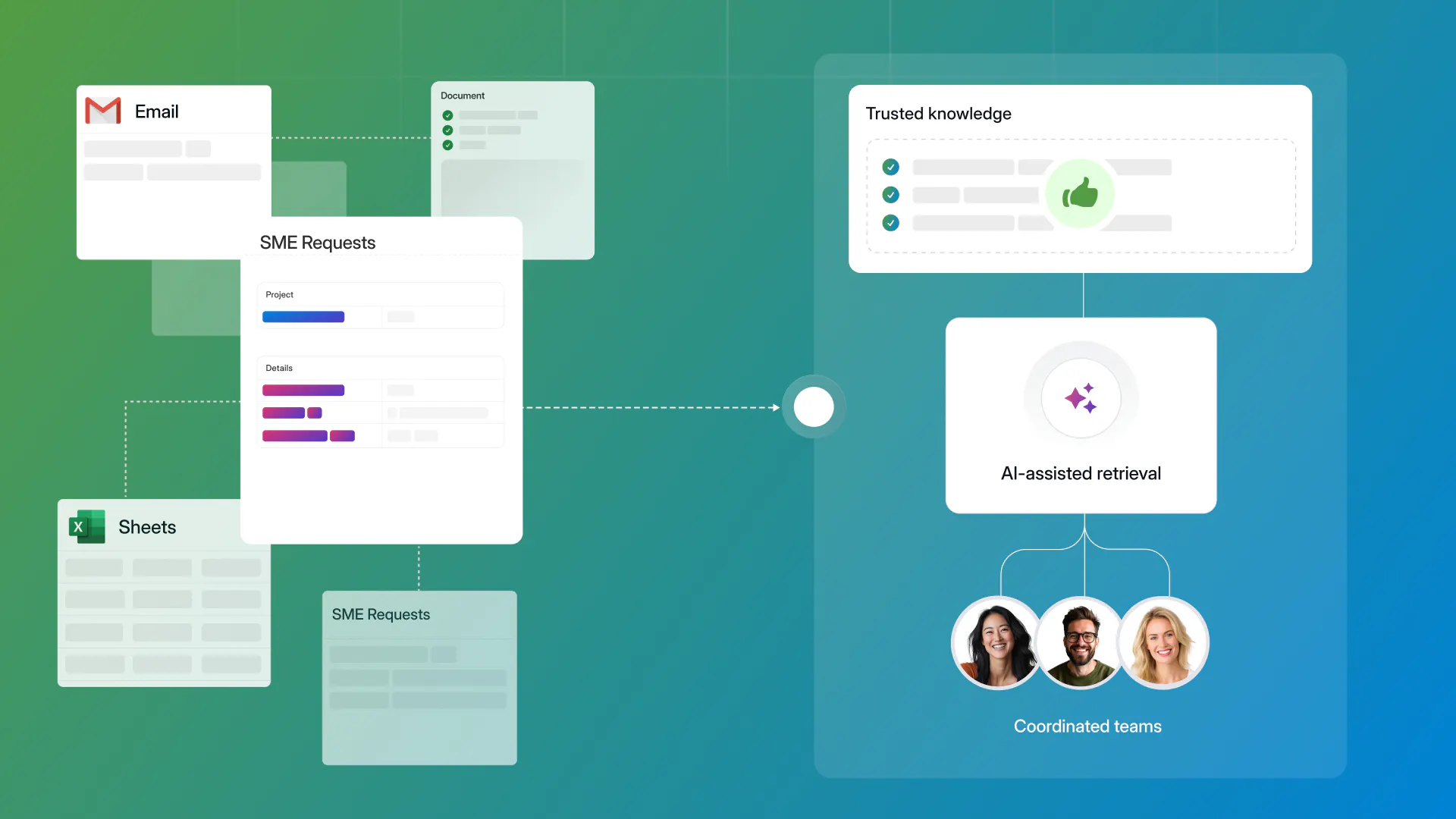
These responses often require coordination across multiple departments and senior subject matter experts (SMEs). Yet, despite the strategic importance of these interactions, many organizations still manage them through a mix of outdated systems, spreadsheets, email threads, and institutional memory.
These outdated and manual processes result in inefficiency and friction across the entire go-to-market motion through:
- Delayed responses that slow deals
- Repeated requests to the same SMEs
- Inconsistent or outdated answers reaching customers
- Teams recreating content that already exists
The result is predictable: Responses take longer than they should, internal experts are pulled away from their highest-value work, and valuable institutional knowledge remains locked inside past responses.
The gold mine most organizations overlook
The good news is that companies already possess the answers to many of these questions.
Every RFP response, every security questionnaire, every due diligence request requires teams to craft thoughtful, customer-ready answers. Senior SMEs contribute their knowledge, legal teams review the language, and sales teams refine the positioning to resonate with buyers.
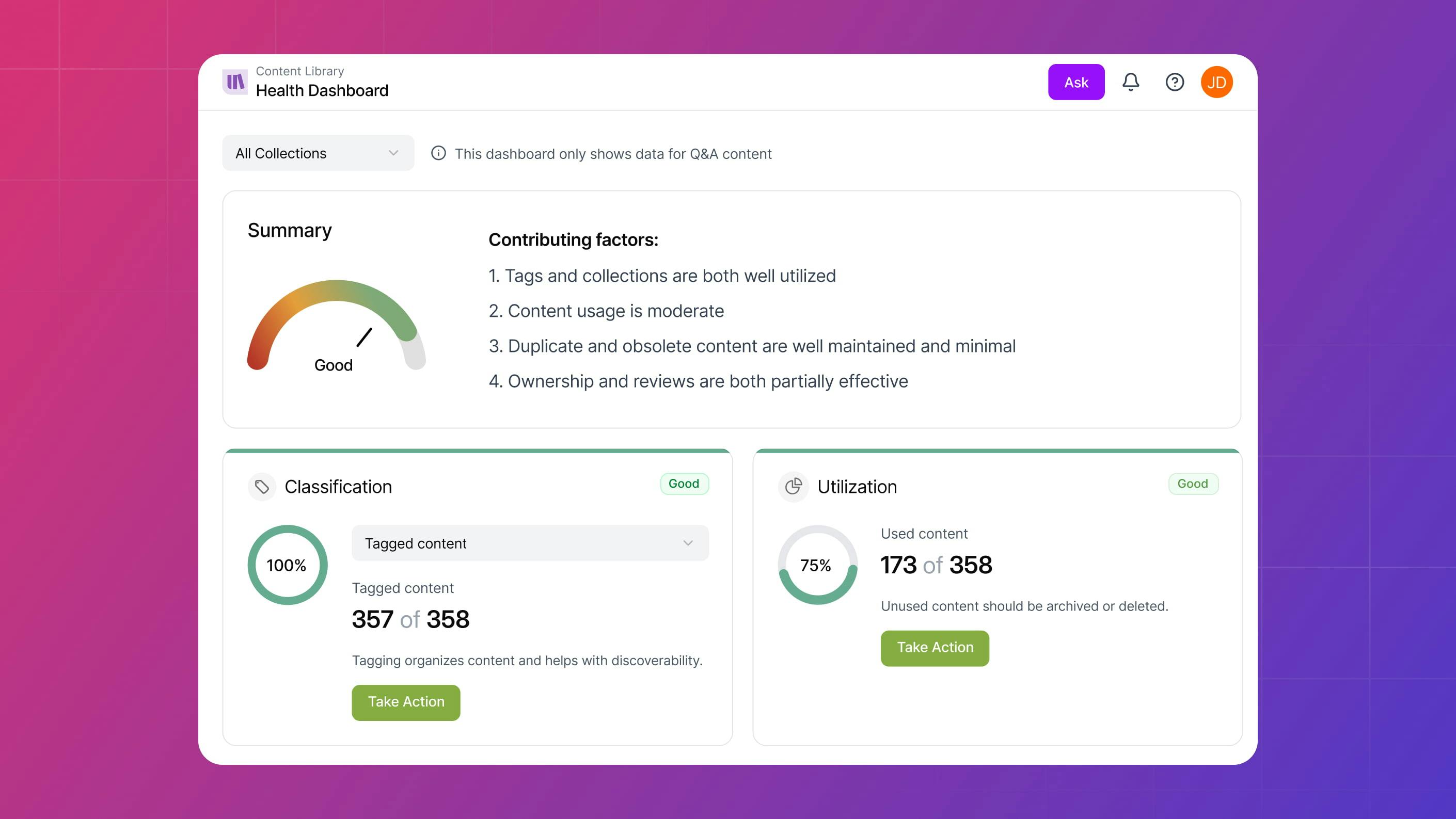
Over time, this creates something incredibly valuable: a curated body of institutional knowledge about how the company presents itself to the market. This knowledge base is a gold mine and one of your most valuable operational assets, one that should be structured, governed, and continuously improved.
But in most organizations, that knowledge is difficult to access, reuse, and learn from. Instead of functioning as a shared system, the knowledge base remains fragmented across files, tools, and individual contributors. SRM platforms are designed to unlock that value.
From tactical process to strategic capability
SRM initiatives typically start during the RFP process. Organizations invest significant time and resources responding to RFPs because they represent clear revenue opportunities.
But once a platform captures those responses, something powerful happens: the knowledge becomes reusable across the entire go-to-market organization. Instead of starting from scratch every time, teams gain access to a trusted knowledge base of customer-ready answers.
- Sales teams can quickly find accurate responses to prospect questions
- Security teams can respond more efficiently to vendor risk assessments
- Product and marketing teams gain visibility into how the company is represented to customers.
Add in AI, and this knowledge becomes even more accessible. AI enables teams to retrieve, draft, and refine responses in real time, directly within their workflows. What begins as a solution for RFP responses quickly becomes a strategic knowledge engine to drive success for the entire business.
Unlock faster growth with lower risk
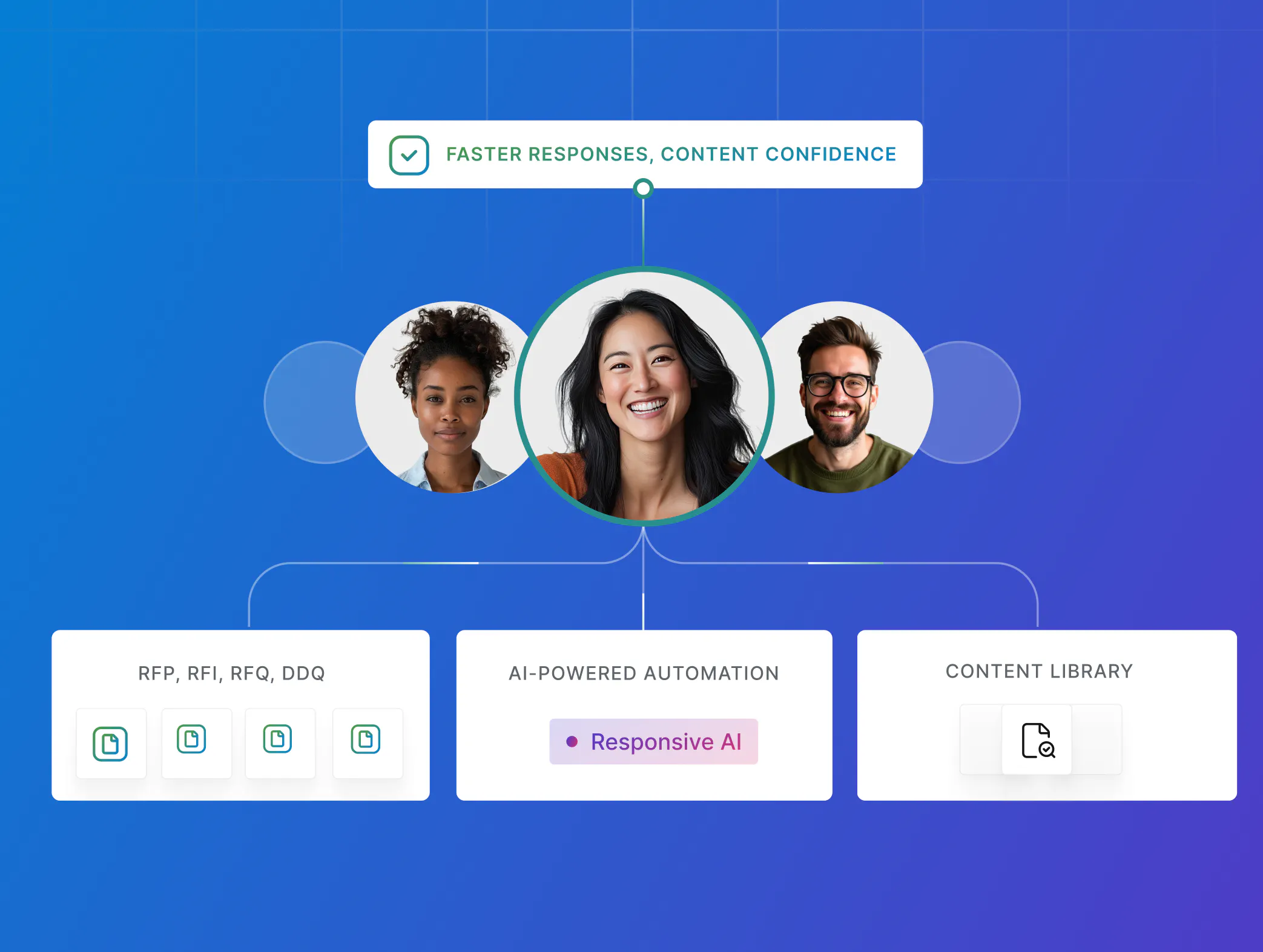
SRM benefits extend well beyond efficiency. Of course, organizations that implement SRM can respond to customer inquiries faster and with greater confidence. Sales teams can provide accurate answers during live conversations with prospects, and security and compliance teams can manage questionnaires without becoming overwhelmed.
Across the board, responses become more consistent, accurate, and aligned with company messaging. This translates into tangible business outcomes:
- Faster sales cycles
- Higher win rates
- Reduced compliance risk
- Improved customer experiences
In other words, SRM helps organizations grow faster while reducing operational friction. It’s a win-win across the entire enterprise.
Turning customer questions into market intelligence
Another powerful (and often overlooked) promise of Strategic Response Management lies in the insights it reveals. Every RFP and questionnaire contains signals about how customer expectations are evolving. Leading organizations don’t just respond, they analyze patterns across responses to inform strategy.
Responses can surface answers to questions such as:
- What security standards are buyers asking about most often?
- Which product capabilities appear in evaluation criteria?
- Where are competitors positioning themselves differently?
When organizations analyze these patterns across responses, they gain valuable intelligence about the market. High-performing companies can feed these insights back into product development, go-to-market strategy, and competitive positioning.
Some teams are now using AI to identify trends, prioritize which opportunities to pursue, and guide go/no-go decisions, moving from reactive response to proactive strategy. In this way, SRM helps organizations understand and shape the market, rather than just respond to it.
A category whose time has come
Strategic Response Management sits at the intersection of several major trends.
- Buyer scrutiny and due diligence are increasing across more complex enterprise purchasing processes.
- Trust, security, and compliance are increasingly important.
- Faster, more informed sales engagement is more essential than ever before.
As these forces continue to evolve, the ability to respond quickly, accurately, and strategically to customer inquiries will become a core competitive advantage.
Forward-thinking organizations already recognize this shift. They treat response management not as a tactical task, but as a strategic capability that supports revenue growth, customer trust, and market intelligence. These organizations are investing in systems and SRM platforms that combine knowledge, workflows, and AI to enable teams to scale high-quality responses and support growth targets.
That’s the promise of Strategic Response Management. And we’re just getting started.

Michael Londgren
CMO @ Responsive
Strategic, passionate, high-impact leader with a strong record of helping companies scale rapidly. Michael drives marketing for SaaS businesses ranging from startups to enterprise organizations.