More than 75% of organizations say today’s buyers have tighter budgets, expect faster response times, and require a higher degree of personalisation. Each of these factors raises the stakes for bid accuracy, customization, and speed.
“[Buyers are] benchmarking. They’ve done their research. So for us, it’s about how fast we can respond, how relevant we can be, and how well we differentiate. If we’re too slow or too generic, we lose.”
Neel Shah
Division Vice President, Commercial Operations at ADP
But at the same time, bid teams are being asked to handle more tenders, questionnaires, and related requests than ever before.
The real differentiator is no longer which tool generates the fastest first draft. Instead, it’s which tender management platform can connect people, process, content, and AI in a way that improves both efficiency and outcomes.
The best tender management software in 2026, therefore, helps organisations:
- Qualify the right opportunities
- Centralise approved knowledge
- Coordinate contributors
- Enforce governance
- Improve win rates over time
What is tender management software?
Tender management software helps organisations manage and respond to formal buyer requests known as tenders or requests for proposals (RFPs). Tender management software can also be helpful in preparing other procurement-related documents, such as:
- Requests for information (RFIs)
- Request for quotes (RFQs)
- Framework applications
- Due diligence questionnaires (DDQs)
- Security questionnaires
Some tools are built for the buyer side of procurement. These buyer-side platforms, such as SAP Ariba, Jaggaer, Ivalua, and Proactis, are often referred to as e-tendering software. They are designed to help procurement teams issue, manage, and evaluate tenders.
Other tender management tools are built for the supplier or vendor side. They help organisations streamline the bidding process with the goal of submitting more successful bids. Key functions include coordinating SMEs, managing reusable content, accelerating the drafting process, reviewing compliance language, and optimizing bid performance over time.
This guide focuses on software that assists with the vendor side of the tendering process.
Best tender management software at a glance
| Platform | Best for | Approach to AI | Key Features | Limitations |
|---|---|---|---|---|
| Responsive | Enterprise bid and tender teams | Full-lifecycle AI SRM platform | Governed knowledge base, end-to-end workflows, collaboration across teams, AI agents, quality scoring, analytics, multi-use-case support | Requires implementation and process alignment for best results |
| Loopio | Structured, repeatable tender workflows | AI-assisted content reuse | Centralised library, strong reuse workflows, intuitive collaboration, easy adoption | Limited flexibility for complex bids, lighter lifecycle support, and more basic analytics |
| Qvidian | Teams modernising legacy proposal processes | Emerging AI on a legacy proposal platform | Established document workflows, content library, and familiar enterprise structure | Legacy user experience, less modern AI support, weaker real-time collaboration, and response intelligence |
| Inventive | Teams looking for fast drafting, growing integrations, and automation | AI-first drafting and workflow automation | Fast draft generation, connected knowledge sources, modern interface, growing integrations across business systems | Greater emphasis on drafting speed than end-to-end bid management |
| AutoRFP | Rapid first-draft generation | AI drafting | Fast parsing and response generation across large documents | Limited workflow orchestration, minimal governance, and manual validation required |
| AutogenAI | Accelerating initial tender drafts | AI drafting | Strong long-form drafting, improved structure and tone, fast first drafts | Limited lifecycle management, significant manual governance is still required |
3 established leaders in tender management software
Tender management software capabilities show a clear delineation between Strategic Response Management (SRM) platforms that support the full pursuit lifecycle and the many startups offering AI response generation.
Look to Responsive, Loopio, and Qvidian as more established, end-to-end tools that numerous clients rely on to improve win rates.
1. Responsive
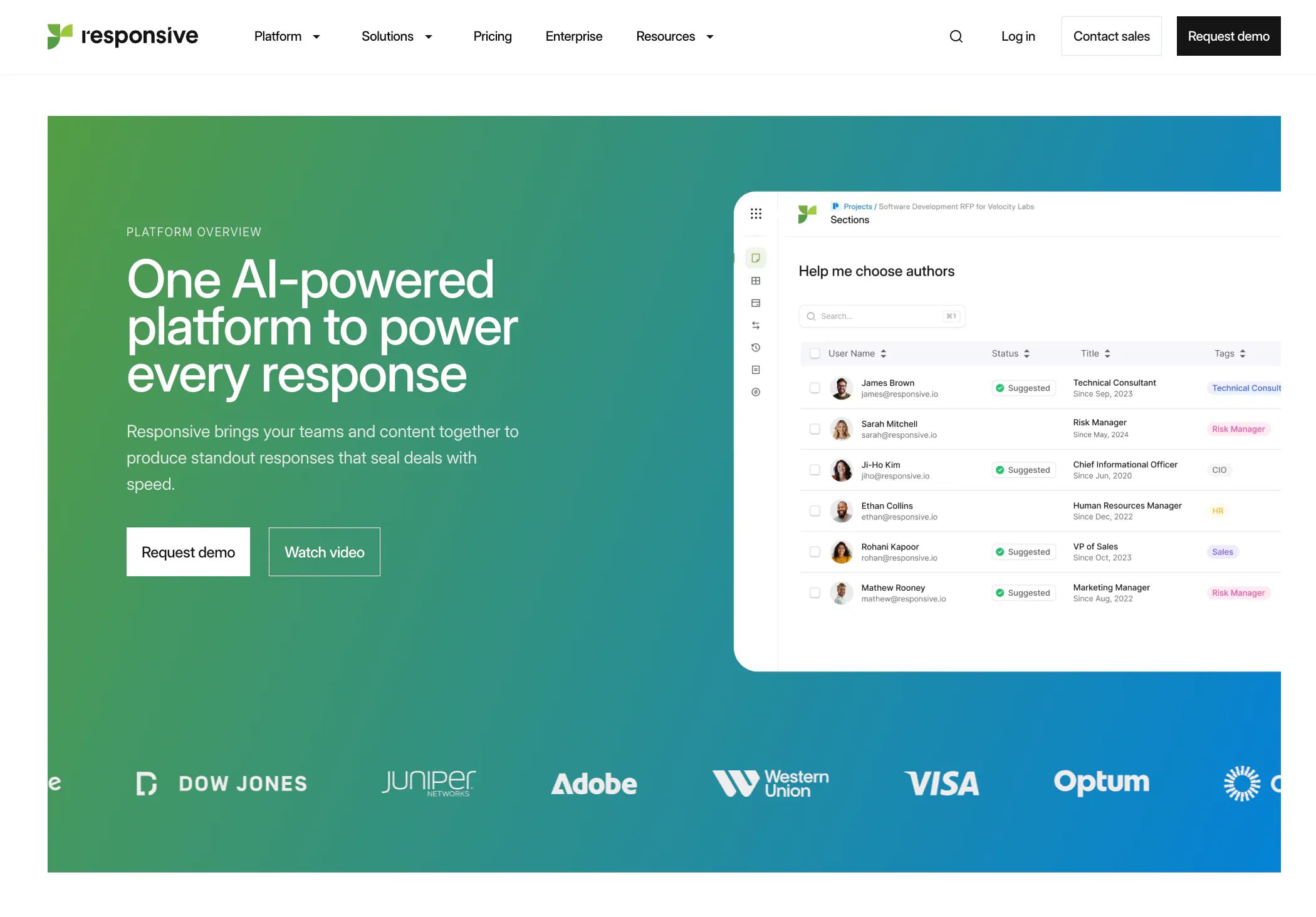
Best for: Enterprise teams managing complex, high-stakes tenders
Responsive is an enterprise‑grade Strategic Response Management platform that brings governed knowledge, AI agents, and full‑lifecycle workflows together so vendors can respond to more tenders with higher quality and stronger win potential.
Differentiators
- Robust knowledge base with analytics, expiration, and governance controls
- Agentic AI embedded across the entire workflow (intake analysis, drafting, quality scoring with TRACE Score, and compliance checks)
- Broad integrations (e.g., Salesforce, SharePoint, Slack/Teams, e‑signature tools) plus rich reporting and proposal analytics
- Support for multiple connected use cases (e.g. bids, questionnaires, ad hoc buyer questions, and trust center experiences).
Drawbacks
- Works best when teams can invest in library governance and process change; lighter‑weight teams may find it more than they need
- Implementation and onboarding are more involved than with point solutions or pure AI drafting tools
2. Loopio
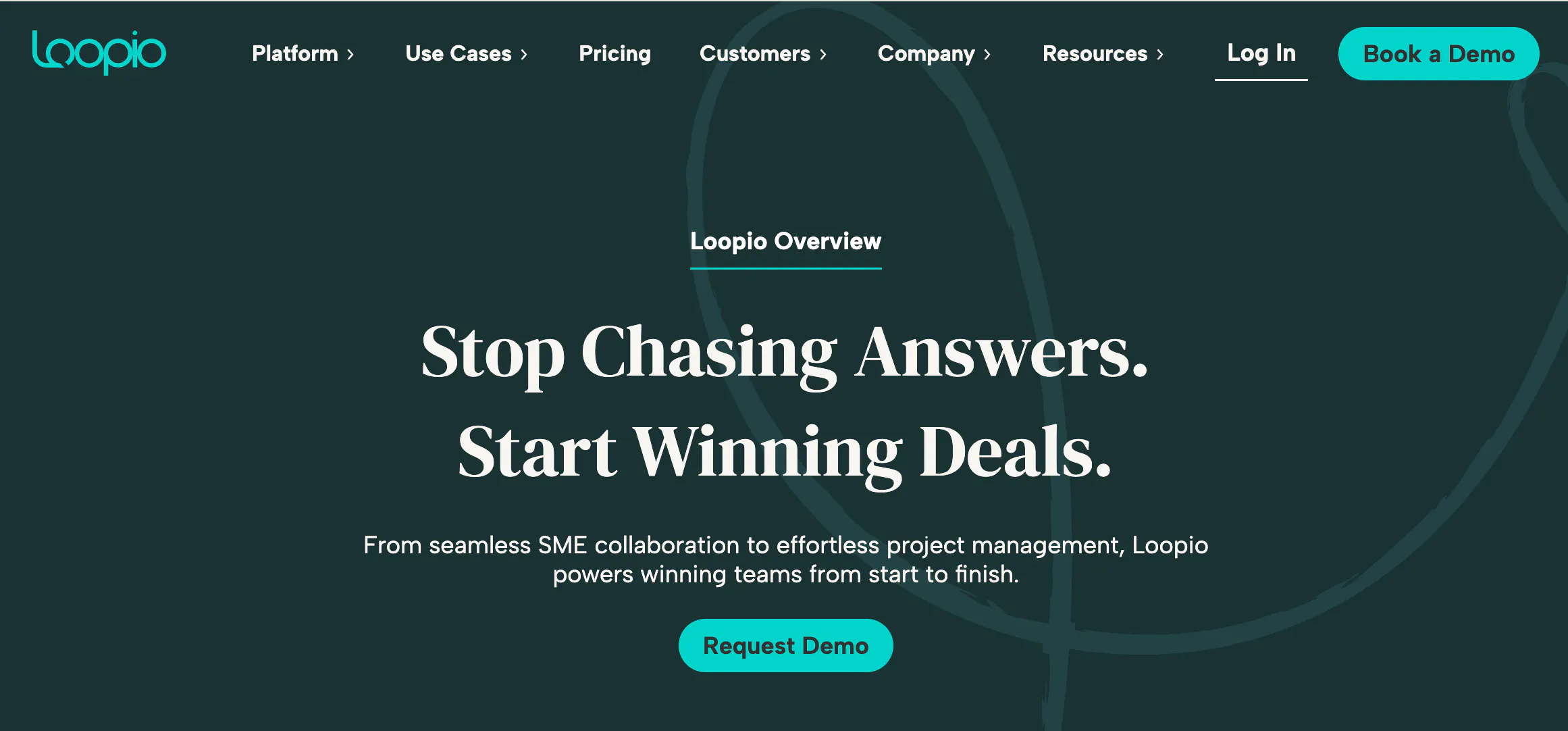
Best for: Organisations with high volumes of standardised tenders and questionnaires
Loopio helps bid and proposal teams centralise their best answers and reuse them efficiently, making it easier to keep tender responses consistent and on‑message across the organisation.
Differentiators
- Centralised content library for reusable answers and templates
- AI-assisted drafting (“Magic”/AI features) that pulls from approved content
- Project and collaboration tools tailored to standardised RFP workflows
Drawbacks
- Less flexible for narrative proposals and complex, multi-stakeholder deals
- Automation value depends heavily on rigorous library maintenance
- Basic reporting and analytics capabilities, with limited visibility into win rates or response effectiveness
3. Qvidian
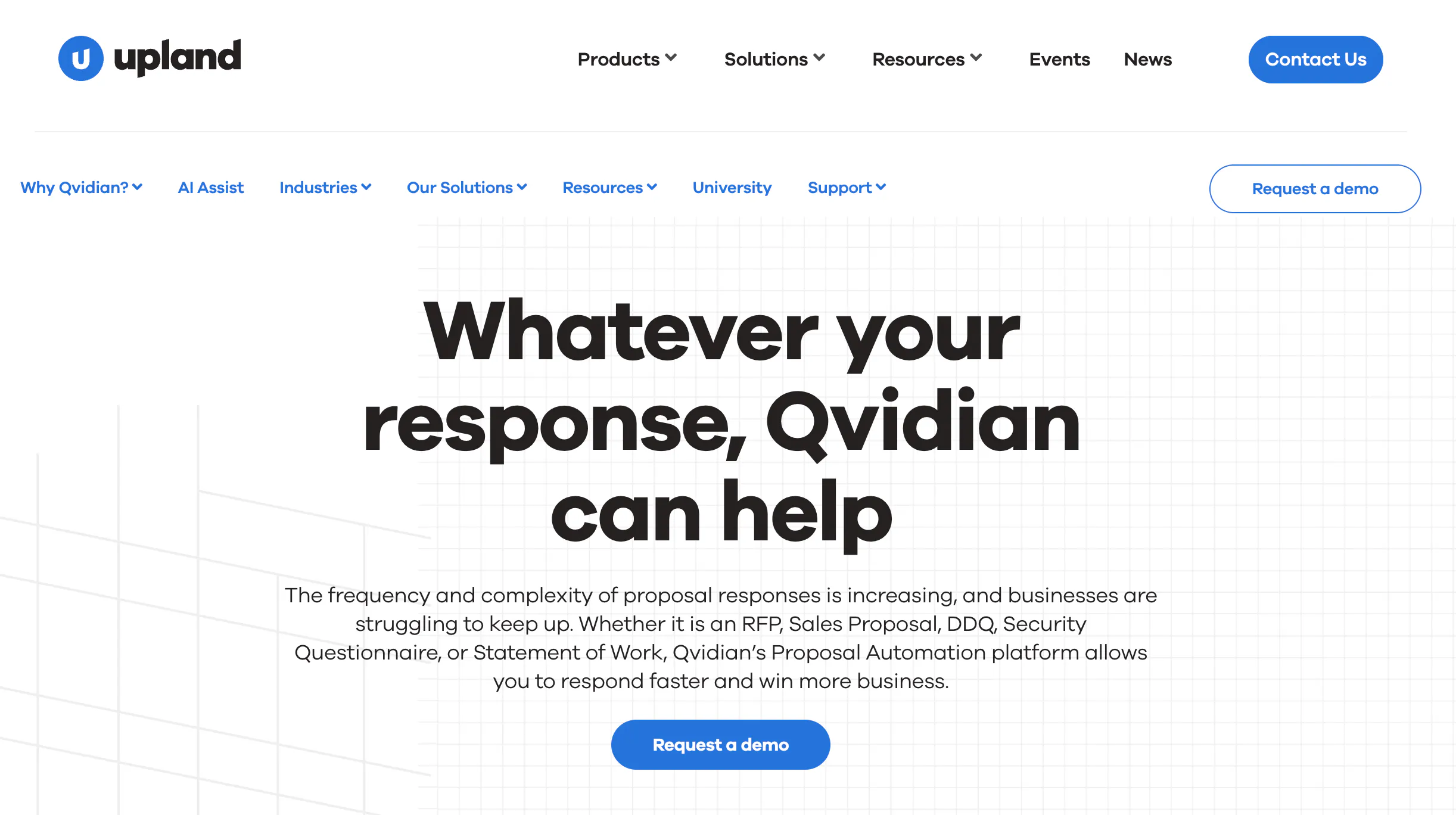
Best for: Teams modernising legacy tender management processes
Qvidian offers established content management and document assembly capabilities, along with a familiar structure for enterprise users. The platform is well-suited for teams that live in Microsoft Office and want to add structure, automation, and a centralised library without abandoning familiar tools.
Differentiators
- Centralised content library with usage tracking and expiration controls
- Automated review and approval workflows with status tracking across proposals
- Tight integrations with Word, PowerPoint, Excel, and collaboration tools for in‑document authoring and reviews
Drawbacks
- User experience and UI feel closer to traditional enterprise software than modern SaaS, with a steeper learning curve for some teams
- Less emphasis on advanced, embedded AI compared with newer SRM platforms and AI‑native tools
- Custom pricing and deployment can make it harder to justify for smaller or less centralized proposal teams
Promising entrants in the tender management space
Numerous bid management software solutions have recently emerged as AI has become more mainstream, including Inventive, AutoRFP, and AutogenAI. Focused largely on AI response generation, these tools dramatically improve drafting speed and perceived answer quality for small‑to‑mid-size bid teams moving off manual tools.
However, newer AI-focused software platforms typically lack the capabilities needed to support more complex bids throughout the full pursuit lifecycle. For example, it’s rare to see a governed tender content library or robust cross‑team collaboration features.
4. Inventive
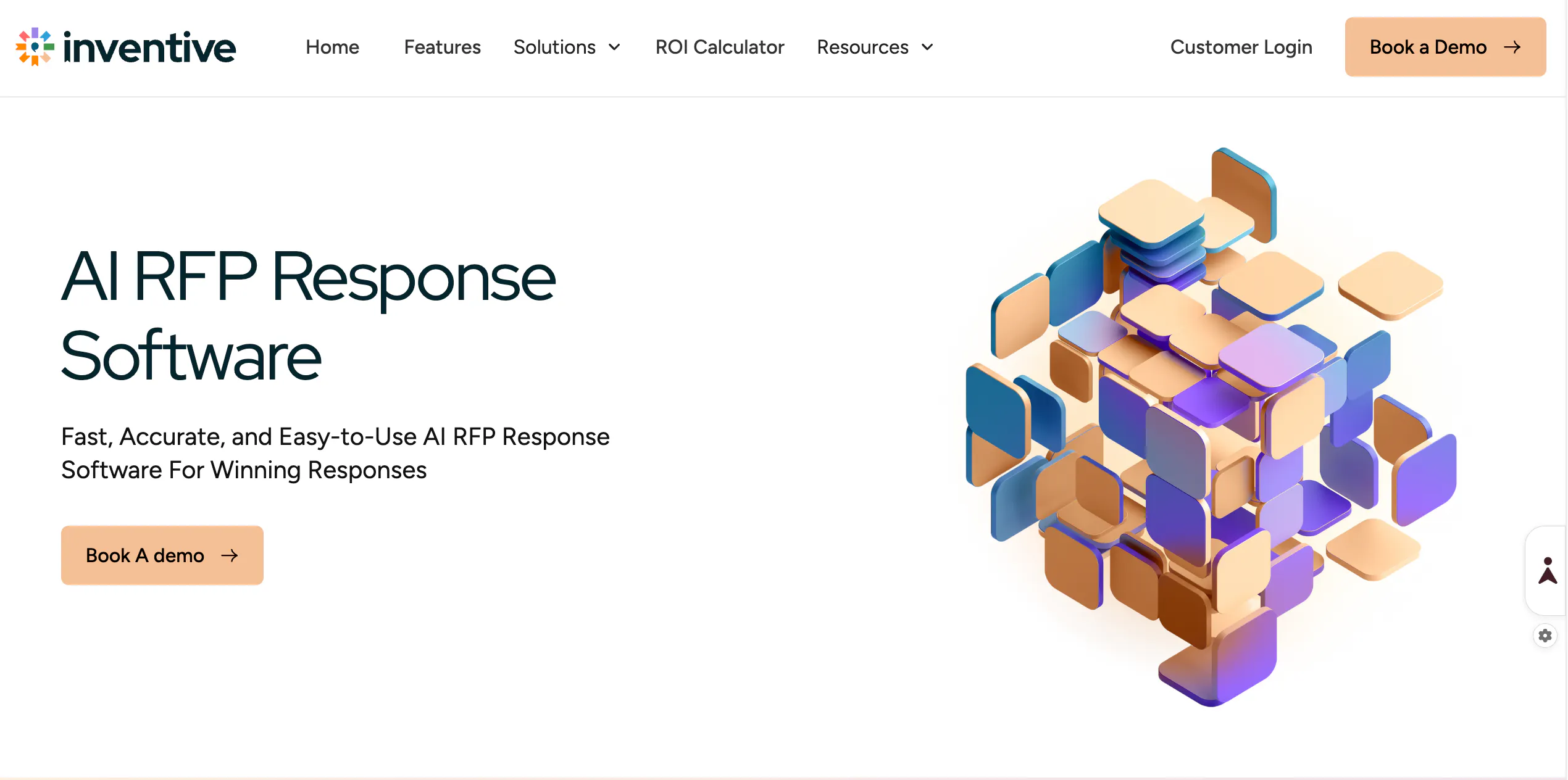
Best for: Teams looking for fast drafting, as well as a growing library of integrations
Inventive uses AI to help teams generate bids more quickly by drawing on connected knowledge sources and automating parts of the response workflow.
Differentiators
- AI-first platform built around fast draft generation and workflow automation
- Connects to multiple knowledge sources and business systems to surface relevant content, such as Slack, Teams, Jira, Confluence, and CRM platforms
- Modern interface
Drawbacks
- Greater emphasis on drafting speed than end-to-end bid management
- Governance and lifecycle depth are less mature than more established SRM platforms
- Long-term reporting, analytics, and enterprise operating model support are less established
5. AutoRFP
Best for: Teams that want rapid draft generation across large tender documents
AutoRFP serves as an AI assistant for tender responses, parsing lengthy questionnaires and suggesting answers. It helps speed up first drafts and can reduce the administrative burden of working through lengthy tenders or questionnaires.
Differentiators
- AI‑powered document ingestion (Word, Excel, PDF) and automated response generation
- Basic workflow automation and collaboration support within a single workspace
- Integrations with systems like Notion, Google Drive, and Salesforce
Drawbacks
- Workflows are focused mainly on Q&A drafting rather than full bid and tender management
- Heavy reliance on generative AI without the same level of governed content controls as enterprise SRM platforms
- Younger company profile and support model may be less proven for complex, global teams
6. AutogenAI
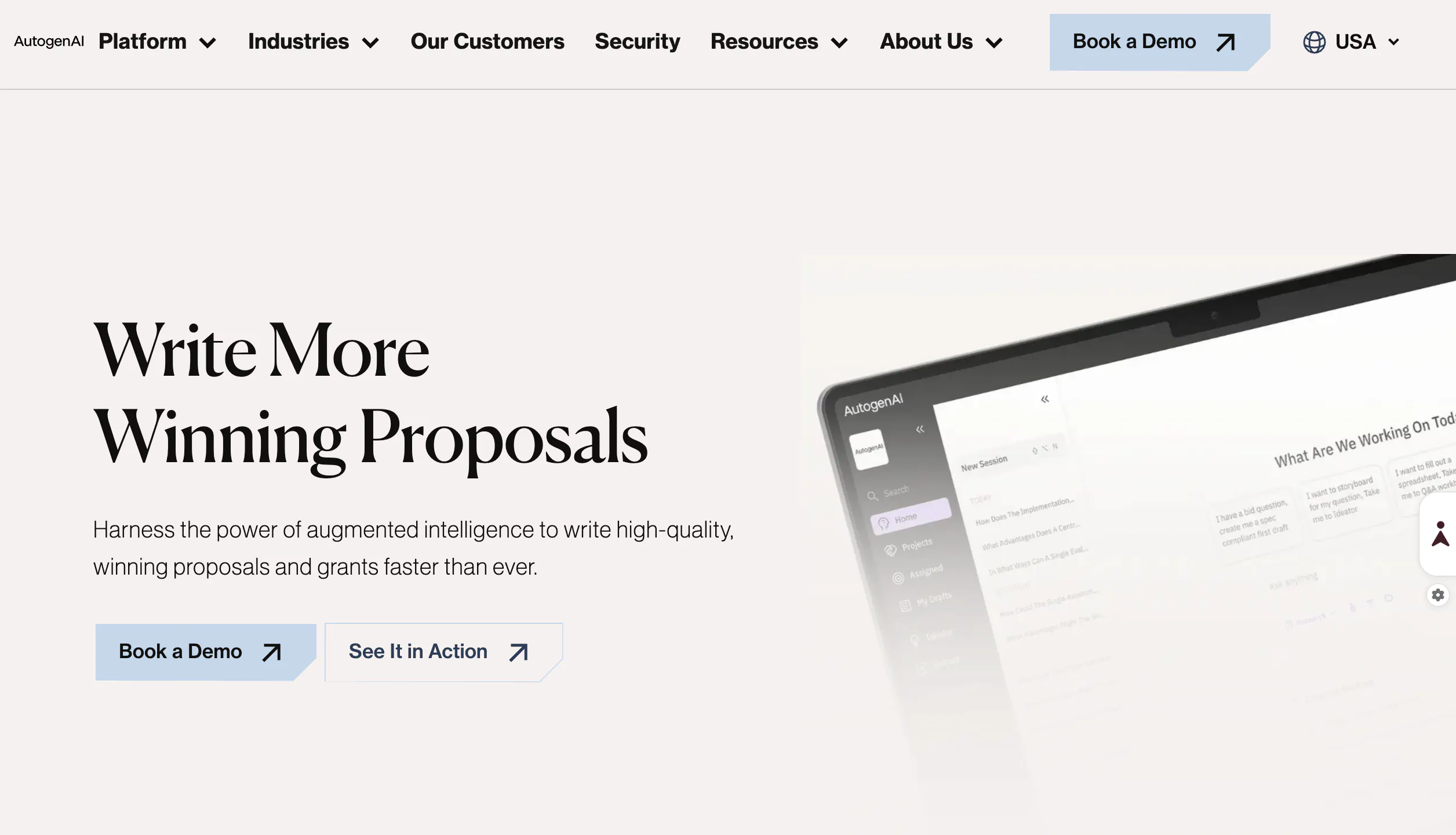
Best for: Teams are looking specifically to speed the creation of initial tender drafts
AutogenAI uses generative AI to turn prompts and past material into structured, on‑brand tender and proposal drafts in a fraction of the usual writing time. It’s attractive to teams that want to dramatically cut drafting time and improve writing quality, especially when transitioning from manual, Word‑based processes.
Differentiators
- Generative AI to draft proposal content using the organization’s input materials
- Collaboration and editing tools for refining AI‑generated responses inside the platform
- Integrations for ingesting content and exporting finished documents into branded templates
Drawbacks
- Primarily focuses on initial content generation; lacks full-lifecycle automation and native workflow orchestration
- Provides limited integration options and lacks native connectors to major tools like CRMs and document ecosystems
- Struggles more with structured questionnaires and Excel‑based RFPs
How to choose the best tender management software
Still undecided on the best tender management software for your business? Enterprise teams should prioritise six capabilities.
1. Centralised, governed knowledge
88% of high-growth teams say they have some level of knowledge centralized. Unfortunately, only 29% of all teams report effectively democratizing knowledge. Enterprise teams need a single source of truth. A trusted knowledge base helps teams respond faster without sacrificing quality, and it reduces the risk of outdated or inconsistent answers being reused across tenders.
The best tender management software should support ownership, review, approval, version control, and ongoing maintenance so that both people and AI draw from current, validated material.
Darrell Woodward, Director at Prosfora Solutions, explains:
“Content management has always been important, but now it’s more essential than ever. If you don’t have a good content set, you’re just setting your AI up to fail.”
2. End-to-end lifecycle support
Successful tenders do not begin with drafting. The tender management process starts with intake, qualification, and go/no-go decisions, then continues through response creation, reviews, submission, and post-submission learning.
Without lifecycle support, teams work reactively. They move straight into drafting without clear alignment, losing the opportunity to improve qualification, reduce wasted effort, and learn from previous submissions.
3. Collaboration across functions
Tender responses depend on contributions from sales, legal, finance, security, product, operations, and other SMEs. The best tender management software should route questions to the right people, provide visibility into progress and ownership, and keep work within a single system rather than scattering it across email threads, spreadsheets, and messaging apps.
“I think the biggest, most obvious opportunity is automating the parts of the process that most people don’t enjoy. Things like chasing SMEs — those repetitive tasks that don’t really add value from the bid professional’s perspective. If we can take that away, and let people focus on the thinking and the strategy behind bidding, that’s where the real impact is.”
Darrell Woodward
Director at Prosfora Solutions
4. AI embedded across the full workflow
Most modern platforms now offer some form of generative AI. That alone is no longer a differentiator. But leading organizations are nearly twice as likely as novices to have fully deployed AI solutions throughout the tender or RFP response process.
The most effective tender management software embeds AI across the entire workflow, including:
- Recommending approved content
- Identifying gaps or risks
- Helping teams qualify opportunities
- Supporting compliance and quality checks
- Accelerating work without removing human judgment
“You can’t afford to wait. There’s no room for laggards. You have to lean in. AI is going to be a critical differentiator, and we’re treating it that way at Seismic. “AI in everything we do” is one of our actual company OKRs this year.”
Toby Carrington
Chief Business Officer, Seismic
5. Accuracy, review, and compliance controls
In tendering, speed without trust creates risk. Built-in review and compliance controls help teams validate AI-generated answers before submission. In Responsive's model, for example, this includes TRACE Score. TRACE is a scoring framework designed to help users assess the trustworthiness, relevance, accuracy, completeness, and explainability of AI-generated responses.
6. Analytics that improve outcomes
The best tender management software should help teams understand what is working, where responses are slowing down, and how to improve over time. This should include visibility into content usage, workflow bottlenecks, response quality, and the kinds of opportunities worth pursuing. Without these data-driven insights, teams may respond faster without becoming any better at winning.
“We started tracking things like how many proposals we could complete per person and how often we got the deal to the next stage. When we had that, we could really show how our process improvements resulted in time savings and, as a result, how we could grow our contribution to the business.”
Kristen Carloni
Head of Aladdin Business, Proposals and Sales Optimization at BlackRock
The best tender management software in 2026
The best tender management software in 2026 does more than help teams complete documents faster. The strongest platforms combine governed knowledge, cross-functional workflows, and AI agents to support the full tender lifecycle.
For enterprise teams, that distinction matters.
Tendering is now too important to be managed through disconnected tools, static content libraries, or AI point solutions focused only on first drafts. The most successful bid teams treat tender management as a strategic capability, not an administrative task, and are investing in platforms that improve quality, control, and win potential.
Tender management software FAQs

Andrew Martin
Content Marketing Manager @ Responsive
Andrew Martin covers AI adoption, RFP strategy, and proposal management at Responsive, drawing on insights from Responsive's 2,000+ enterprise customer base and original research.